

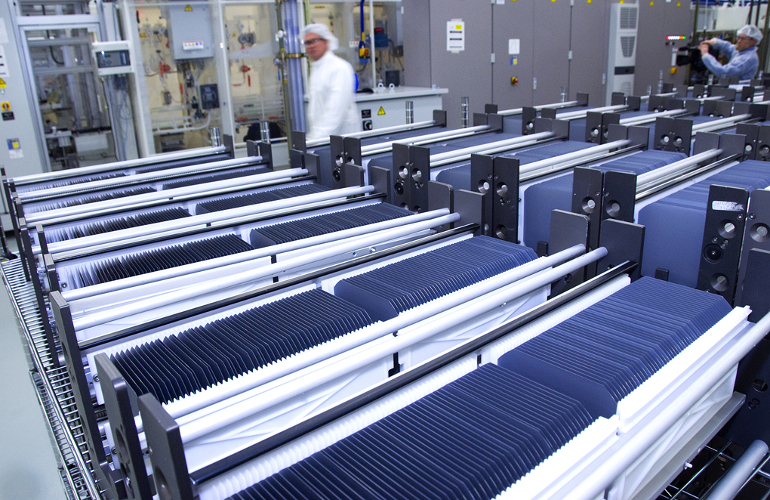
In its ongoing revision of Sec. 301 tariffs on Chinese goods, the Office of the United States Trade Representative (USTR) announced today increased rates on certain tungsten products, wafers and polysilicon. Tariffs on tungsten products will increase to 25% effective January 1, 2025, and tariffs on solar wafers and polysilicon will increase to 50%.
“The tariff increases announced today will further weaken the PRC’s harmful policies and practices. These actions will complement the domestic investments made under the Biden-Harris administration to advance a clean energy economy while increasing the resiliency of critical supply chains,” said Ambassador Katherine Tai.
The Sec. 301 tariffs were initiated by the Trump administration in 2018 in response to a finding that “China’s actions, policies and practices related to technology transfer, intellectual property and innovation are unreasonable and discriminatory and burden or restrict U.S. commerce.”
These increased rates were part of a four-year evaluation of that original research. In May, the USTR raised tariffs on electric vehicles, solar cells, lithium batteries, steel and aluminum products, and semiconductors from China. The agency’s report on the Sec. A 301 survey shows that China is focusing on solar products, lithium-ion batteries and electric vehicles for export growth. The federal government wants to fight the new “big three” with these new tariffs – and instead support domestic production.
When receiving comments on this review, the USTR said nearly everyone supported rising tariffs on polysilicon and solar wafers, noting the importance of the tariffs in growing domestic production. Given the president’s order to increase tariffs on Chinese solar cells to 50%, USTR also decided to increase tariffs on polysilicon and wafers to 50%.
“Raising tariffs on polysilicon and wafers will complement recent investments, encourage diversification of Chinese sources, provide additional leverage for China to eliminate the actions, policies and practices under investigation, and reduce vulnerability to these harmful actions, policies and reduce practices,” today’s message reads. . “While rising tariffs may initially lead to higher prices, the tariffs are necessary to allow domestic producers to compete against China’s massive overcapacity, defend recent investments and encourage more domestic production.”
U.S. solar panel makers are unlikely to have much interaction with Chinese solar wafers, as much of the supply to the United States instead comes from Southeast Asian countries. Avoiding Chinese polysilicon can be more difficult: seven of the world’s ten largest polysilicon producers are in China.
Mike Carr, executive director of the Solar Energy Manufacturers for America (SEMA) Coalition, released a statement on the tariffs: “SEMA greatly appreciates Ambassador Tai’s work on behalf of America’s solar workers to end tariffs on China’s imports of polysilicon and wafers. increase. It is an important precedent that a 50% tariff will soon cover the entire solar panel supply chain in China. These trade measures will begin to counter widespread Chinese government subsidies in solar energy production. It’s a step in the right direction. But we must go a step further to expand this approach and address the significant trade distortion that exists outside of China by Chinese-owned solar companies to fundamentally help put American workers on a more level playing field.”
