

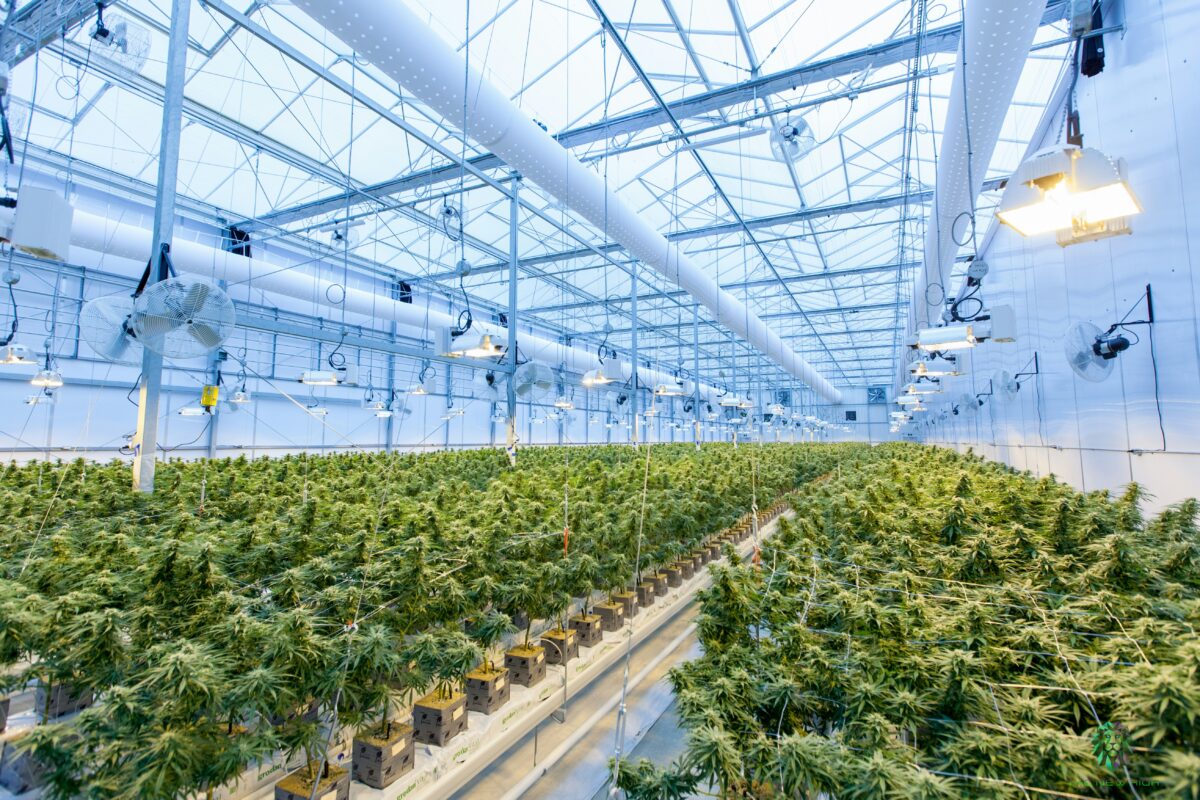
Scientists have designed a greenhouse system consisting of a battery energy storage system, hydrogen production and storage, as well as a semi-transparent PV array. The system is optimized for maximum net present value and minimum dependence on the electricity grid.
A research team led by scientists from Turkey’s Final International University has developed a self-sustaining greenhouse that uses a semi-transparent PV system (STPV), a battery energy storage system (BESS) for short-term energy storage, and hydrogen for the long term. term storage.
The size of the proposed system was optimized to maximize net present value (NPV) and minimize energy dependence (ED) on the electricity grid.
“Previous studies highlight the potential of STPV systems, which perform a dual function by allowing sunlight to pass through for photosynthesis and generating electricity at the same time. Despite this benefit, there is a recognized lack of energy availability during the winter months in greenhouses,” the team explains. “By integrating both BESS and hydrogen as part of a hybrid energy storage solution, this research provides a comprehensive approach to addressing seasonal energy dependency and optimizing energy management throughout the year.”
The system is designed to use STPV with an efficiency of 7%, with a cost per 32 W panel of $100. The BESS is lead-acid based, with a charge and discharge efficiency of 80% to 90% and a price of $500/Kw. The electrolyzer has an efficiency of 80% and costs € 388/kW; the hydrogen storage system has an efficiency of 90% and a price of $10/kW; and the fuel cell has an efficiency of 60% and a price of € 395/kW.
The assumed grid electricity rates are $0.43 per kWh in peak demand, $0.12 in off-peak and $0.3 in average demand.
The GBO algorithm optimizes the system based on three scenarios: the first prioritizes financial profitability, which means a higher NPV; the second strikes a balance between profitability (higher NPV) and energy independence (low ED); and the third tries to achieve maximum energy independence, meaning the lowest possible ED. Solar radiation data for Qatar’s summer and winter were collected and used.
“GBO is an efficient and powerful algorithm that uses two basic search strategies: exploitation and exploration. The exploitation search technique focuses on finding local optima, ensuring detailed and refined searches within a specific search area,” the academics explain. “The exploratory search technique, on the other hand, aims to discover global optima by searching broadly across the entire solution space.”
Image: Final International University, Journal of Energy Storage, CC BY 4.0
The scientists discovered that the first scenario requires a STPV area of 8,500 m2, a BESS capacity of 150 kW, an energy capacity of 240 kWh and a hydrogen storage of 4,436.4 kg. In this case, the NPV would be $1,584,800, with an initial investment of $1,304,006. The system will have an ED percentage of 15.07% and import 19,200 kW of power from the grid in summer, 62.76% and 86,851 kW in winter, respectively.
For the optimization of the second scenario, a STPV surface area of 12,750 m², a BESS power of 225 kW, an energy capacity of 360 kWh and a hydrogen storage of 8,763.6 kg were required. In this case, the NPV would be €1,483,500 with an initial investment of €2,007,900. The system will have an ED percentage of 10.64% and import 15,000 kW of electricity from the grid in summer. In winter, the ED rate will be 40.09%, with 50,595 kW being imported.
Finally, the third scenario requires a WWTP area of 27,200 m², a BESS power of 480 kW, an energy capacity of 768 kWh and a hydrogen storage of 23,476 kg. In this case, the NPV would be $98,223 with an initial investment of $4,401,100. The system will have an ED rate of 10.31% and will import 14,760 kW of power from the grid in the summer. In winter, the ED rate will be 1.56%, with only 1,078.7 kW being imported.
“Scenarios that emphasize minimal ED result in negative NPVs, underscoring the trade-off between achieving energy independence and maintaining financial viability,” the team concluded. “This dual-focus optimization not only improves the economic viability of greenhouse gas systems, but also promotes sustainability and energy independence, providing valuable guidance for developing sustainable and financially viable greenhouse gas management strategies.”
The results are presented in “Towards a self-sufficient greenhouse using semi-transparent PV: using hybrid BESS-hydrogen energy storage system”, published in the Journal of Energy Storage. Researchers from Turkey’s Final International University, Qatar’s Ministry of Municipal Council and Qatar University, and Egypt’s Arish University conducted the study.
This content is copyrighted and may not be reused. If you would like to collaborate with us and reuse some of our content, please contact: editors@pv-magazine.com.
Popular content

