
Close Menu
  • News
  • Industry
  • Solar Panels
  • Commercial
  • Residential
  • Finance
  • Technology
  • Carbon Credit
  • More
    • Policy
    • Energy Storage
    • Utility
    • Cummunity
What's Hot

Dutch solar owners asked to switch off during peak periods to ease the distribution crisis

June 7, 2026

The hydrogen flow: Toyota demonstrates its racing prototype on liquid hydrogen

June 7, 2026

Era of electrification exposing Australia’s weakest link

June 6, 2026
Facebook X (Twitter) Instagram
Solar Energy News
Monday, June 8
  • News
  • Industry
  • Solar Panels
  • Commercial
  • Residential
  • Finance
  • Technology
  • Carbon Credit
  • More
    • Policy
    • Energy Storage
    • Utility
    • Cummunity
Solar Energy News
Home - Technology - Softbank and Longi develop heterojunction solar panels of 665 g/m2 with an efficiency of 22.2% – SPE
Technology

Softbank and Longi develop heterojunction solar panels of 665 g/m2 with an efficiency of 22.2% – SPE

solarenergyBy solarenergyNovember 2, 2024No Comments3 Mins Read
Facebook Twitter Pinterest LinkedIn Tumblr Email
Share
Facebook Twitter LinkedIn Pinterest Email

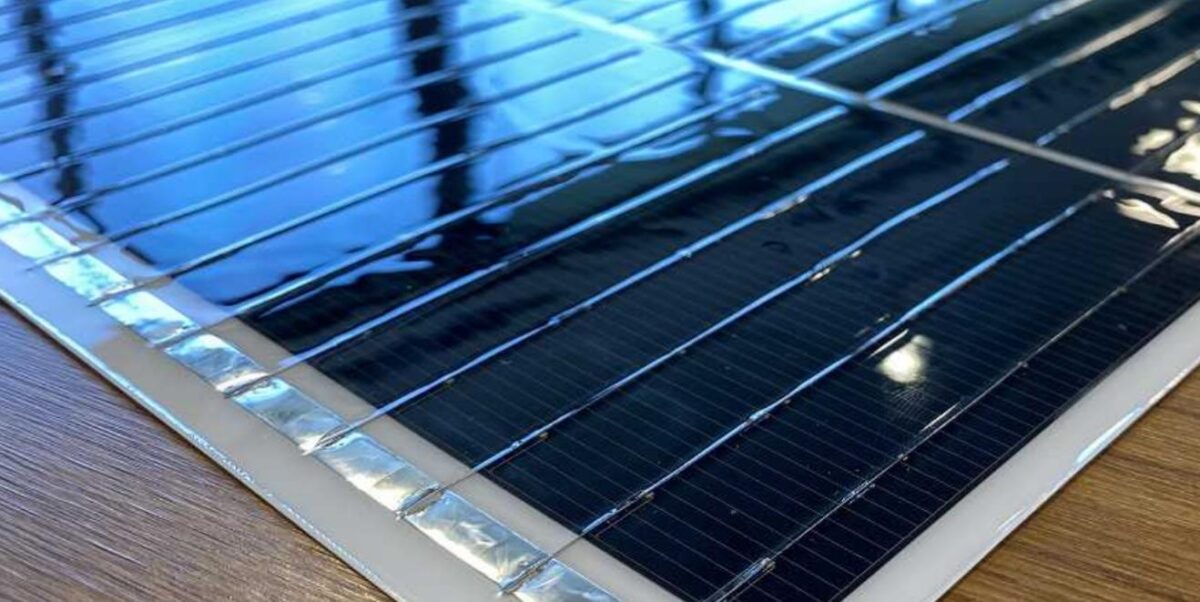
Researchers from the two companies have built a lightweight and flexible silicon heterojunction (HJT) PV panel that measures 563mm x 584mm and weighs just 218.5g.

November 1, 2024
Valerie Thompson

Japanese investment holding company Softbank is developing a wide range of technologies for its planned ultra-lightweight high-altitude platform station (HAPS), a solar-powered aircraft intended to operate at an altitude of 20 km above the Earth’s surface and carry telecommunications base stations as a base station. load.

One of the research projects completed in March this year focused on a silicon PV panel weighing less than 700 g/m2, inspired by the high-efficiency silicon PV modules used in solar car racing. It was described in an R&D article: “The challenge of ultralight solar modules for HAPS,” published on Softbank’s website.

In the paper, the team explained why they were looking for silicon PV technology: “The lightest and most efficient solar cell currently available is the composite solar cell for space applications, but this is expensive and takes a long time to produce,” the report said. “For this reason, we opted for high-efficiency crystalline silicon cells, which are available for approximately 1/1000 of the price.”

The project, which was participated by Japan-based Fujipream Corporation and Chinese module manufacturer Longi, produced a 665 g/m2 silicon heterojunction panel, even lighter than the project’s target of 700 g/m2.

Made with cell technology from Longi, the same 80µm HJT technology used to build a record-breaking cell unveiled in 2022, the encapsulated modules measured 563mm x 584mm and weighed 218.5g. The maximum output power of 71.1 W was measured under the standard spectra AM 1.5 for a module efficiency of 22.2% on the effective area.

See also  Egypt spends on a 500 MW solar project – SPE

To achieve the target weights, all materials were much thinner than conventional panels. The front, cells, encapsulants, and back were 25 µm, 80 µm, 150 µm, and 50 µm, respectively.

The connections on this format were a challenge. “For the cell-to-cell direct connections, thin copper wire with a diameter of 250 µm was selected, which was connected using low-melting point solder,” the researchers said, noting that a manual process was used .

Further research is planned towards a target of 500 g/㎡. “To achieve this goal, we will continue to develop modules with the aim of making each part of the module even thinner and delivering better performance, while improving wiring and laminating technology,” the researchers said.

The Softbank spokesperson has indeed confirmed this pv magazine that a new project is in the making. “Solar module manufacturer Fujipream Corporation is our partner for this research project,” they said, adding that the work is not limited to any particular solar cell manufacturer.

Since 2017, Softbank has been working with external partners from industry and academia to solve the technology challenges on the path to achieving its HAPS goals. For example, this month it announced a successful second field trial of its Sunglider HAPS aircraft with US aerospace and defense technology company AeroVironment in the US state of New Mexico.

Appearance of ultra-thin silicon heterojunction cell

Image: Softbank

This content is copyrighted and may not be reused. If you would like to collaborate with us and reuse some of our content, please contact: editors@pv-magazine.com.

Popular content
Source link

develop efficiency gm2 heterojunction Longi panels Softbank solar SPE
Share. Facebook Twitter Pinterest LinkedIn Tumblr Email
solarenergy
  • Website

Related Posts

Dutch solar owners asked to switch off during peak periods to ease the distribution crisis

June 7, 2026

Letter from China’s PV Industry: Arctech wins 2.1 GW solar deal

June 5, 2026

ComEd starts a new energy pilot with a solar rebate on the roof of a brewery

June 5, 2026
Leave A Reply Cancel Reply

Don't Miss
News

Missouri Republicans introduce legislation in the field of solar pilot program

By solarenergyFebruary 14, 20250

Missouri Rep. Ben KeathleyRc-inield, and Sen. Curtis TrentR-Springfield, both have announced the introduction of legislation…

Sound barrier integrated solar photovoltaic for highways, railways

June 21, 2024

From quantum physics to coastal resilience Brad Bartz to presenter Who turned the power back on at AltaSea

March 2, 2026

Energy Toolbase platform adds solar + storage modeling to show utility bill savings

April 25, 2024
Stay In Touch
  • Facebook
  • Twitter
  • Pinterest
  • Instagram
  • YouTube
  • Vimeo
Our Picks

Dutch solar owners asked to switch off during peak periods to ease the distribution crisis

June 7, 2026

The hydrogen flow: Toyota demonstrates its racing prototype on liquid hydrogen

June 7, 2026

Era of electrification exposing Australia’s weakest link

June 6, 2026

‘Come out from behind your screen, our industry is ultimately about people’

June 6, 2026
Our Picks

Dutch solar owners asked to switch off during peak periods to ease the distribution crisis

June 7, 2026

The hydrogen flow: Toyota demonstrates its racing prototype on liquid hydrogen

June 7, 2026

Era of electrification exposing Australia’s weakest link

June 6, 2026
About
About

Stay updated with the latest in solar energy. Discover innovations, trends, policies, and market insights driving the future of sustainable power worldwide.

Subscribe to Updates

Get the latest creative news and updates about Solar industry directly in your inbox!

Facebook X (Twitter) Instagram Pinterest
  • Contact
  • Privacy Policy
  • Terms & Conditions
© 2026 Tsolarenergynews.co - All rights reserved.

Type above and press Enter to search. Press Esc to cancel.