

In this article, Solar Media Market Research senior analyst Josh Cornes tracks the UK’s solar deployment to 2026, addressing the factors impacting deployment this year, which marks an increase in construction activity even as planning remains a barrier to new projects.
Following a successful 2025 for utility-scale ground-mounted solar in Britain, with 2.5 GWp completed and 90% growth from 2024, Solar Media Market Research predicts that ground-mounted solar will grow 60% year over year in 2026.
Nearly 800 MWp will have been delivered by the end of Q1 2026. With the first quarters generally slow due to winter, this year’s 700 MWp increase, completed in the first quarter of 2025, shows a steady start.
It also helps explain the record days we had last week, which were new The UK record for solar power generation was achieved two days in a row, with generation reaching 14,414 MW at 11:30 am on the morning of April 7.
Some notable completed projects include the Thorpe Larches/Thewles Trio north-west of Middlesborough, developed by Sonnedix and built by Ameresco & Sunel Group. This project consisted of three sites, making it the second largest operational project in the country to date, with a capacity of more than 150 MWp.
Green Farm in Barkestone-le-Vale, owned and built by Metlen, has been completed, and some of the 11 sites (700 MWp) where RWE has started construction over the past two years are starting to go live following mechanical completion late last year.
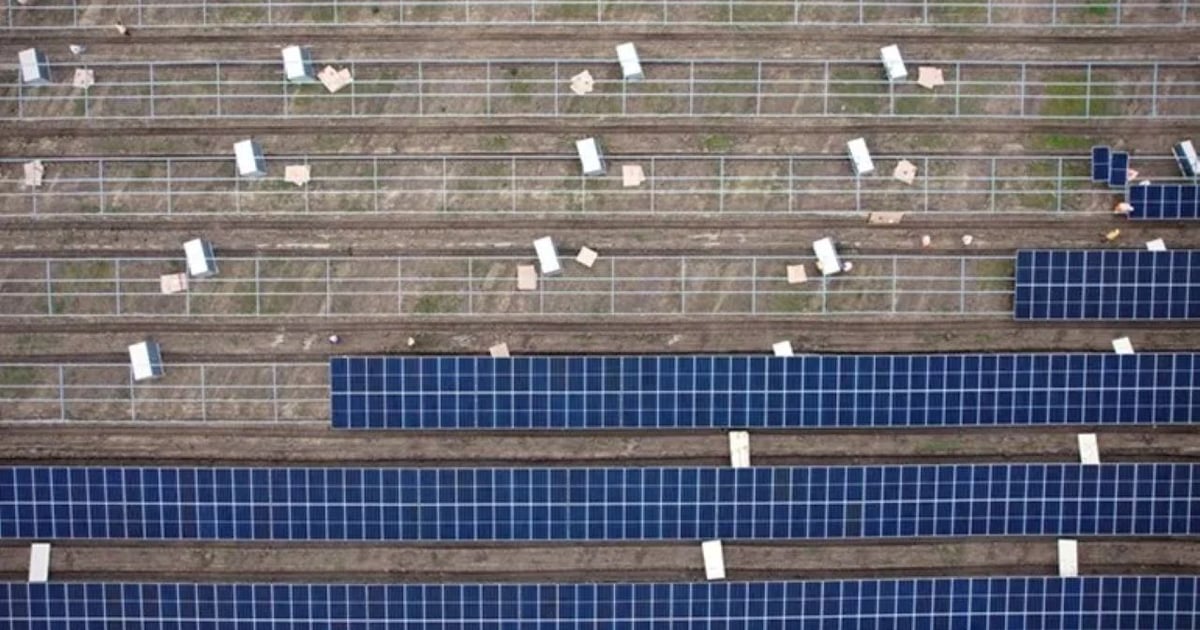
There are still approximately 100 locations with a total capacity of 4 GWp under construction throughout the country. More than half of this capacity has started construction before the end of the second quarter of 2025 and is expected to be operational before the end of this year.
Due to the delays in notifications and final dates for grid connection, there was a pause in projects going under construction at the end of last year; However, we are starting to see an increase again, with around 750MWp coming under construction in the last 2-3 months. Six of these locations are projects acquired in the past year as the mergers and acquisitions market continues to boom. This is also highlighted by the fact that eight sites that have a Contract for Difference (CfD) in Allocation Round 7 (AR7) have already changed hands.
Figure 1: Projects coming under construction each year, broken down by size, highlighting the pause in project starts due to the delays in the electricity grid reform timeline causing uncertainty.
Figure 1 outlines the slower 2025, in terms of projects coming under construction. The biggest factor is probably the uncertainty caused by delays in finding out their notifications and final dates. While 2025 was relatively slow, much of the 2024 capacity will be completed in 2026, and as mentioned, much of the 2025 capacity will have started in the first half of the year and be in the same category.
What does the upcoming pipeline look like?
Planning is known to have come to a standstill after August 2025. From September to December, fewer than ten projects were submitted at Local Planning Authority (LPA) level, and in 2026 this trend has continued. Conversely, Nationally Significant Infrastructure Projects (NSIPs) are being submitted at record pace, with a third of all applications reaching the government in the last seven months, with seven projects totaling 3.2 GW.
The big change in LPAs having the power to approve solar power stations up to 100MW is starting to take effect as Hedgehog Grove Solar Farm and Lostrigg Solar Farm have both been removed from the Planning Inspectorate, with the former submitting its full application to Braintree & Uttlesford District Councils. Boralex has also submitted an environmental impact statement to Melton Borough Council. Both projects are 99.9MWac.
Due to the halt in applications, decisions are starting to catch up. Fewer than 200 projects at LPA level are now awaiting a decision, down 25% from this time last year.
Timelines remain a concern, with the average time to approval on first application taking 53 weeks in 2024 (156 sites), increasing to 57 weeks since the start of 2025 to date (153 sites).
Frustratingly, refusals continue to play a major role, after as many as 46 projects were refused at LPA level in 2025. This year is off to a better start with seven refusals out of 39 decisions. Nearly 90% of denials are approved on appeal, but this process more than doubles the average time from original filing to approval, which now takes more than two years.
Planning timelines is more important than ever. As firm grid connection dates are handed out, developers will have to provide evidence that they are meeting certain milestones on time. The above evidence shows that refusals can make or break a project, and with some projects without planning permission likely to be connected to the grid in 2028, the wait is tense.
All the data above comes from Solar Media Market Research analysis, which can be accessedhere.
Send an email to book a demo and access the data [email protected].
