

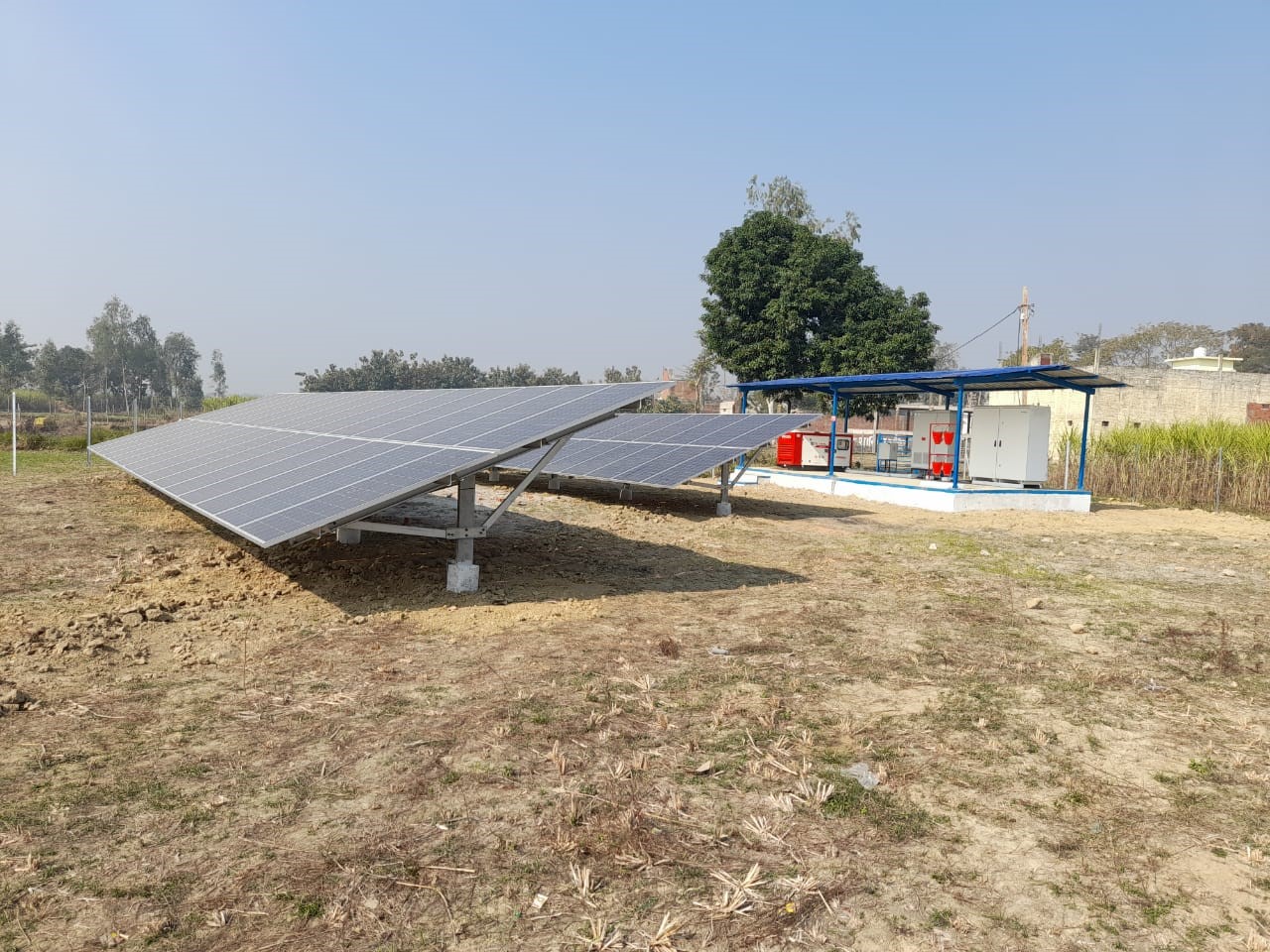
Solar-based distributed renewable energy (DRE) systems in rural India can generate electricity at a lower cost than conventional power grids, according to a new study. The report says careful planning around local demand, storage, grid conditions, financing and long-term operations is needed to realize these savings.
A joint report by the International Institute for Sustainable Development (IISD) and Idam Infrastructure Advisory Pvt. Ltd., “Scaling Rural Distributed Renewable Energy in India: A Framework for Planning and Implementation,” says Village Energy Plans (VEPs), based on system modeling and field research, are essential for translating the cost benefit of DRE into reliable, scalable implementation. Based on modeling and evidence from operational DRE projects, the report finds that tailoring renewable energy investments to village-level demand, grid conditions, storage requirements and financing can improve project viability, reduce costs and support broader deployment.
“To scale up DRE in rural areas, India must move from isolated projects to system-level planning, starting with VEPs that reflect local demand, integrating DRE with distribution utilities, and planning early for storage and excess energy management. Without this, the cost benefits will not translate into reliable, scalable deployment,” said Ashwitha Tunga, policy analyst at IISD.
The modeling shows that DRE maintains a cost advantage across environments when systems are designed around local demand. In Maharashtra’s Hiware Bazar, the report estimates the levelized cost of solar electricity at around INR 3 ($0.032)/kWh, compared to the state’s average energy cost of almost INR 6/kWh. In Bamun Sualkuchi in Assam, solar power generation is estimated at around INR 4/kWh, compared to the average purchase cost of over INR 8.5/kWh. According to the report, both projects remain cost-competitive without subsidies.
“DRE can provide affordable and reliable electricity in rural India, often below the state cost of purchasing energy in various rural contexts. In most cases it can remain competitive even without subsidies. But lower costs alone are not enough. Systems must be designed around local demand, integrated with the electricity grid and planned for long-term use. Scaling DRE is not just about adding capacity; it is about building systems that work with local grids and deliver long-term value to communities and utilities,” said Sunil Mani, policy advisor at IISD.
One village, one plan
The report recommends adopting village energy plans for all communities targeted for DRE implementation. A VEP combines local electricity demand, seasonal load variations, storage requirements, grid conditions, financing arrangements, and long-term operations and maintenance into a single planning framework.
The analysis shows that demand patterns are the most important factor affecting system performance and costs. Daytime agricultural loads can be largely covered by solar power generation and limited battery storage, while evening demand requires larger storage capacity or stronger grid integration. The findings underscore the need for site-specific planning rather than standardized implementation models.
“If India wants DRE to meaningfully contribute to its clean energy and net-zero ambitions, it must go beyond one-size-fits-all and adopt energy planning at the village level. Success will depend not only on understanding local demand and system requirements, but also on creating a supportive regulatory framework that enables seamless grid integration, consumer aggregation, virtual net metering, efficient management of excess energy and stronger utility participation. Only then can DRE evolve from a collection of projects to a scalable and sustainable energy solution for rural areas,” said Rajiv Shukla, Executive Director at Idam Infrastructure Consultancy Pvt. Ltd.
