

A study from Switzerland has compared how France, Italy and Spain are integrating biodiversity into renewable energy planning, spatial policy and ecological impact monitoring under the European Green Deal. The findings show that France and Spain have more advanced frameworks, while Italy remains more fragmented regionally, with large gaps in cumulative impact assessment in all three countries.
Scientists from Switzerland have conducted a comparative analysis of national policies in France, Italy and Spain in the areas of environmental integration of sustainable energy projects, spatial planning, ecological monitoring and cumulative impact assessment.
The study examined how the three countries are integrating biodiversity targets into renewable energy deployment strategies under the European Green Deal. The researchers note that France, Italy and Spain are among Southern Europe’s leading sustainable energy systems and share high environmental sensitivity, but follow different governance approaches: France adopts a centralized model, while Italy and Spain rely on more decentralized, multi-level systems.
In the newspaper “Integrating biodiversity conservation into renewable energy development under the European Green Deal: a comparative analysis of national policies in France, Italy and Spain”, published in Environmental challengesthe researchers analyzed 46 public policy documents – 15 from France, 13 from Italy and 18 from Spain – on energy, biodiversity, the circular economy and cross-cutting policy areas. The aim was to assess how effectively ecological considerations are integrated into energy planning, and how synergies and conflicts between biodiversity and renewable technologies, including solar, wind, bioenergy, hydropower, geothermal and marine energy, are addressed.
Spain implements data-driven spatial planning
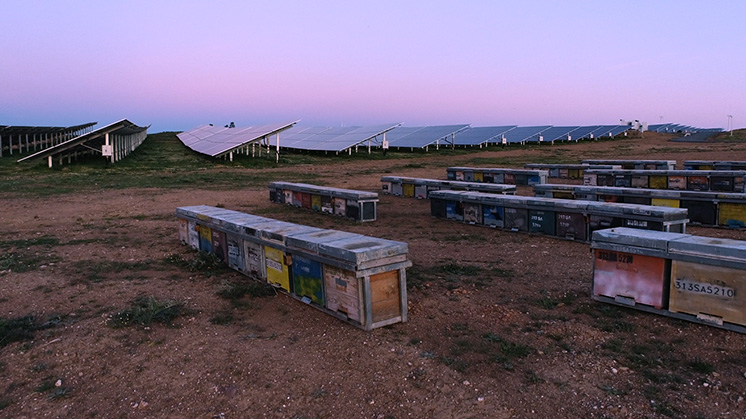
The study identified Spain as one of the most advanced cases in the use of spatial planning tools based on scientific data. Spanish policy gives priority to locating renewable energy projects in areas of degraded or low ecological value, while at the same time requiring minimization of land occupation, protection of ecological corridors and avoidance of impacts on the so-called Natura 2000 protected areas. The Ministry for Ecological Transition is developing tools for mapping environmental sensitivity and zoning plans in collaboration with the Spanish autonomous communities.
The authors noted that Spain enshrines principles such as “no net loss of biodiversity” and requires preventive, corrective and compensatory measures in environmental impact assessments (EIAs). It also promotes nature-friendly approaches, including agricultural voltaics and multiple-use land strategies.
However, the study also warns that Spain still does not have a fully operational system to evaluate the cumulative and long-term impacts of multiple renewable energy projects on terrestrial and marine ecosystems.
France leads in national coordination
France stands out for its coordinated and coherent national framework. The Renewable Acceleration Law establishes “renewable acceleration zones,” defined through municipal participation and public consultation processes. The country has also established specialized observatories to monitor the impact of onshore and offshore renewable energy projects on biodiversity, landscapes and soils.
The study highlights the role of the French General Secretariat for Ecological Planning, created in 2022, which coordinates ministerial strategies and monitors compliance with environmental legislation in all sectors.
Italy remains regionally dependent
In Italy, the ecological integration of renewable energy largely depends on regional authorities. Although national criteria have been adopted to identify suitable and unsuitable areas for the deployment of renewable energy sources, implementation varies considerably due to regional regulations and legal disputes.
The researchers also noted that there is no robust national framework for monitoring cumulative ecological impacts across different regions.
Cumulative consequences
In all three countries, progress has been made in integrating biodiversity considerations into the energy transition through tools such as Strategic Environmental Assessments (SEA), Environmental Impact Assessments (EIA), maritime and spatial planning tools and biomass sustainability criteria.
However, the research reveals persistent gaps in the assessment of indirect, cumulative and long-term impacts on habitats, species and ecological connectivity. Monitoring systems remain fragmented, with data often scattered across regional authorities or across project-level assessments.
France and Spain are considered to have more advanced and structured frameworks than Italy, although each country shows strengths in different areas.
France is said to have the most mature governance model, mainly due to its centralized coordination approach, operational renewable acceleration zones covering all renewable technologies, and dedicated national observatories for monitoring biodiversity. The authors explained that more centralized systems tend to allow for more uniform and faster implementation.
Spain is highlighted for its science-based approach to spatial planning, including ecological zoning tools, environmental sensitivity mapping and criteria that include ecosystem services and ecological connectivity. The study describes the Spanish model as a methodological benchmark for identifying low-impact zones suitable for renewable energy development.
Overall, the document emphasizes that successful deployment of renewable energy depends not only on administrative efficiency, but also on institutional capacity to align energy, environmental and spatial planning policies. Key recommendations include strengthening data-driven ecological planning, harmonizing monitoring methodologies and establishing stronger inter-ministerial and multi-level coordination mechanisms.
This content is copyrighted and may not be reused. If you would like to collaborate with us and reuse some of our content, please contact: editors@pv-magazine.com.
