

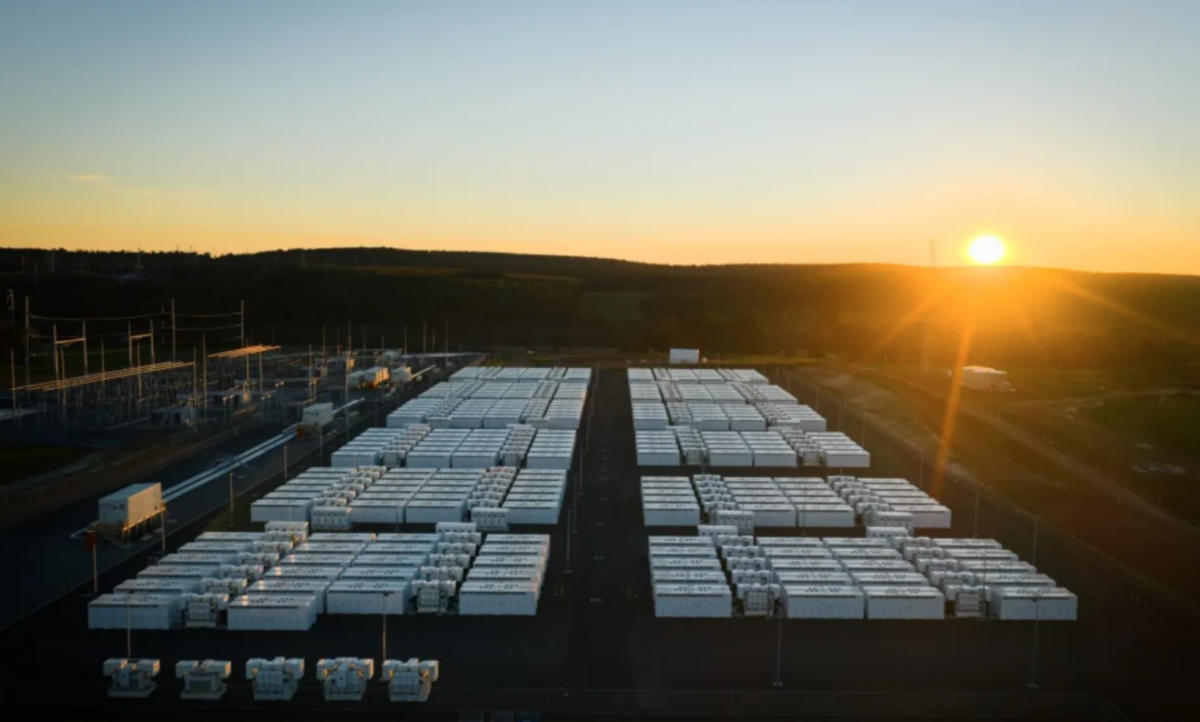
New South Wales has awarded long-term energy services agreements to six battery energy storage projects totaling 1.17 GW and almost 12 GWh, increasing the state’s contracted storage capacity to 30 GWh.
The New South Wales Roadmap Tender Round 6 for Long Term Energy Storage (LDES) has awarded Long Term Energy Service Agreements (LTESAs) to six new battery energy storage projects representing a capacity of 1.17 GW/11.98 GWh.
By increasing the state’s contracted storage capacity to 30 GWh, the latest procurement round meets the NSW Roadmap’s minimum statutory target of delivering 2 GW LDS by 2030 and 28 GWh by 2034.
The tenders are managed by AusEnergy Services Limited (ASL), formerly the Australian Energy Market Operator (AEMO).
Subject to relevant planning approvals, the largest of the six projects with a rated storage life of 10.6 hours includes French developer Neoen Australia’s 330MW/3,500MWh Great Western Battery at Wallerawang, near Lithgow, 140km northwest of Sydney.
Singapore and Norway are headquartered by BW ESS Australia’s 233 MW/2,676 MWh Bannaby Battery Energy Storage System (BESS) in the Southern Tablelands, with a rated storage life of 11.5 hours, and Korea Zinc subsidiary Ark Energy’s 250 MW/2,414 MWh (9.7 hours) Bowmans Creek BESSin the Upper Hunter, have also been successful.
Two projects near Armidale, 481km north of Sydney, include Spanish renewable energy developer FRV Services Australia’s 158 MW/1,440 MWh (9.1 hours) Armidale East BESS, and US-based Bridge Energy’s 100 MW/870 MWh (8.7 hours) Ebor BESS.
Also in the New England and North West region of New South Wales, near Tamworth, 111km south of Armidale, the sixth successful tender has been awarded to Spain-based Iberdrola Australia’s 100 MW/1,080 MWh (10.8 hours) Kingswood BESS.
Minister for Climate Change and Energy Penny Sharpe said the six big batteries put New South Wales on track to “destroy” storage targets, harvesting the sun and wind to provide NSW with round-the-clock power and putting downward pressure on prices.
“We’re not stopping here – NSW will support more projects, so we are ready for a network powered by renewable energy, backed by gas,” Sharpe said.
ASL Chief Executive Officer Nevenko Codevelle said it is encouraging to see proponents using and appreciating the flexibility of the LTESA product to meet the needs of their project.
“These agreements also deliver value to consumers by freeing up investments in additional capacity that can reduce price volatility,” Codevelle said. “We are about to see the first LDS projects contracted through these tenders come online. These are storage projects of more than eight hours that would otherwise not have been financially completed or delivered energy to NSW consumers. It is a very exciting time for the energy transition in NSW.”
Currently, two more tenders for long-term storage are planned in the second quarter of 2026 and another in 2027.
“There are no guarantees for further LDS tenders beyond this point, so we expect competition to increase even further for these future tender rounds,” Codevelle said.
The next LDES tender will start in the second quarter of 2026, seeking 12 GWh of projects, followed by another 12 GWh in 2027.
ASL will resume tenders for the Generation LTESA, with a tender for 2.5 GW of projects scheduled to start in the second quarter of 2026.
A tender for 500 MW of reinforcement and demand response projects that can be operational by the end of 2027 It is currently being worked on and will be ready by the end of May 2026.
The New South Wales Electricity Infrastructure Roadmap (launched in 2020) is a twenty-year, legislated plan to transition the state’s energy system to cleaner, cheaper and more reliable sources.
It focuses on building renewable energy zones (REZs) to replace old coal-fired power plants with 12 GW of renewable energy and 2 GW of storage by 2030.
This content is copyrighted and may not be reused. If you would like to collaborate with us and reuse some of our content, please contact: editors@pv-magazine.com.
Popular content

