

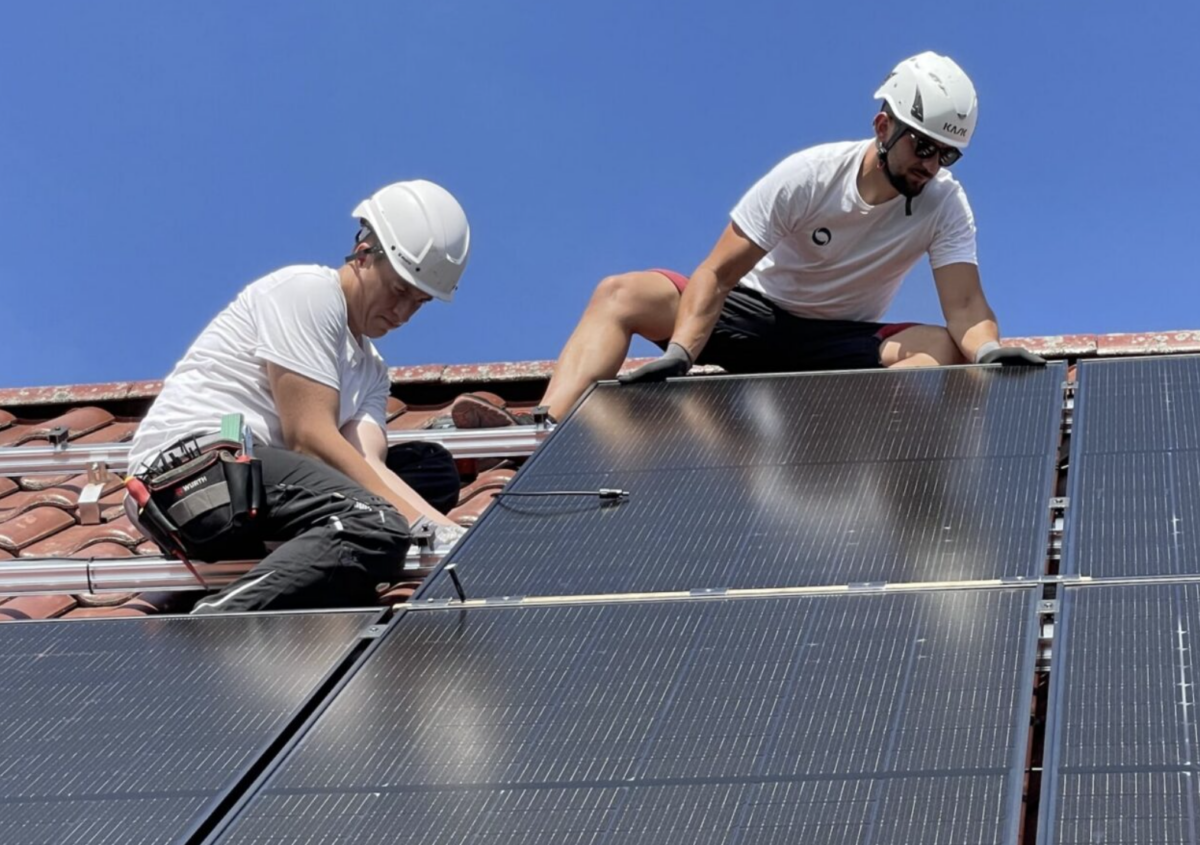
The German solar sector reports an increase in investigations following the military escalation between Israel, the United States and Iran, with E.ON citing a doubling of demand for solar installations. Other industry participants are more cautious, attributing much of the increase to seasonal patterns rather than geopolitical fears.
Energy supplier E.ON has said demand for solar installations among German private customers has roughly doubled since the military escalation between Israel, the United States and Iran began in late February, with interest in heat pumps and electric vehicle chargers also surging.
Filip Thon, CEO of E.ON Energie Deutschland, confirmed that the number of solar requests has doubled compared to recent months and that the company has already expanded the capacity of its solar teams in response. He noted that many households are trying to protect themselves from rising energy prices and supply risks.
Renewable energy companies 1KOMMA5° and Enpal have made similar claims in the German media, with 1KOMMA5° citing a doubling of demand compared to the previous month and Enpal describing demand as comparable to the levels of the last gas crisis.
But not all industry voices are equally optimistic. Peter Knuth, director of PV equipment supplier Enerix, said an internal survey found that only 30% of partner companies recorded above-average demand, while 45% attributed the current upturn to seasonal patterns. Knuth said customer interest is increasing, but only marginally, noting that the solar industry sees demand reliably rebound each spring after the slow winter months.
The German wholesaler of PV systems EWS GmbH & Co. KG described the mood in its February market analysis as optimistic but not euphoric. EWS (Handewitt) Managing Director Jan Paul Dahm said rising fossil fuel prices and energy supply uncertainty are generating more attention, adding that the discussion reminds consumers that renewable energy is the only path to long-term energy independence.
Carsten Körnig, director of Bundesverband Solarwirtschaft (BSW), acknowledged the geopolitical effects, but was more moderate in his analysis. The official of the German solar industry association said that the spike in energy prices is opening the eyes of many people and that a temporary increase in demand for solar energy, heating and storage systems is likely – a pattern already observed at the beginning of the war in Ukraine. Körnig also flagged a domestic policy factor: Announcements by German Economics Minister Katherina Reiche that subsidies for new solar energy on the roofs of private homes will end from 2027 could accelerate demand in the short term. How strong this rebound will prove remains to be seen, Körnig said.
The geopolitical background is material. Following attacks by the United States and Israel on Iran on February 28, Tehran imposed restrictions on shipping through the Strait of Hormuz, a key route for liquefied natural gas (LNG) and crude oil from Gulf states. Since early March, tanker traffic through the strait has fallen sharply. Germany gets most of its natural gas from Norway, but disruptions in global LNG markets – including potential supply cuts from Qatar – directly impact European pricing.
Data from Verivox and Strom-Report shows that electricity prices for new customers increased by around 8.5% in four weeks, from an average of €0.2318 ($0.27)/kWh to €0.2516/kWh. The current average for new customers is €0.277/kWh; existing customers pay an average of €0.312/kWh, while basic supply rates rise to €0.4283/kWh. Gas prices for new customers have increased more moderately, from €0.0799/kWh in December to €0.098/kWh currently.
Both moves remain well below the levels seen in 2022, when Russia’s invasion of Ukraine cut off gas supplies to Europe and drove prices to historic highs – a period that also saw a significant increase in rooftop solar sales. Thon of E.ON Energie Deutschland said the longer the situation remains tense, the stronger interest in energy independence is likely to become. He added that crises do not create new trends, but accelerate existing ones.
This content is copyrighted and may not be reused. If you would like to collaborate with us and reuse some of our content, please contact: editors@pv-magazine.com.
