

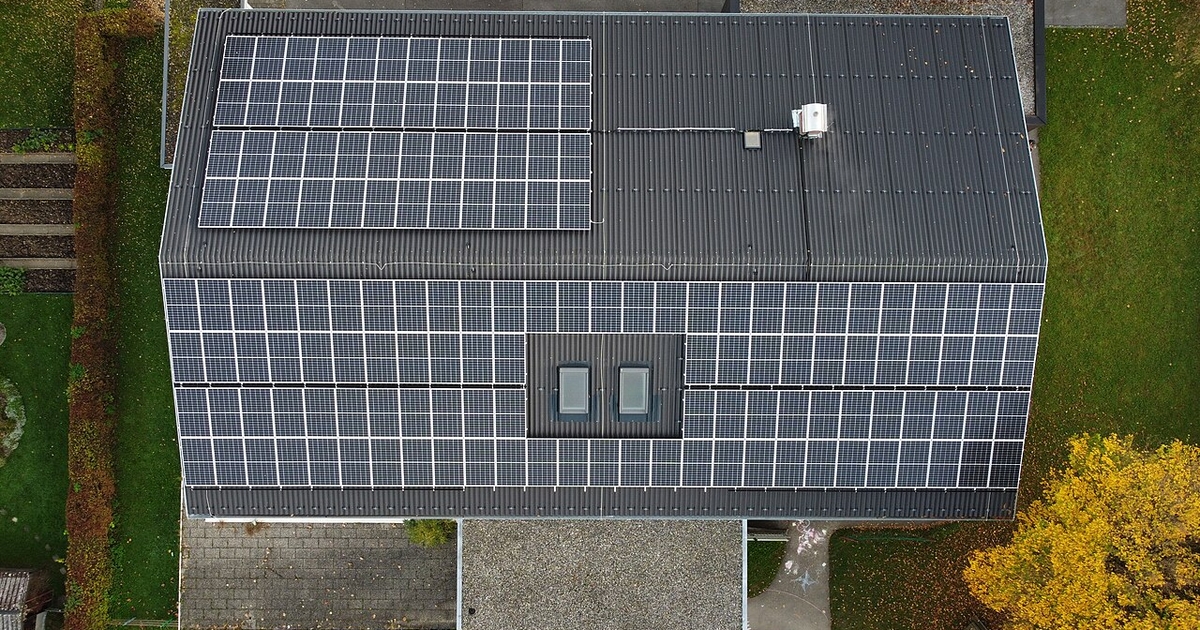
In this contributed article, Alanna Loder-Symonds, sustainability director at consultancy EQONIC Sustainability, part of battery technology company EQONIC, weighs the case for installing renewable technologies on domestic and commercial properties, writing that the long-term benefits are now too substantial to ignore.
Renewable energy in buildings was once seen as a green luxury, commendable but far from essential. Now it’s reshaping the fundamentals of real estate values. Solar PV, battery storage and other on-site renewable technologies have gone from optional additions to central components of a building’s long-term financial performance, resilience and viability.
But for all their benefits, these systems often require significant upfront investments, and many commercial landlords, developers and homeowners hesitate about the initial capital outlay. As energy prices fluctuate and Britain tightens its net-zero trajectory, it is crucial to gain clarity on the true costs and growing list of benefits of renewables.
The upfront cost of renewable energy remains the most visible barrier. A domestic solar system in Britain on a three-bedroom house ranges from £5,000 to £9,000, with battery storage typically costing £3,000 to £7,000. Commercial installations, residential blocks and industrial roofs obviously cost much more, sometimes into six figures.
These expenses typically come before savings, and in an economic climate where capital budgets are tight, hesitation is understandable. However, companies like EQONIC, BOXT or Octopus Energy offer businesses and building owners the opportunity to spread the costs of solar and battery installations in monthly or quarterly installments, turning what was once a capital-intensive decision into manageable operating costs.
Once the solar panels and battery are installed, the owner can expect to save around £600-£1,000 per year in energy costs in a typical three-bedroom house by installing solar panels and a battery. The The estimated payback period for ROI is approximately 5-12 years for a battery-powered solar system. This is particularly important in the UK context, where homeowners move on average every 17 years.
The real estate value premium: what recent research shows
What is also clear is that renewable energy delivers benefits that go far beyond lower electricity bills. Multiple real estate studies have shown that renewable installations can significantly increase the value of buildings.
Research from Swansea University shows that using solar energy and other low-carbon technologies can increase the price of a house by 6-7%. This increase is reinforced by wider market signals: 1.6 million UK homes already have solar installed, representing just over 5.5% of all homes. Renewable energy will be integrated into 40% of new construction projects from the start in 2024. Even among older populations, interest in energy-efficient homes is increasing, reflected in a 34% increase in online searches for eco-friendly homes over the past year.
Barrows and Forrester’s analysis shows that solar panels, which typically cost an average of £5,875, add £11,500 in value to a property, almost double the cost of installation. Meanwhile, Rightmove’s ‘Greener Homes 2023 Report‘ found that increasing the EPC rating of a home from F to C could increase the home value by as much as 15%. At the typical property price of £285,000, as recorded by the Office for National Statistics, that represents a potential £42,750 in added value.
Demand is growing on both sides of the market. Younger buyers are the driving force behind this shift. Research by Legal & General showed that buyers are willing to pay a 10.5% premium for low-carbon properties, while future Generation Z buyers are willing to pay up to 20% more.
More recent analysis shows that consumers are willing to pay 3.4% more for homes with high energy efficiency (A or B ratings) compared to D-rated homes, while homes rated F or G typically sell for 7.4% less than D-rated homes.
Broader economic benefits beyond property values
This change in buyer behavior is creating ripple effects for landlords and developers. Homes and commercial buildings equipped with solar energy not only sell faster, but also rent more easily and achieve higher returns. In a more stringent regulatory environment, energy efficiency also becomes a compliance issue. As EPC standards rise and net-zero expectations penetrate deeper into the built environment, assets without a credible renewable energy strategy are at risk of losing value or becoming stranded assets. Owners and investors are increasingly recognizing that adding renewable capacity is not just about environmental credibility, but also about protecting asset performance over the long term.
Energy independence is another growing driver of adoption. As Britain experienced repeated increases in wholesale gas and electricity prices, especially from 2021 onwards, the vulnerability of buildings dependent on electricity networks became clear. Solar energy combined with battery storage allows buildings to generate and store their own energy, reducing exposure to volatile rates and peak prices. This shift is reshaping the operating economy. Importantly, these benefits are becoming increasingly important as Britain moves to electric vehicles and electric heating. Homes and buildings will require more energy, and self-generation will help meet that demand at a much lower cost.
In addition to the economic arguments, the technology itself is developing rapidly. British buildings are evolving from passive energy users to active energy systems. Solar panels, advanced inverters, behind-the-meter batteries and intelligent control systems now work together to optimize energy consumption based on demand, price signals and weather forecasts. Commercial buildings are beginning to function as micro-energy hubs, participating in flexibility markets and reducing peak demand on the electricity grid. Residential developments increasingly include community renewable systems, shared battery banks and integrated EV charging infrastructure. These innovations not only reduce emissions, but also help buildings move toward varying degrees of energy autonomy.
The general direction of travel is unmistakable. Renewable energy improves building value, strengthens rental performance, reduces operating costs, increases resilience and supports compliance with the UK’s net zero pathway. The initial investment does not have to be significant; the long-term benefits – financial, environmental and strategic – are now too substantial to ignore. For homeowners, the matter is becoming increasingly compelling; for developers and landlords it becomes a necessity; and for the real estate market as a whole, the integration of renewable energy will become a defining feature of asset quality over the next decade.
As Britain moves towards electrified heating, widespread adoption of electric vehicles and a zero-carbon energy system, the buildings that will retain value are those that can generate and manage their own energy. Renewable energy is no longer an optional upgrade; it is a core component of future-proof real estate.
