

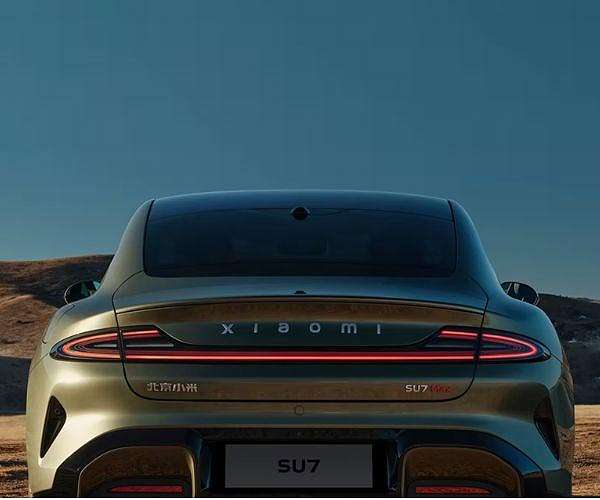
The EU’s additional tariffs of up to 35.3% on Chinese electric vehicles anger Beijing
The EU’s decision to impose heavy tariffs on Chinese-made electric cars sparked anger in Beijing on Wednesday after an anti-subsidy investigation found that Chinese support was undermining European carmakers.
The additional taxes are controversial, with strong opposition from Germany and Hungary, for fear of provoking China’s ire and sparking a bitter trade war.
Beijing denounced the European Union’s decision, saying it did not “agree or accept” the tariffs and had filed a complaint under the World Trade Organization’s (WTO) dispute settlement mechanism.
“China will take all necessary measures to firmly protect the legitimate rights and interests of Chinese companies,” Beijing’s Commerce Ministry said.
EU trade chief Valdis Dombrovskis said on Tuesday that “by taking these proportionate and targeted measures after a rigorous investigation, we are standing up for fair market practices and for the European industrial base”.
“We welcome competition, including in the electric vehicle sector, but this must be underpinned by fairness and a level playing field,” he said.
But the German auto industry’s main association warned the tariffs raised the risk of “a far-reaching trade conflict”, while a Chinese trade group rejected the “politically motivated” decision even as it urged dialogue between the two sides.
The duties are in addition to the current 10 percent on imports of electric vehicles from China.
The decision became law after being published in the EU’s official gazette later on Tuesday and the duties come into effect from Wednesday.
The Brussels investigation showed that Chinese state subsidies unfairly undermined European car manufacturers.
Once they come into effect, the rates are final and valid for five years.
The additional duties also apply, at different rates, to vehicles made in China by foreign groups such as Tesla – which carries a rate of 7.8 percent.
Chinese auto giant Geely – one of the country’s largest sellers of electric vehicles – will face an additional 18.8 percent duty, while SAIC will be hit the highest at 35.3 percent.
– Ailing companies –
The tariffs do not have the support of a majority of the EU’s 27 member states, but in a vote early this month the opposition was not enough to block them – which would have required at least 15 states representing 65 percent of the EU’s population block represented.
The EU launched the investigation in an effort to protect its car industry, a key player that provides jobs to around 14 million people.
France, which pushed for the investigation, welcomed the decision.
“The European Union is taking a crucial decision to protect and defend our trade interests, at a time when our automotive industry needs our support more than ever,” French financial sector Antoine Armand said in a statement.
But Europe’s bigger carmakers, including German car giant Volkswagen, have criticized the EU’s approach and urged Brussels to resolve the issue through talks.
The additional tariffs are “a step backwards for free world trade and therefore for prosperity, job retention and growth in Europe,” Hildegard Mueller, president of the German Automobile Industry Association, said on Tuesday after the announcement.
Volkswagen, which has been hit hard by increasing competition in China, has previously said the tariffs would not improve the competitive position of the European car industry.
That warning came weeks before the ailing giant announced plans on Monday to close at least three factories in Germany and cut tens of thousands of jobs.
– Retaliation –
Talks between the EU and China continue and the tariffs could be lifted if a satisfactory agreement is reached, but officials on both sides have pointed out differences.
Discussions focused on minimum prices that would replace tariffs and force automakers in China to sell vehicles at a certain price to offset subsidies.
“We remain open to a possible alternative solution that would be effective in addressing the identified issues and would be compatible with the WTO,” Dombrovskis said, referring to the World Trade Organization.
The Chinese Chamber of Commerce at the EU has urged Brussels and Beijing to “accelerate talks on setting minimum prices and ultimately abolishing these tariffs.”
However, the EU is facing retaliatory measures from China. China said on October 8 that it would impose provisional tariffs on cognac imported from the EU.
Beijing has also been investigating EU subsidies for certain dairy and pork products imported into China.
Trade tensions between China and the EU are not limited to electric cars, with Brussels also investigating Chinese subsidies for solar panels and wind turbines.
The EU is not alone in imposing high tariffs on Chinese electric cars.
Canada and the United States have imposed much higher tariffs of 100 percent on Chinese imports of electric cars in recent months.
burs-je/vos
