

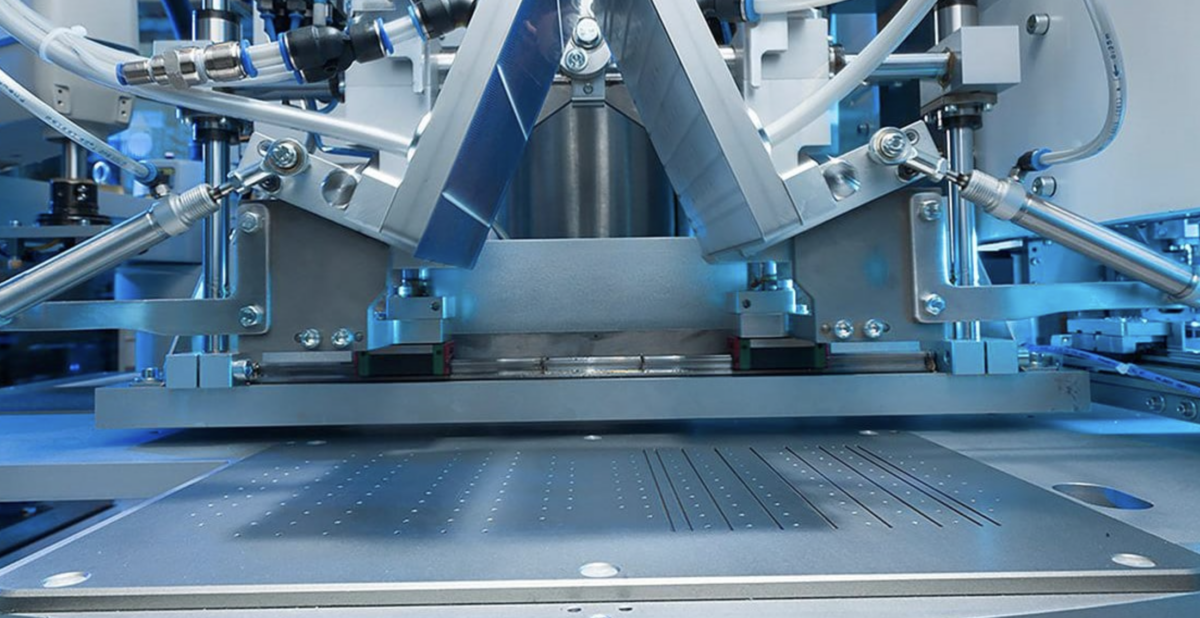
A new study from the German Mechanical Engineering Association (VDMA) shows that global capital expenditure on PV manufacturing equipment will grow to more than 2.5 times current levels by 2035, with European suppliers maintaining their competitiveness for the time being despite structural challenges.
Global capital expenditure on PV production equipment reached approximately $16.6 billion in 2025 and is expected to rise to $43.8 billion by 2035, according to a study commissioned by VDMA and conducted by the Fraunhofer Institute for Solar Energy Systems and ISC Konstanz. This represents an increase to approximately 2.6 times the current market size.
The study, ‘European Photovoltaics Machinery and Equipment Study’, focuses on the prospects for PV production equipment and the competitive position of European manufacturers.
According to the VDMA, the findings suggest that European companies remain relatively well positioned for the time being to participate in the expected market expansion. The region continues to have strengths in high-tech solar energy production, backed by decades of research and technical expertise, particularly in the areas of reliability, process stability and equipment longevity.
However, the report highlights structural challenges. Large-scale PV production is concentrated in China, India and the United States, where industrial policy support has accelerated capacity growth. Europe lacks a strong domestic manufacturing base, which the study finds is a disadvantage for maintaining competitiveness.
It also points to operational disadvantages for European suppliers, including longer response times, higher capital costs and a more limited range of turnkey solutions compared to predominantly Asian competitors. These findings are based on interviews with international factory operators. The subsidized competition in Asia further increases the pressure on European companies.
The expected growth in equipment demand is consistent with the expansion of the global PV market itself. Annual installations are expected to reach 1.65 TW by 2035, representing roughly 2.5 times current levels. The study identifies tunnel-oxidized passivated contact (TOPCon), back-contact, heterojunction (HJT) and tandem cell technologies that are likely to dominate future manufacturing.
The report notes that European equipment manufacturers have already demonstrated the capabilities of current technologies such as TOPCon, but emphasizes that speed will be critical as customers increasingly prioritize short payback times, integrated solutions and fast delivery.
The analysis covers the entire PV production chain, from polysilicon production and crystal growth to the production of wafers, cells and modules. Key technologies explored include nanocoating, process automation, crystal growth systems, wet chemical and thermal processing, metrology and module assembly tools such as stringers and laminators. Over the past decade, throughput and productivity in these areas have increased as much as sixfold.
The report quotes VDMA representatives such as Peter Fath, who said the findings provide a realistic assessment of the European PV equipment sector and its potential to support a competitive solar production industry, while also highlighting the need for targeted industrial policy measures and financing instruments in Europe and key export markets.
It also quotes Puzant Baliozian, who said that in addition to the European market potential, export markets will play a crucial role, with global annual investments for PV production equipment expected to exceed $40 billion. European manufacturers, he said, are preparing consortium-based and turnkey solutions for the production of blocks, wafers, cells and modules to capture market share.
This content is copyrighted and may not be reused. If you would like to collaborate with us and reuse some of our content, please contact: editors@pv-magazine.com.
