

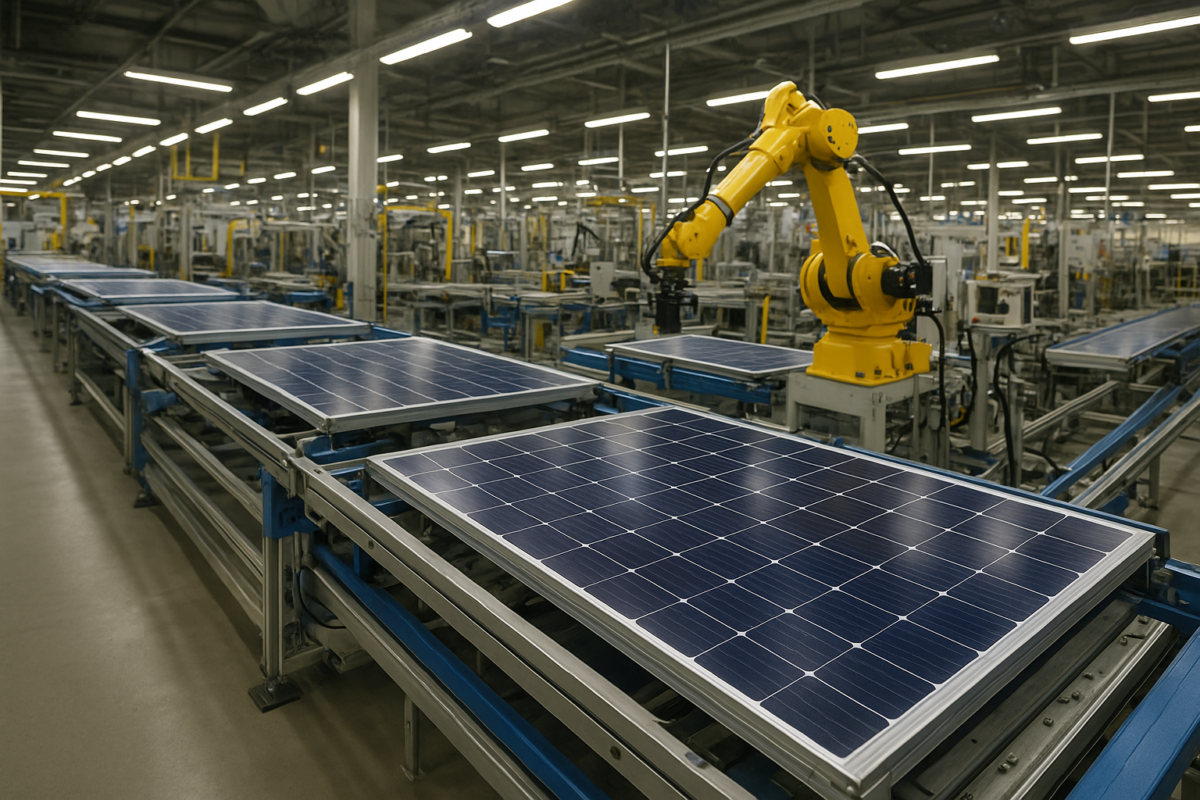
The Dutch government says that the production of large-scale solar panel is no longer viable, which means that the SolarNL stimuli are closed for building and vehicle-integrated products, heterojunction modules and perovskiet-silicon tandem panels.
The Dutch cabinet has decided to terminate the SolarNL Incentive program to support the production of domestic photovoltaic module.
The decision followed a request from an advisory committee of the National Growth Fund, a government -run investment fund that financed and supervised the program.
“The advisory committee has established that the factors that SolarNL should make a success, unfortunately not, or only partially, present. This means that setting up a new Solar PV sector in the Netherlands with large-scale production no longer seems realistic,” said the National Growth Fund in a statement.
After the advice of the advisory committee, the Dutch government withdrew € 277 million ($ 326.0 million) in funds that were initially awarded for the second and third phases of the SolarNL scheme. Some of the funds can be again assigned to support the Dutch semiconductor industry.
“In the coming months, the Ministry of Economic Affairs and the Climate Policy will consult stakeholders to determine the consequences for SolarNL for the expiration date of financing for the second and third phases,” the National Growth Fund explained. “Some of the funds that have already been assigned before the first phase of the project have not yet been spent.”
The SOLARNL program offered incentives to buildings-integrated (BIPV) and vehicle-integrated (VIPV) applications, as well as heterojunction modules or perovskiet-silicon tandem panels.
In June 2023, the Dutch government assigned € 2.6 billion ($ 3.06 billion) through its National Growth Fund to support innovative technologies in sustainability, energy, high -tech, digitization and healthcare.
“The sun plays a key role in the energy transition,” the government said at the time, without providing further details about the implementation of the program. “Researchers, suppliers of raw materials, construction companies and the automotive sector are joining forces to ensure that the next generation of solar panels is developed here in a completely circular way.”
This content is protected by copyright and may not be reused. If you want to work with us and reuse part of our content, please contact: editors@pv-magazine.com.
