

Silver prices have fallen more than 40% since early January, when they hit an all-time high of around $120/oz.
After hovering above $80 per ounce (oz) between February 19 and March 13, silver prices now appear to have stabilized around $70/oz.
“For now, silver prices appear to have found a new bottom, supported by yesterday’s announcement of a pause in attacks on Iran,” said Philip Newman, director of independent research consultancy Metals Focus. pv magazine.
As of mid-October 2025, silver was already on a strong upward trajectory, having broken historical levels around $50/oz. The rally accelerated towards the end of the year, with prices rising rapidly to around $70-75/oz in November and December, marking one of the sharpest year-end gains in decades.
In early January 2026, the rally further intensified, pushing silver past previous highs to an all-time high of around $120/oz, driven by speculative momentum, tight supply and strong investment demand. Shortly after reaching this record, the market became volatile again, but began to stabilize compared to the January peak.
According to an analysis published by the Silver Institute, the photovoltaic industry is expected to use less silver by 2026.
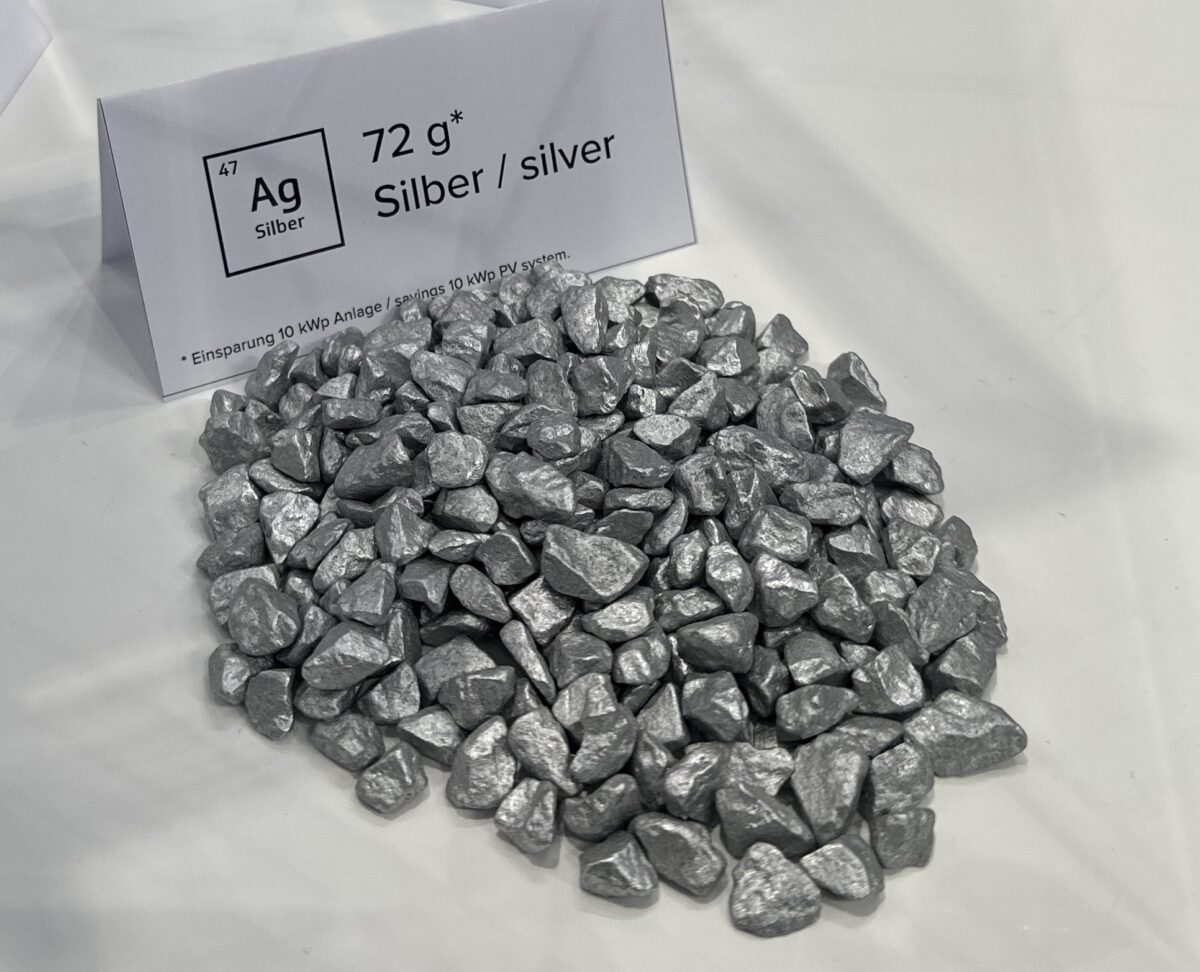
Silver paste currently accounts for more than 20% of the total cost of solar cells, creating a difficult environment for manufacturers already dealing with overcapacity, falling module prices and tight margins. Companies are exploring alternative metallization technologies and other ways to reduce silver consumption.
Recently, China-based metallization paste supplier DK Electronic Materials highlighted this trend, revealing that a gigawatt-scale customer will use its copper-rich paste for commercial production.
According to Radovan Kopecek, co-founder and director of the German research institute the International Solar Energy Research Center Konstanz (ISC Konstanz), an immediate transition to copper is technically and economically feasible. “Copper screen printing can be implemented quickly and we have received many inquiries about it,” he said pv magazine last month.
Ning Song, from the University of New South Wales (UNSW) in Australia, explained that even if using a high copper paste results in a small drop in efficiency, the price trade-off should be acceptable to manufacturers. “This trade-off is acceptable if it does not introduce new reliability risks. Ultimately, the decision depends on how well the efficiency loss can be compensated at the module and system level,” she said. pv magazine.
Research published last September found that the PV industry could be responsible for 40% of global silver demand by 2030.
This content is copyrighted and may not be reused. If you would like to collaborate with us and reuse some of our content, please contact: editors@pv-magazine.com.
