

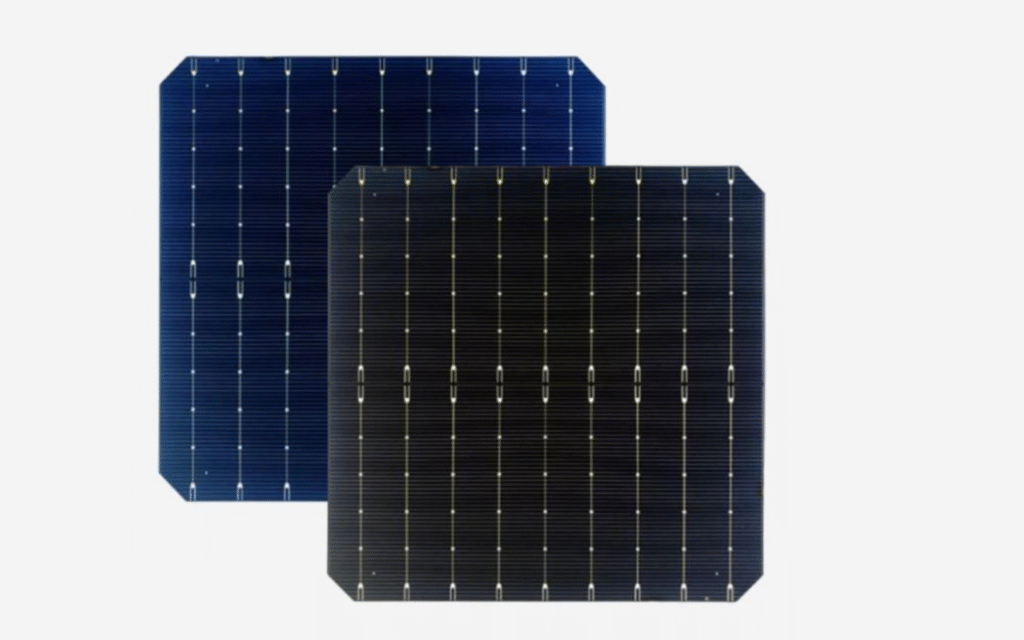
TOYO Co., Ltd. has announced a $357 million capital investment to build a 1.5 GW N-type heterojunction (HJT) solar cell manufacturing facility in the Houston metropolitan area.
The project brings together cell manufacturing with the existing module factory in Texas to secure Section 45X tax benefits and create a fully integrated, domestic content-compliant U.S. supply chain. The integration is designed to shorten production cycles from processing raw wafers to finished modules.
Engineering, facility design and procurement planning are already underway, with full project completion and first pilot production expected within the next 20 months. Leveraging existing infrastructure at the Houston site will reduce risks to greenfield development, streamline local permitting processes and allow the company to leverage its existing regional management team and labor pool, the company said.
This latest expansion represents TOYO’s official entry into domestic US cell manufacturing, a move strongly encouraged by the structural design of the Inflation Reduction Act (IRA). Under current U.S. framework guidelines, domestic cell production is eligible for direct Advanced Manufacturing Production Credits under Section 45X of the IRA, which provide $0.04 per watt for domestically produced solar cells. At full capacity of 1.5 GW, this single facility could generate up to $60 million in annual production tax credits.
In addition to the direct 45x benefits, the co-location of cell and module lines ensures that TOYO can provide developers with a product that fully meets the requirements of “domestic content”. This allows project buyers to secure the 10% domestic content bonus tax credit under the Investment Tax Credit (ITC) and Production Tax Credit (PTC) frameworks, providing a crucial competitive advantage as developers increasingly reject modules that rely on imported cells.
“Expanding into domestic cell production is the logical next step in our quest to create an integrated onshore solar supply chain, from polysilicon to panels,” said Takahiko Onozuka, Chairman and CEO of TOYO. “Co-locating 1.5 GW of HJT cell capacity at our Houston module site significantly optimizes our capital allocation and infrastructure expenditures.”
The announcement marks the next phase of a multi-year shift away from tariff-exposed regions. TOYO initially announced entering the US downstream market at the end of 2024 with a 2 GW panel assembly plant in Texas. However, as trade barriers developed, assembly alone proved insufficient to protect the manufacturer from geopolitical headwinds.
To ensure compliance with Foreign Enty of Concern (FEOC) regulations and AD/CVD trading regimes, the company has had to rework its upstream pipeline. Early this year, TOYO secured a strategic supply contract with an unnamed US polysilicon manufacturer. By using US-sourced polysilicon in cell production, the company aims to create a dual-source supply chain that can withstand changing US customs enforcement.
The company continues to defend its global footprint against trade friction. A coalition of domestic U.S. manufacturers has scrutinized TOYO’s international operations, alleging tariff avoidance. TOYO strictly denies these tax evasion claims in Ethiopia, countering that Ethiopia’s 4 GW cell facility operates transparently, while confirming that moving midstream cell operations to Houston serves as a hedge against trade disputes.
While TOYO expanded its North American footprint, it maintained a presence as an upstream partner in other Western markets. At the end of 2025, the manufacturer signed a solar cell supply agreement with French module manufacturer Voltec Solar, proving its ability to serve the European market with high-efficiency cells even as it anchored its primary capital expansion in the US Sunbelt.
The Houston facility will focus on the production of next-generation N-type heterojunction (HJT) cells. This HJT technology sets a new benchmark for power density by combining industry-leading conversion efficiencies, often greater than 25%, with very low annual degradation rates. Designed for maximum output, HJT cells feature improved bifaciality and temperature coefficients, supporting high power production even in extreme heat.
In the US market, where fixed infrastructure, land, labor and installation costs are high, maximizing efficiency is critical. TOYO’s high-density HJT technology reduces these predetermined system balance costs by generating more megawatt hours per hectare, directly improving project returns for developers.
The $357 million investment represents a substantial capital investment relative to TOYO’s current market capitalization of $579 million. In its first quarter 2026 financial results, TOYO posted revenues of $142.8 million, up 177% year-over-year, and generated record net income of $28.4 million, thanks to the scaling of its international cell lines.
The company expects to finance construction in Houston through a mix of internal cash flow, non-dilutive project financing, potential strategic partnerships and selective equity financing. The new facility is expected to create approximately 400 direct full-time manufacturing jobs in the Houston metropolitan area, with an estimated 1,200 additional jobs in the regional supply chain.
