

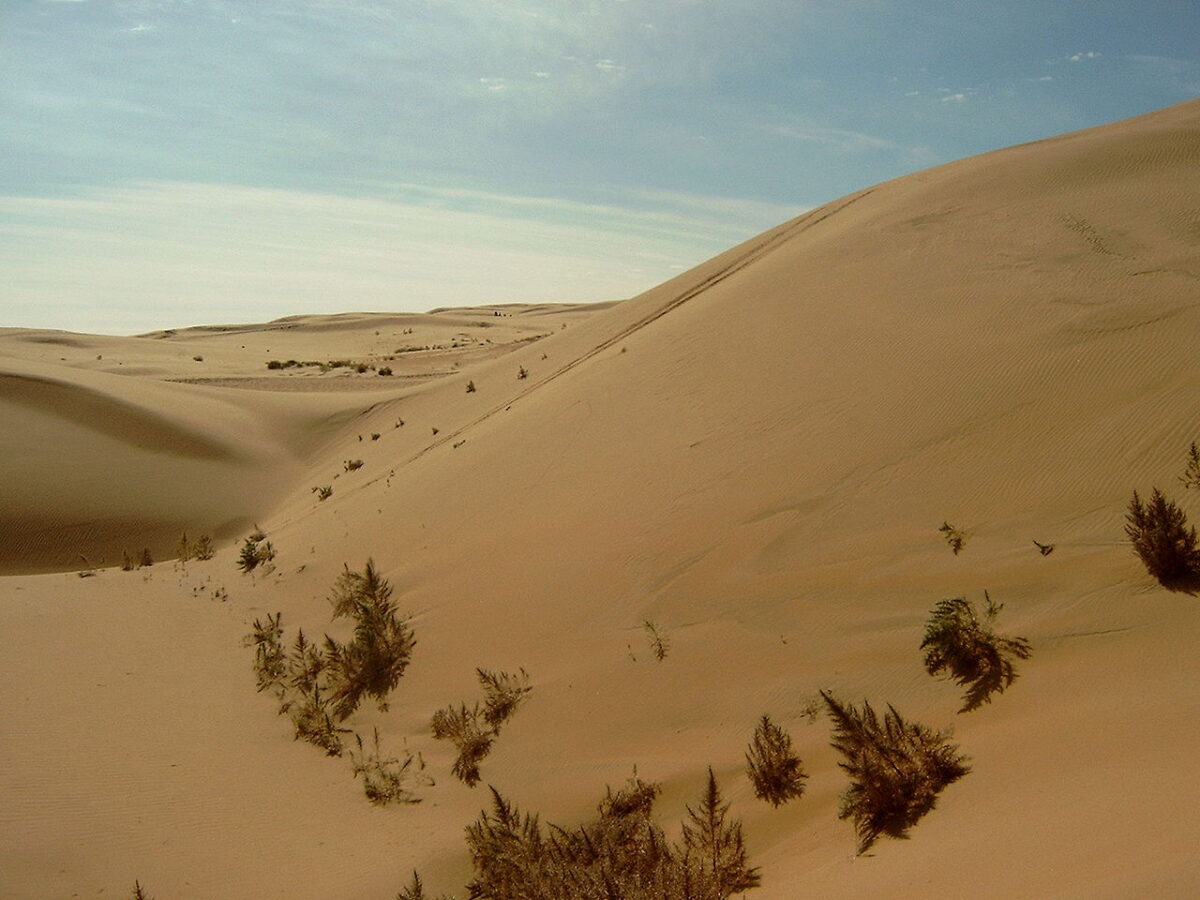
A two-year field study at a 100 MW photovoltaic plant in semi-arid Inner Mongolia combined ground-based sensors, radiation measurements and UAV thermal imaging to quantify how large-scale PV installations change local air temperature, surface temperature and energy balance compared to nearby non-PV areas. The results show consistent site-scale warming of 0.8 C.
A research team from China conducted a two-year field study to assess how large-scale photovoltaic (PV) farms affect local climate conditions, focusing on air temperature, surface temperature and surface radiation balance. The observation campaign took place from 2022 to 2024 in a 100 MW solar PV plant in a semi-arid desert area in Inner Mongolia.
The researchers combined in situ meteorological measurements, surface radiation observations and unmanned aerial vehicle (UAV)-based thermal infrared imaging to quantify changes in air temperature, land surface temperature and surface energy balance. By comparing conditions within the PV plant and in nearby non-PV reference areas, they assessed how the PV infrastructure changes radiant fluxes and heat exchange processes in arid environments.
The dataset provided high-resolution evidence of how utility-scale PV deployment can alter local thermal regimes and energy distribution in arid and semi-arid landscapes, providing insight into the broader environmental impacts of rapid solar expansion.
“Our research aims to quantify the seasonal and daily impact of PV deployment on surface air temperature; to characterize the fine-scale spatial heterogeneity of land surface temperature (LST) within and around PV arrays using UAV-based thermal imaging; and to diagnose the radiative and thermodynamic mechanisms underlying PV-induced warming by combining ground-based and airborne observations,” the researchers explained.
During the study period, a network of temperature sensors was deployed, both within the PV plant and at a nearby reference location approximately 10 km away, to capture background conditions unaffected by solar infrastructure. These instruments were installed at a standard height of 2 m above ground level and recorded air temperature at 15-minute intervals, allowing high temporal resolution comparisons between the PV and non-PV environments.
In addition to long-term temperature monitoring, targeted radiation measurements were carried out during an intensive field campaign in July 2023. This campaign used instrumented observation towers placed in the PV field and at a reference location approximately 2 km away, allowing the researchers to directly compare radiation fluxes under similar meteorological conditions.
To complement the point-based measurements, land surface temperature patterns were further investigated using UAV-based thermal infrared imagery on July 29, 2023. This approach provided high-resolution spatial mapping of the surface thermal conditions of both the PV plant and adjacent non-PV areas, capturing small-scale heterogeneity that ground sensors alone could not resolve, the research group said.
The results showed a statistically robust heating signal associated with the PV installation. Over the two-year observation period, the PV farm showed an average air temperature increase of 0.8 C compared to the reference site, with warming observed consistently in all seasons. The study further revealed an asymmetry in daily temperature changes: increases in daily minimum air temperatures were greater than those in daily maximum temperatures, leading to a reduction in daily temperature range by 1.9°C compared to non-PV areas.
Consistent with these findings, UAV-based thermal maps revealed elevated land surface temperatures within the PV field, ranging from 0.3 C to 4.1 C over adjacent non-PV areas. The radiation measurements also indicated a positive disturbance of the surface energy balance, with the average daily net radiation in the PV area increasing by 8.3 W m². This improvement was especially pronounced during the day, when net radiation increased by as much as 18.5 W m2, highlighting the role of PV infrastructure in altering local radiative and thermal dynamics.
“This increase in net radiation was mainly due to a decrease in albedo, resulting in 24.6 W m2 more net shortwave radiation,” the team said. “The PV park increased the outgoing longwave radiation by 6.1 W m2 during the day and by 4.6 W m2 at night, which was significantly lower than the increased net shortwave radiation.”
The research was presented in “Sustained site-scale warming associated with solar photovoltaic installations”, published in the Journal for Environmental Management.“These findings underscore the need to consider potential ecological tradeoffs in future solar energy deployment strategies,” the scientists concluded.
Researchers from China’s Inner Mongolia University of Finance and Economics, Beijing University, Inner Mongolia Institute of Water Resources Research and Inner Mongolia Agricultural University.
This content is copyrighted and may not be reused. If you would like to collaborate with us and reuse some of our content, please contact: editors@pv-magazine.com.
