

The financing of large-scale BESS in the UK and Europe has evolved significantly in recent years, but challenges remain, particularly around the availability of tolls and fixed income products.
That’s one of the key takeaways from the conversations we’ve had with event speakers coming to the Energy Storage Summit 2026 in London next week, February 24-25, including executives from Fidra Energy, Kona Energy, Triple Point, Danske Commodities and ion Ventures.
This is a shortened version of a pan-European-looking article that originally appeared on our sister site Energy-Storage.new (Premium access required).
Evolution of the European market
Britain ended 2025 with over 12 GWh of operational BESS capacity, according to our internal data from Solar Media Market Research’s Battery Storage: UK Pipeline & Completed Assets Database Report. It is Europe’s leading market, but the sector is becoming increasingly international.
Many British developers and operators have moved abroad to less saturated markets, and the European market as a whole has matured enormously, explains Ariane Brunel, investment director at finance company Triple Point.
“The European energy storage market is at a crucial stage of maturity and has transitioned from a niche technology to an increasingly mainstream infrastructure asset,” she says.
Growing lender and investor confidence, improved technological performance and more sophisticated income stacking strategies have driven this, she adds.
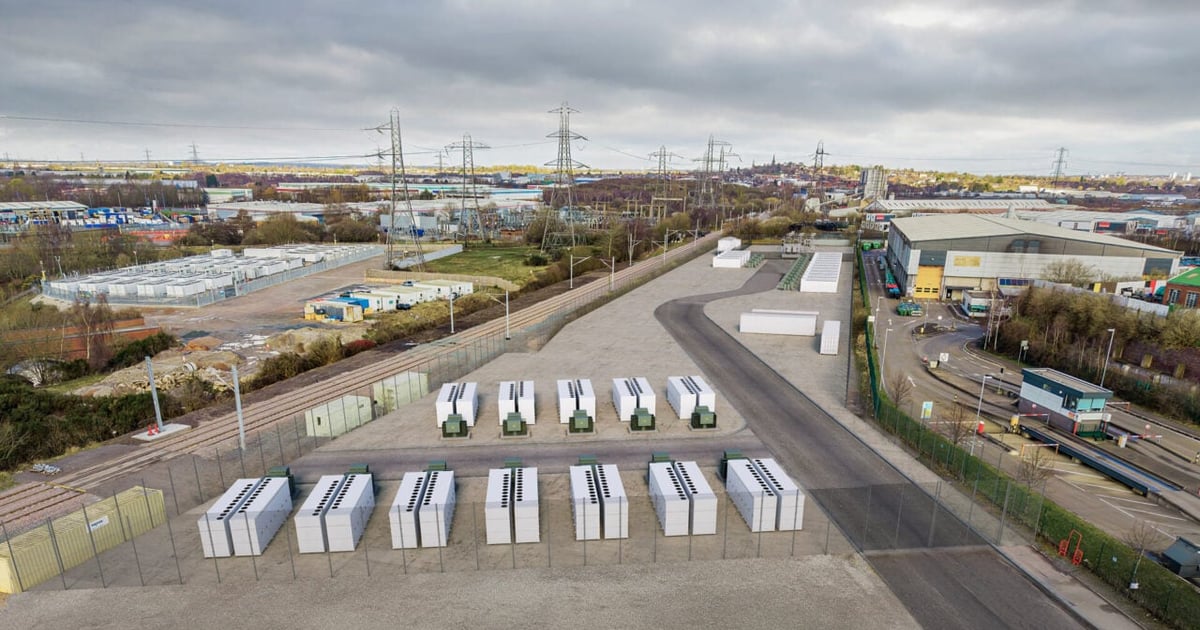
Chris Elder, CEO of Fidra Energy, adds that longer guarantees from BESS providers allow banks to provide longer debt terms, reducing the cost of capital for the sector. Fidra is building the 1.4GW/3.1GWh Thorpe Marsh project in Britain, one of the largest on the continent.
Triple Point’s Ariane Brunel adds that the UK finance space has moved from being dominated by a relatively small group of specialist lenders to seeing a marked increase in the number of participants.
Tolls and products that guarantee revenue
In addition to conventional tolls, there are broader products available that guarantee revenue, says Rimshah Javed, principal founder at Danske Commodities, one of Europe’s largest energy and gas trading companies.
“Merchant and floor deals are quite well understood at this point, and we are increasingly seeing tolls, barter transactions and virtual products with new entrants such as corporations. Overall, the industry is good at collaborating on customized and unique offtake structures,” she says.
The trend is now a few years old, and in that time there has also been an evolution in the extent to which lenders rely on these structures.
Brunel says: “For debt-financed projects, lenders initially required a minimum level of contracted revenue – often around 50% of expected cash flows, typically supported by floor mechanisms. As confidence in the asset class grew, this requirement weakened, with many financings accepting significantly greater exposure to traders and, in some cases, little or no contracted long-term revenue beyond what could be offered under a capacity market or optimization agreement, if at all.”
However, the 50% contracted revenue is still around the sweet spot for large-scale financing, at least for Fidra Energy in Britain, Elder says.
But as sources in other European markets have said, Elder says there is more demand than supply for fixed income offerings for BESS.
“The market is still relatively thin for people who can provide reasonable amounts of tolls and floors. It’s definitely a risk to the industry,” he says.
New services for BESS
Hassen Bali, co-founder and director of developer ion Ventures, says he expects inertia to emerge on a large scale as a new application for BESS.
Andy Willis, founder and CEO of developer Kona Energy, adds that these types of services will be accurately valued by the market over time.
“Kona continues to believe that operability revenues remain significantly undervalued by both the market and many optimizers. We expect to see significant increases in the use of BESS assets for non-energy services beginning in 2027, as system needs evolve and the value of stability, voltage and other operability products is more clearly recognized,” he says.
Raster and LDES
At the time of writing this article, the UK’s electricity interconnection reform is being lamented by developers and owner-operators. After 2027, no one is sure of the date of their connection to the electricity grid, making financing impossible for them, a source said.
That has brought pipeline financing and project mergers and acquisitions to a virtual standstill. However, once these dates become clear, sources expect a rebound in dealmaking, hopefully within a few months.
