
Close Menu
  • News
  • Industry
  • Solar Panels
  • Commercial
  • Residential
  • Finance
  • Technology
  • Carbon Credit
  • More
    • Policy
    • Energy Storage
    • Utility
    • Cummunity
What's Hot

A deep learning model tracks the status of the EV battery with high precision

March 6, 2026

Mitsubishi Electric Trane announces new heat pump line for hydronic heating – SPE

March 6, 2026

Origis is developing a 413 MW solar portfolio in West Texas

March 6, 2026
Facebook X (Twitter) Instagram
Solar Energy News
Friday, March 6
  • News
  • Industry
  • Solar Panels
  • Commercial
  • Residential
  • Finance
  • Technology
  • Carbon Credit
  • More
    • Policy
    • Energy Storage
    • Utility
    • Cummunity
Solar Energy News
Home - News - University of Maryland to develop sustainable energy systems for ocean monitoring systems
News

University of Maryland to develop sustainable energy systems for ocean monitoring systems

solarenergyBy solarenergyJanuary 3, 2025No Comments2 Mins Read
Facebook Twitter Pinterest LinkedIn Tumblr Email
Share
Facebook Twitter LinkedIn Pinterest Email

University of Maryland to develop sustainable energy systems for ocean monitoring systems


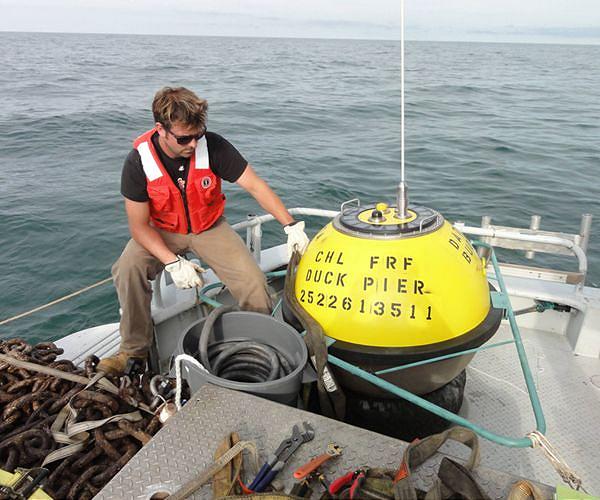
University of Maryland researcher Stephanie Lansing has been awarded $7.8 million by the Defense Advanced Research Projects Agency (DARPA) to lead the development of a biologically powered energy system aimed at transforming power generation for ocean monitoring equipment worldwide.

Today’s ocean monitoring devices, essential for understanding marine ecosystems, tracking climate change, and maintaining national security, rely heavily on lithium-ion batteries or extensive underwater cables for power. Lansing’s groundbreaking project aims to replace these conventional systems by harnessing microorganisms and specialized bacteria to fuel a marine microbial energy source that can provide a stable 10 watts of power for more than a year.

“This unique collaboration of interdisciplinary experts will deliver a bio-inspired system that has breakthrough potential to deliver direct electrical current to enhance sensing capabilities while protecting and reducing environmental impact through the use of this unique bio- energy system,” explains Professor Lansing. in UMD’s Department of Environmental Science and Technology.

The system, known as the Persistent Oceanographic Device Power (PODPower), uses an advanced mechanism that collects ocean microbes and organic matter in a specialized fermentation chamber. Bacteria in this chamber preprocess the material into an efficient ‘fuel’ for other bacteria that colonize the electrodes of the microbial fuel cell, generating usable electricity.

Key design features include a fish gill-inspired catch net, a corkscrew-shaped auger for transporting organic material and a dual cathode system to improve energy yield. These innovations are expected to overcome the limitations of previous microbial fuel cell technologies.

See also  Entergy and NextEra Energy Resources enter into agreement for up to 4.5 GW of new solar + storage

PODPower is funded under DARPA’s BioLogical Undersea Energy (BLUE) program and joins initiatives to exploit ocean biomass for sustainable energy solutions. In addition to the $7.8 million allocated for Phase 1 development through 2026, an additional $3.4 million could be allocated for Phase 2, aimed at generating 100 watts of power and deploying systems in multiple environments.

The project includes collaboration with experts from Battelle, George Washington University, Harvard University, UMD Baltimore County’s Institute of Marine and Environmental Technology (IMET), James Madison University, Johns Hopkins University, University of Delaware and Yokogawa Corporation of America.


Source link

develop Energy Maryland monitoring Ocean Sustainable systems University
Share. Facebook Twitter Pinterest LinkedIn Tumblr Email
solarenergy
  • Website

Related Posts

A deep learning model tracks the status of the EV battery with high precision

March 6, 2026

Origis is developing a 413 MW solar portfolio in West Texas

March 6, 2026

The technical interface makes perovskite solar cells ready for the market

March 5, 2026
Leave A Reply Cancel Reply

Don't Miss
News

New Jersey starts the program to implement 2 GW of energy storage by 2030

By solarenergyAugust 23, 20250

A storage project from Arevon. Government Phil Murphy On August 22, a bill signed that…

Full perovskite tandem PV cell based on carboranes achieves an efficiency of 27.2% – SPE

May 20, 2024

Small Business (SME) Guide To The US Voluntary Carbon Market

May 4, 2024

Digitizing the stakes: improving solar energy development

April 30, 2024
Stay In Touch
  • Facebook
  • Twitter
  • Pinterest
  • Instagram
  • YouTube
  • Vimeo
Our Picks

A deep learning model tracks the status of the EV battery with high precision

March 6, 2026

Mitsubishi Electric Trane announces new heat pump line for hydronic heating – SPE

March 6, 2026

Origis is developing a 413 MW solar portfolio in West Texas

March 6, 2026

New Jersey expands state community solar program by 3 GW

March 6, 2026
Our Picks

A deep learning model tracks the status of the EV battery with high precision

March 6, 2026

Mitsubishi Electric Trane announces new heat pump line for hydronic heating – SPE

March 6, 2026

Origis is developing a 413 MW solar portfolio in West Texas

March 6, 2026
About
About

Stay updated with the latest in solar energy. Discover innovations, trends, policies, and market insights driving the future of sustainable power worldwide.

Subscribe to Updates

Get the latest creative news and updates about Solar industry directly in your inbox!

Facebook X (Twitter) Instagram Pinterest
  • Contact
  • Privacy Policy
  • Terms & Conditions
© 2026 Tsolarenergynews.co - All rights reserved.

Type above and press Enter to search. Press Esc to cancel.