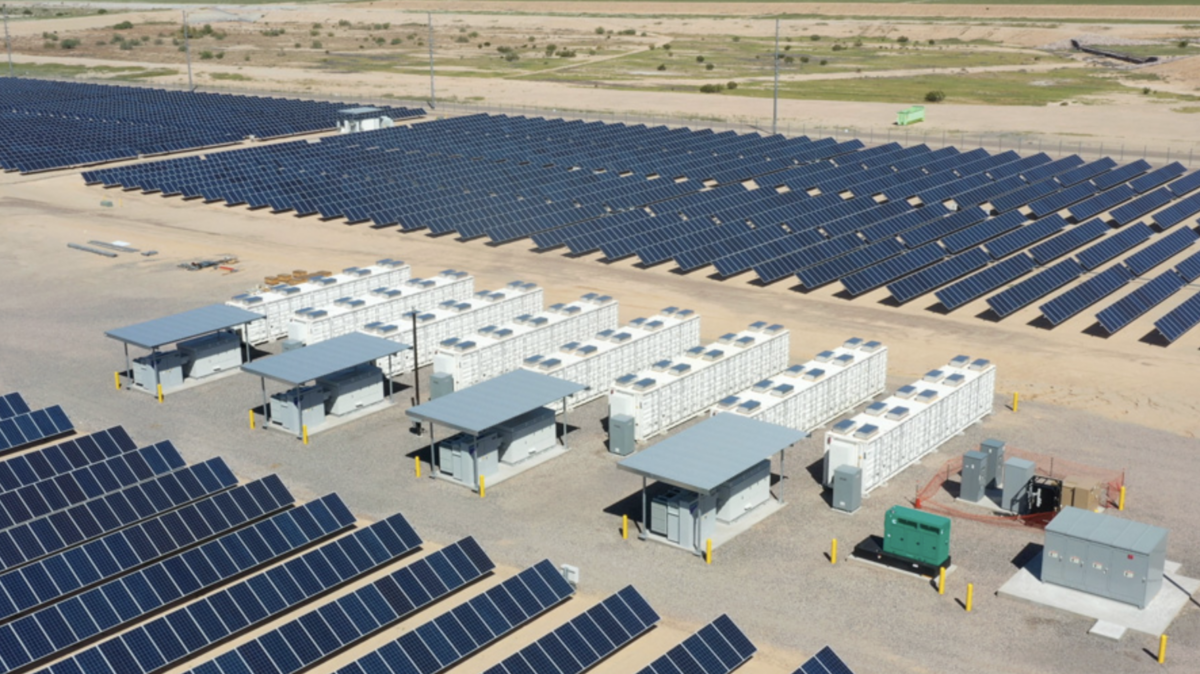
The U.S. Energy Information Administration (EIA) says battery storage capacity grew by 13,809 MW over the past twelve months and is expected to increase by another 22,053 MW as solar energy continues to dominate new utility-scale applications.
Tristan Rayner
Image: Arizona Public Service
EIA figures show that battery energy storage and solar are dominating capacity additions, while fossil fuel capacity continues to decline. Another 22 GW of storage is expected for the coming year.
U.S. battery energy storage capacity expanded by 13,809 MW in the past year, an annual growth rate of 59.4%, according to EIA data.
EIA data, reviewed by the SUN DAY Campaign, confirms that the surge in the storage sector that occurred in 2024, with battery capacity increasing by 66 percent in the calendar year, has continued well into 2025.
While the percentage growth on a smaller basis means that storage easily outpaces all other traditional generation sources, it also ranked second behind utility-scale solar in gross megawatts added, with solar capacity growing by 31,620 MW over the past year. By comparison, natural gas capacity added 3,417 MW over the same period, while nuclear added a negligible amount over the same period.
The EIA data shows that this trajectory will accelerate in the coming year. Developers of the management projects will bring an additional 22,053 MW of battery capacity online over the next 12 months, with a map showing the clustering of additions in Texas, California and other markets. While Arizona is showing growth, California and Texas together control more than 70 percent of the total national capacity.
This content is copyrighted and may not be reused. If you would like to collaborate with us and reuse some of our content, please contact: editors@pv-magazine.com.
Popular content