

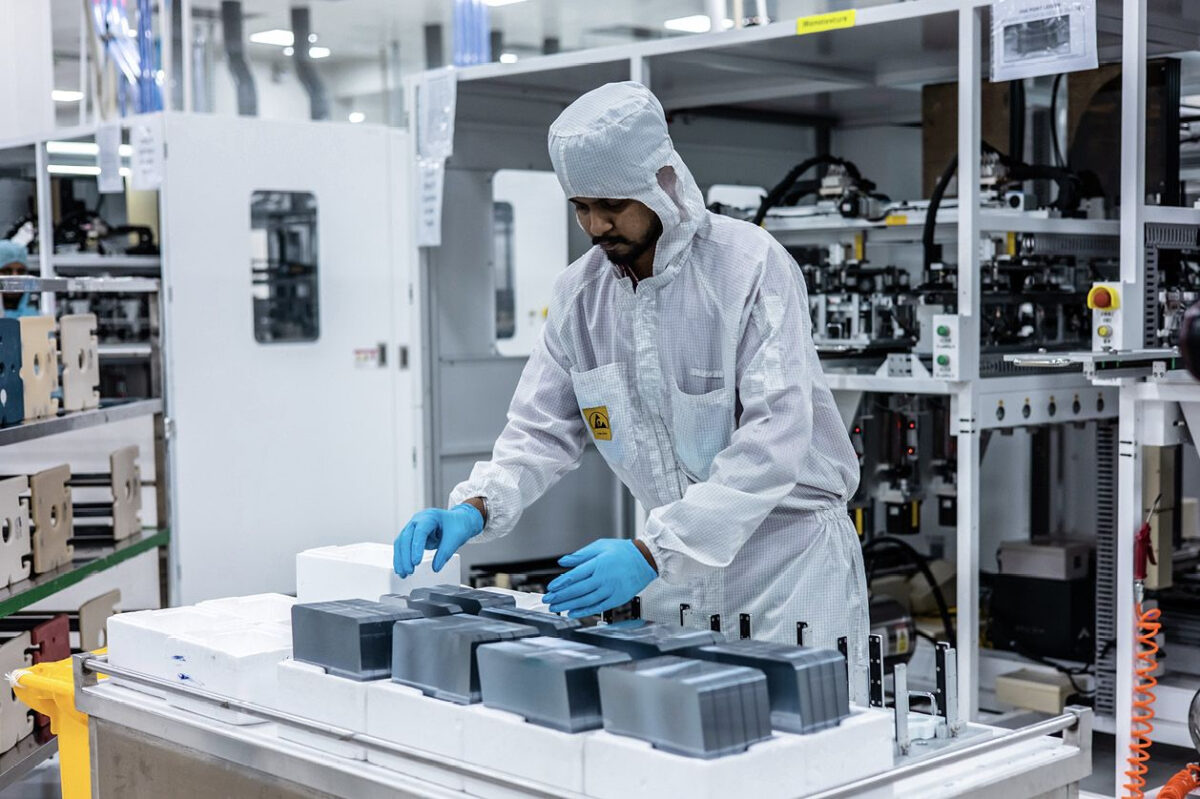
IRENA’s latest report shows that energy consumption and material intensity in the solar PV manufacturing supply chain will decrease until 2030. The analysis also shows that Vietnam remains more cost competitive than India due to lower electricity prices, while high energy and labor costs keep Australia and Germany less competitive.
A new report from the International Renewable Energy Agency (IRENA) says energy consumption at all stages of solar energy production will decline over the next five years.
The “Solar supply chain energy cost tool” report details the material, processing and assembly costs at each stage of solar panel production. It includes hiring data, country-specific data and cost forecasts through 2030 to calculate total module costs.
The report says polysilicon electricity consumption is expected to decline by 6% between 2025 and 2030, the same rate expected for solar wafers and blocks. Electricity consumption from solar cells is expected to decrease by 25% by the end of this decade, while electricity consumption from solar panels is expected to decrease by 20%, from 0.025 kWh/module in 2025 to 0.020 kWh/module in 2030.
Image: IRENA
IRENA expects that advances in areas such as cutting loss reduction will lead to an improvement in polysilicon-to-wafer conversion yield. It also predicts that a decrease in specific polysilicon consumption will result in thinner wafers and higher yields.
Silver consumption in solar cells is also expected to decline, by 5% per year to 25% by the end of the decade.
The report also predicts that the conversion efficiency of solar cells will increase by 3% by 2030, while the efficiency of solar modules will increase by 4%, both reaching 26% by the end of the decade. IRENA says this improvement will lead to solar cells that produce more power.
IRENA’s report also provides an overview of total module costs in Vietnam, India, Australia and Germany under different production scenarios.

Image: IRENA
IRENA says total module costs will remain relatively high if all components are manufactured domestically due to accumulated production costs and potentially higher input costs. The most notable decline in overall module costs occurs when more advanced components are imported, the report adds, especially given current market prices.
In the report’s conclusion, IRENA says Vietnam considers production costs comparable to those in China due to lower labor and electricity rates. India is less competitive than Vietnam due to higher average electricity prices, despite similarly low labor costs.
Australia’s higher production costs are driven by higher electricity, labor and construction and facilities costs, the IRENA report said, while in Germany those in Germany are attributed to high electricity rates, higher labor and construction costs and smaller economies of scale.
IRENA further says that its tool highlights the “problematic relationship between short-term market dynamics and long-term industry sustainability.” It explains that while cheap imports from China enable rapid deployment of solar energy, they are significantly below what is needed to maintain sustainable production levels, leading to financial pressure across the value chain.
“There is a need for a balanced approach: maintaining affordability to support solar adoption, but also ensuring fair market conditions for manufacturers – both nationally and internationally,” the report concludes. “Without some corrective action, there is a risk that market distortions within the solar industry will deepen.”
This content is copyrighted and may not be reused. If you would like to collaborate with us and reuse some of our content, please contact: editors@pv-magazine.com.
Popular content

