
Close Menu
  • News
  • Industry
  • Solar Panels
  • Commercial
  • Residential
  • Finance
  • Technology
  • Carbon Credit
  • More
    • Policy
    • Energy Storage
    • Utility
    • Cummunity
What's Hot

The UK government has urged to ensure that plug-in solar is properly regulated

July 22, 2026

Cornwall Insight cuts price ceiling forecast after Burnham’s VAT cut

July 22, 2026

SmartestEnergy, Greentech ink CfD PPA for the Kent solar project

July 22, 2026
Facebook X (Twitter) Instagram
Solar Energy News
Thursday, July 23
  • News
  • Industry
  • Solar Panels
  • Commercial
  • Residential
  • Finance
  • Technology
  • Carbon Credit
  • More
    • Policy
    • Energy Storage
    • Utility
    • Cummunity
Solar Energy News
Home - News - Warmtecycli are the durability of perovskiet cells
News

Warmtecycli are the durability of perovskiet cells

solarenergyBy solarenergyMarch 10, 2025No Comments3 Mins Read
Facebook Twitter Pinterest LinkedIn Tumblr Email
Share
Facebook Twitter LinkedIn Pinterest Email

Warmtecycli are the durability of perovskiet cells


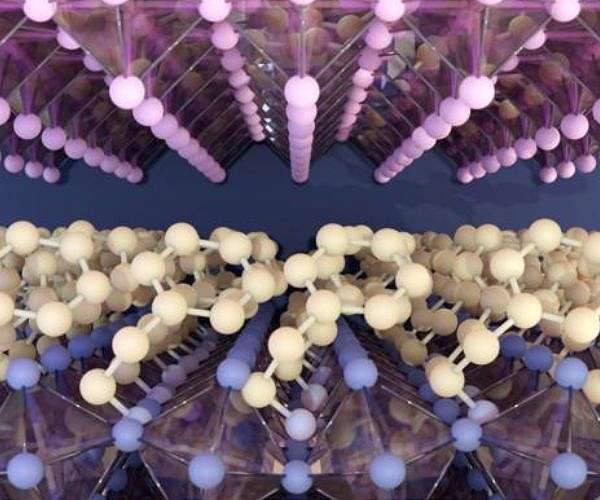
Perovskiet solar cells combine high efficiency with low production costs, but are confronted with challenges in retaining performance for decades of outside exposure. In an extensive overview published in Nature Reviews Materials, an international team under the leadership of Prof Antonio Abate investigated how repeated temperature cycles change cell microstructures and the interactions between layers. Their work indicates that thermal stress is a primary engine for demolition of material.

Metalhalide perovskites can achieve efficiency up to 27%, while they require minimal material and energy during the manufacture, a factor that could considerably reduce the costs of solar energy. Nevertheless, the ambition to obtain a stable energy yield for 20 to 30 years remains unimpaired for 20 to 30 years, which underlines the need for more robust materials.

The cooperation study brought together experts from China, Italy, Spain, the VK, Switzerland and Germany. In collaboration with Prof Meng Li from Henan University, the research documented many years of research that shows that drastic temperature fluctuations critically undermine the performance of metalhalhalic perovskiet solar cells.

In real-world conditions, solar modules are confronted with daily and seasonal temperature fluctuations. As Abate states, “when they are used outside, solar modules are exposed to the weather and the seasons”, indicating that even with effective moisture protection the cells in some regions pass significant thermal variations from minus 40 degrees Celsius to plus 100 degrees Celsius.

To simulate even stricter conditions, the study subject the cells to extreme temperature cycles of minus 150 degrees Celsius to plus 150 degrees Celsius repeatedly. Dr. Guixiang Li investigated how these cycles changed the microstructure of the perovskiet layer and disturbed the interactions with adjacent layers.

See also  Perovskite-CIGS tandem solar cells have technical potential to reach 26.69% efficiency

These severe temperature fluctuations cause stress in the perovskiet film and on the interfaces between uneven materials. As Abate explains: “In a perovskite -sun cell, there must be very different materials in perfect contact; unfortunately these materials often have a completely different thermal behavior,” which leads to poorer intermediate blades, local phase transitions and the diffusion of elements.

Based on these insights, the researchers propose measures to improve long -term stability. Such as Abate states, “Thermal stress is the key” and argues for improving the crystalline quality of the perovskiet structures and the use of suitable buffer layers to reduce the thermal trunk. The team also calls for standardized test protocols to enable effective comparisons of sustainability results.

Research report:Resilience routes for Halide Perovskiet Photovoltaïschen under Temperature Cycling


Source link

cells durability perovskiet Warmtecycli
Share. Facebook Twitter Pinterest LinkedIn Tumblr Email
solarenergy
  • Website

Related Posts

China imposes new consumption tax on PV cells and batteries as industry consolidation pushes

July 19, 2026

The US will investigate solar cells from Ethiopia for possible tariff evasion

July 17, 2026

Research shows POLO back-junction solar cells could outperform PERC in terms of cost in Europe – SPE

May 26, 2026
Leave A Reply Cancel Reply

Don't Miss
Energy Storage

Exide releases mobile 200 kWh, 400 kWh storage solutions – PV Magazine International

By solarenergyFebruary 25, 20250

The company said that the new product uses a maximum of four batteries of lithium…

Not enough U.S. solar panels are made for the federal government’s needs

December 16, 2024

A change in SBTi policy could increase carbon credit prices: TCX CEO

April 27, 2024

India reaches 63 GW of annual PV module production capacity

December 7, 2024
Stay In Touch
  • Facebook
  • Twitter
  • Pinterest
  • Instagram
  • YouTube
  • Vimeo
Our Picks

The UK government has urged to ensure that plug-in solar is properly regulated

July 22, 2026

Cornwall Insight cuts price ceiling forecast after Burnham’s VAT cut

July 22, 2026

SmartestEnergy, Greentech ink CfD PPA for the Kent solar project

July 22, 2026

Flexibility as an asset

July 22, 2026
Our Picks

The UK government has urged to ensure that plug-in solar is properly regulated

July 22, 2026

Cornwall Insight cuts price ceiling forecast after Burnham’s VAT cut

July 22, 2026

SmartestEnergy, Greentech ink CfD PPA for the Kent solar project

July 22, 2026
About
About

Stay updated with the latest in solar energy. Discover innovations, trends, policies, and market insights driving the future of sustainable power worldwide.

Subscribe to Updates

Get the latest creative news and updates about Solar industry directly in your inbox!

Facebook X (Twitter) Instagram Pinterest
  • Contact
  • Privacy Policy
  • Terms & Conditions
© 2026 Tsolarenergynews.co - All rights reserved.

Type above and press Enter to search. Press Esc to cancel.