

In this article co-authored by Dan Monzani, managing director, UK & Ireland, and Tom Betts, senior associate, at Aurora Energy Research, they walk us through the viable next steps for investment signals after zonal pricing was ruled out.
There are two respectable theories of change for decarbonising the British power system. The first is that, because we had allowed action to lag ambition, we needed a renewed and urgent sense of mission with all levers pressed forward urgently to the max.
Only a “war spirit” could catalyse government and industry sufficiently. And so, the UK’s “Clean Power 2030 Mission” targets an unprecedented and rapid build-out of renewables: up to 11GW of onshore wind, 22GW of offshore wind, and 24GW of solar all by 2030. Planning barriers are being targeted with legislative alacrity and the amount of eligible capacity in the Contracts for Difference (CfD) auction has been widened ambitiously. This is a nationwide sprint that touches every part of the system, across all technologies, and spans from transmission to distribution.
But the second theory of change is that you need a plan, some means of coordination, if you want to deliver such a complex transformation, at least without costs spiralling and the consensus fraying: in this theory, sprints are all well and good but ultimately this is a marathon where we need the different limbs of our mission moving in rhythm and synchroneity. As we prepare for CfD Auction Round 7, are we also approaching a pivot point where government and regulators will focus more on that second thesis: on reforming the system to integrate renewables, more than on cranking the CfD handle ever harder?
Beyond rising supply chain and financing costs, hidden integration costs are increasingly significant. For instance, CfDs added roughly £27 to annual household energy bills in 2024. That’s not a net addition – wind will also lower wholesale costs; we have roughly traded commodity for capital costs, meaning an orderly but quicker transition is roughly cost neutral. However, a disorderly transition – where system integration lags renewables – could add at least 15% to total system costs, based on Aurora’s modelling.
Where to build? What signals does the current system send developers?
We need more networks, but these cannot be deployed instantly, so one critical cost optimisation is a signal to investors where and when to build new wind and solar farms (and also flexible resources like batteries, but our focus here is renewable generation). Otherwise, we will continue with the increasingly expensive absurdity of supporting major projects with public subsidy, only to curtail them more than half the time.
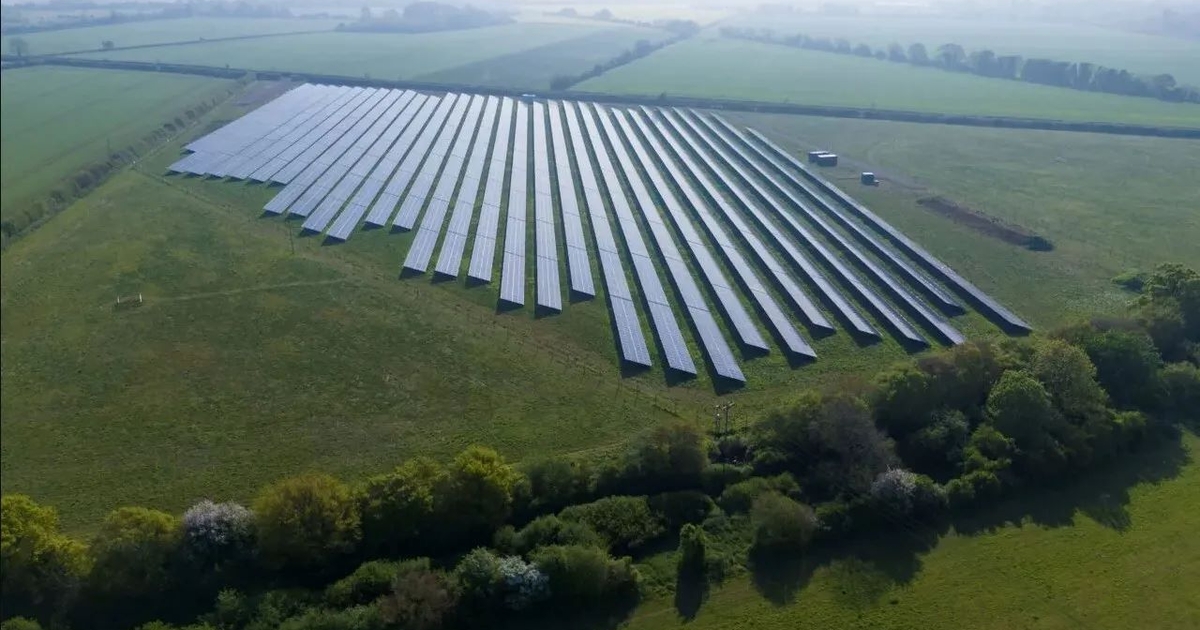
Britain’s strongest current locational signal is simply the availability of wind or sun. The CfD pays the same for each unit of power, wherever and whenever it is produced, so all else being equal, it rewards projects which maximise output. Developers have herded into the gustiest corners of Scotland and the brightest stretches of England to win auctions. But this underweights the integration costs incurred when many projects cluster in the same region (and so all produce power at the same time, not always when it is needed) and especially when done ahead of network reinforcement.
However, this “meteorological imperative” isn’t the only locational signal – and this is where it gets complicated and incoherent. There are counterproductive signals: until last year onshore wind was effectively banned in England. That moratorium has lifted, but plenty of English and Welsh projects are in areas with difficult planning approval. Offshore wind seabed leasing fees vary widely by area and when they were auctioned; they pay little heed to the societal value of developing those sites. Newer offshore projects in the relatively underexploited Irish Sea are saddled with very high seabed lease costs, whereas ScotWind projects (which would be immediately constrained the majority of the time if built now) have much lower fees to recoup.
Meanwhile some signals are missing. Most large transmission-connected generators receive firm access rights without financial penalty for later causing congestion. This means if a new wind farm contributes to a severe bottleneck, the wind farm itself bears little of that cost. A proposal to introduce such charges was considered by government but was ultimately shelved. Another gap is the lack of incentive for geographic diversity over herding projects into meteorological hotspots. Offshore wind farms in the Celtic Sea have wind patterns less correlated with the North Sea or Scotland, so when the north is becalmed, the south might still be breezy, and vice versa – better matching demand. Today’s market setup penalises these locations because they produce for slightly fewer hours overall.
The risk of getting these signals wrong is enormous. Aurora has modelled two scenarios out to 2035 to quantify this: first, where renewables deployment is uncoordinated (everyone builds in the “best” resource locations), we deploy ~89GW offshore wind but annual wind curtailment could reach 50TWh: that is wasted generation equivalent to about 15% of annual power consumption. Constraint costs hit £8 billion per year. Conversely, in a coordinated scenario where projects are steered to more diversified sites, curtailment in 2035 might drop to 21 TWh, costing £5 billion less. That would save almost enough to power the whole of Greater London.
How developers can navigate locational uncertainty
We now know that Ministers have concluded against zonal wholesale power prices as a locational signal due to the transitional disruption. So, Britain will retain a single but “reformed” national electricity price. Details are expected by the end of this year, but the Department for Energy Security and Net Zero (DESNZ)’s summer update indicates interest in two key tools: strategic spatial planning (due at the end of 2026) and network charges.
It is this second tool, particularly the uncertainty around Transmission Network Use of System (TNUoS) charges, with which investors need to grapple today. Generators pay TNUoS to cover the cost of the high-voltage transmission network. It varies by region: generators in parts of northern Scotland, far from demand centres, pay the highest TNUoS charges, whereas southern generators often receive credits for locating where the grid “needs” generation. In theory, TNUoS discourages new power stations in grid-constrained zones and encourages building where power is needed.
In practice navigating TNUoS is notoriously challenging. The charging methodology is impenetrably complex – NESO runs detailed load-flow models and contingency analyses with numerous assumptions about future grid investments and generation patterns to set tariffs. The methodology itself has been under constant review, with a slew of proposed modifications being debated. It’s unclear which of these modifications Ofgem will approve or on what basis Ofgem assesses them: is TNUoS primarily a way to recover network costs reliably or a proxy zonal price? The result for project developers is fog: their wind farm might incur, say, £5/kW/year in TNUoS charges under today’s rules, but that cost could swing dramatically over a 15-year asset life if the charging basis shifts, new cables are built, or policies change. This uncertainty dilutes the effectiveness of TNUoS as a signal and increases the overall project risk premium. In projects we are supporting today, this volatility is the difference between investable and loss-making.
So, how can developers and investors navigate this uncertain landscape?
-
Take a portfolio view. A company can spread renewable investments across different regions to hedge some TNUoS volatility naturally. Owning some projects in northern Scotland and others in England means that if charges are rebalanced between zones in the future, the company isn’t over-exposed to one outcome.
-
Understand the drivers. Insight into TNUoS calculations enables developers to be clear eyes about the real-world risks they are taking. The introduction of new HVDC cables bringing Scottish wind power south significantly alters the distribution of charges. By knowing these planned grid reinforcements, a developer can judge whether today’s high charge in their zone might ease in a few years once new infrastructure is in place – or vice versa.
-
Plan for a range of scenarios. Given the inherent uncertainty, prudent developers model their project economics under multiple TNUoS scenarios. NESO provides a five-year forecast of TNUoS tariffs each year which currently forms the basis for most financing cases. However, at Aurora, we use these models to run additional scenarios, offering probabilistic ranges for future charges based on reasonable real-world variation. By exploring best-case, worst-case, and central scenarios for locational costs, investors can ensure a project is still investable even if charges turn out at the realistic high end of forecasts. In short, robust investment cases should be resilient to most likely network outcomes, just as project due diligence routinely examines low demand and commodity price scenarios. Lenders are increasingly asking for this kind of assurance.
What is needed from policy makers?
Policy makers need to sharpen and stabilise locational signals to get closer to a cost efficient “coordinated” CP30 scenario. Developers ready to invest billions into clean energy require greater and clarity if we want reasonable pace and cost. Uncertainty has direct costs: if developers are unsure about future network charges or other locational policies, they have to build that into their CfD bids or invest elsewhere. Industry consensus is that policy-makers could implement a few practical changes:
-
Send signals only to those who can respond. Imposing volatile charges on existing assets does little good – a wind farm built five years ago cannot move because its region is now deemed less advantageous, but its lenders certainly will offer worse terms if the revenue available to repay capital is uncertain. Similarly, advanced projects with grid connections and planning permission due online before 2030 will often have passed the point of no return. Therefore, focus locational incentives on influencing new investment decisions. Any new locational signals should largely apply to future projects, guiding where new capacity is built without destabilising the economics of infrastructure that is already in place or nearly built.
-
Make signals clear and transparent. Opaque TNUoS calculations and endless reform processes mean developers don’t know what penalty or benefit a location will carry over their asset life. This undermines the purpose of a price signal. One approach could be to lock in TNUoS for a defined period at the point of investment. If a developer knows that for its first 15 years of operation, it will face a given charge, it can price that in with confidence. Clarity beats theoretical perfection in real world markets, even if not in a regulatory economist’s spreadsheet. The overarching goal is to deliver a locational incentive that is quantifiable at the time of a project’s Final Investment Decision.
-
Ensure signals reflect actual system needs and adapt over time. Locational signals should not be static; they should evolve as the system evolves, guided by planning tools like SSEP. If the strategic plan identifies that beyond a certain amount of wind in northern Scotland any additional capacity there yields diminishing returns, then financial signals need to point in the same direction. Importantly, that signal should be clear out into the future, reflecting grid build out, so developers can plan their pipeline across regions. A smart tariff would not treat the first and the fiftieth investment decision in a zone identically if system conditions have changed in between – but that must be foreseeable well in advance.
-
Act quickly and cohesively. The next few years will see multiple large CfD auction rounds to procure vast amounts of renewables. It is vital that uncertainties are reduced before these auctions, so that bidders internalise them. Delaying reforms risks locking in suboptimal siting and higher long-term costs. Yet moving quickly must be combined with moving together: DESNZ, NESO and Ofgem all have slightly different incentives, timelines and ways of working, which can lead to misalignment. Better coordination between all three is essential to expedite reforms coherently.
The energy transition races forward but we are not on the least-cost path. Having decided against radical wholesale market reform to incorporate locational signals into prices, the burden now rests on policy makers to use the planning and economic tools at their disposal to ensure an integrated, well-coordinated transition. The need for reform is urgent.
