

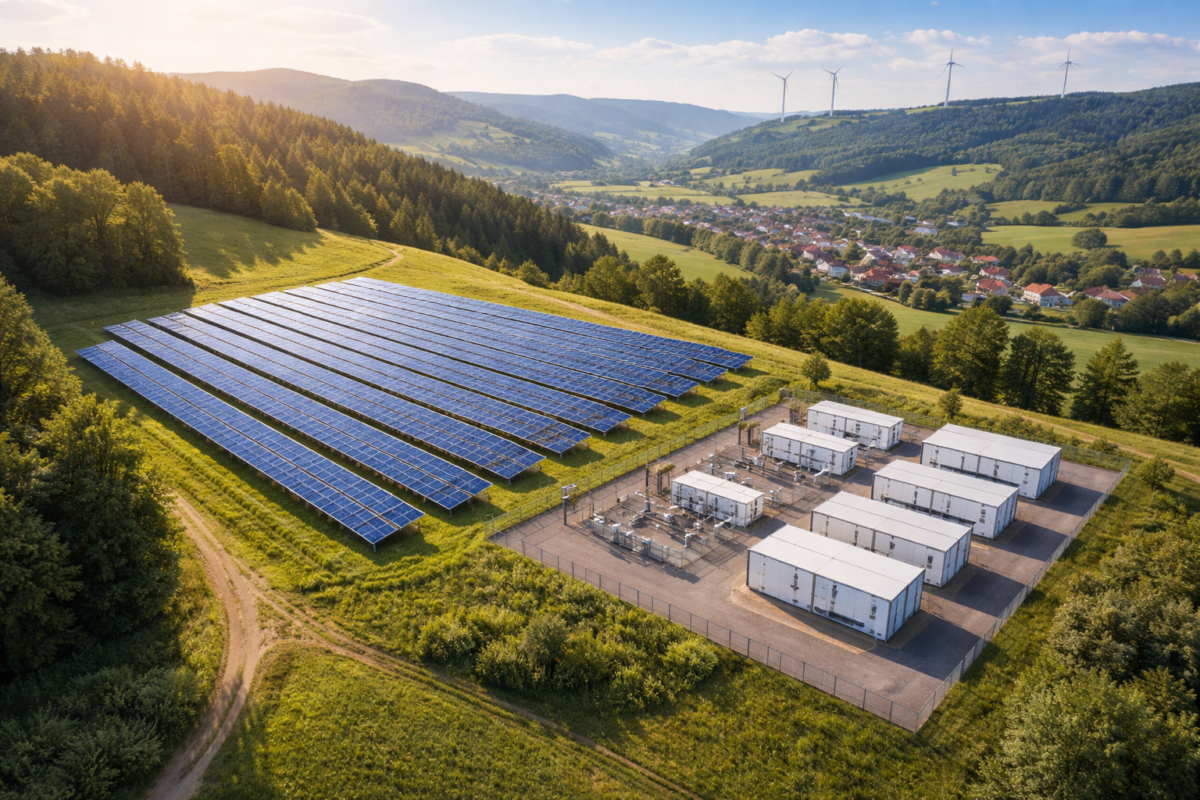
Europe’s hybrid solar-plus-storage projects are growing rapidly, but increasing complexity means that treating technical due diligence as a formality is now a serious risk. Rigorous, lifecycle-based technical due diligence (TDD) – covering financial, supply chain, digital and ESG factors – is essential to ensure project reliability, investor confidence and a resilient clean energy transition.
The European energy transition is accelerating faster than anyone predicted. Utility-scale solar and battery storage are no longer separate technologies; they are increasingly deployed as integrated hybrid systems that are expected to deliver robust capacity, grid services and long-term reliability. But as these projects become more complex, the industry still views engineering diligence as a box-ticking exercise. That mentality becomes a liability.
Hybrid PV-plus-storage installations are not simple assets. They are multi-layered systems in which electrical, mechanical, digital and environmental factors interact in ways that can increase risk. A single inverter failure in a DC-coupled system can shut down both the solar panel and the battery at the same time. A small software vulnerability can expose an entire site to cyber attacks. A misjudged assumption about battery degradation can undermine a project’s financial model. These are not theoretical risks; they happen today.
That’s why technical due diligence (TDD) is more important than ever. At its core, TDD is an objective technical audit: a neutral verification that a project is sound, safe and capable of delivering the performance investors expect. But in today’s market it has become something bigger. It is now one of the most powerful tools we have to protect long-term value, ensure finance and maintain confidence in Europe’s clean energy build-out.
The first reason is financial in nature. Investors are increasingly exposed to uncertainty about performance, supply chain variability and regulatory pressures. A robust TDD provides the technical certainty needed to unlock financing. It validates return estimates, performs stress tests and quantifies risks in a way that lenders can trust. Early detection of design flaws or equipment problems is not only good engineering practice, it is also good economics. Repairing a defect during construction is ten times cheaper than repairing it in the field.
The second reason is the quality of the supply chain. The European solar and storage markets depend on global production networks that vary widely in transparency and reliability. Without rigorous supplier due diligence: financeability checks, factory audits, traceability and independent testing, projects risk being built with components that may not withstand real-world conditions. Extreme heat, humidity, hail and wind are already pushing equipment beyond its limits. As climate volatility increases, so will the consequences of poor purchasing decisions.
The third reason is digitalization. Modern hybrid installations are closely interconnected, with constant data flows between inverters, battery management systems, SCADA platforms and network operators. This connectivity brings efficiency, but also vulnerability. Frequent firmware updates, secure communications protocols and compliance with emerging EU regulations such as the Cyber Resilience Act are essential to protect critical infrastructure.
Finally, Europe needs consistency. Until now, technical due diligence practices have varied widely across countries, consultants and project types. That inconsistency creates uncertainty for investors and delays implementation. A common European framework – one that is flexible enough to apply across technologies and climates, yet rigorous enough to reduce risk – is essential for scaling hybrid PV-plus storage with confidence.
That is why SolarPower Europe has launched the new “Technical Due Diligence Best Practice Guidelines for Hybrid Solar PV and Battery Energy Storage Systems.” The goal is not to create another checklist. It aims to provide a lifecycle-based framework that strengthens project quality from pre-development through decommissioning. It integrates environmental and social governance, supply chain sustainability, cybersecurity and financial risk analysis into one coherent approach. And it prepares projects for the wave of ESG and reporting requirements that will shape Europe’s energy sector over the next decade.
The energy transition depends on trust – trust that the assets we build today will perform tomorrow. We earn that trust through technical due diligence. As hybrid solar energy becomes the backbone of the future European energy system, rigorous, transparent and forward-looking TDD is no longer optional. It forms the basis for a resilient, profitable and sustainable clean energy future.
Author: Niki Fodor, project employee at SolarPower Europe
The views and opinions expressed in this article are those of the author and do not necessarily reflect those of the author pv magazine.
This content is copyrighted and may not be reused. If you would like to collaborate with us and reuse some of our content, please contact: editors@pv-magazine.com.
