
Close Menu
  • News
  • Industry
  • Solar Panels
  • Commercial
  • Residential
  • Finance
  • Technology
  • Carbon Credit
  • More
    • Policy
    • Energy Storage
    • Utility
    • Cummunity
What's Hot

Growth in solar and wind capacity slowed last year, analysis shows

March 6, 2026

Tigo introduces a 725 W optimizer for powerful solar panels

March 6, 2026

Fox ESS, SMA, SAX Power, Kostal and BYD impress with high efficiency – SPE

March 6, 2026
Facebook X (Twitter) Instagram
Solar Energy News
Friday, March 6
  • News
  • Industry
  • Solar Panels
  • Commercial
  • Residential
  • Finance
  • Technology
  • Carbon Credit
  • More
    • Policy
    • Energy Storage
    • Utility
    • Cummunity
Solar Energy News
Home - Solar Industry - A closer look at backsheet degradation in desert environments
Solar Industry

A closer look at backsheet degradation in desert environments

solarenergyBy solarenergySeptember 20, 2024No Comments3 Mins Read
Facebook Twitter Pinterest LinkedIn Tumblr Email
Share
Facebook Twitter LinkedIn Pinterest Email

A Qatari research group has analyzed the performance of polyethylene terephthalate backing sheets in real outdoor test conditions in desert areas and identified the main causes leading to degradation. These include prolonged exposure to high ultraviolet radiation, high operating temperatures and relative humidity.

September 19, 2024 Emiliano Bellini

Researchers from Hamad Bin Khalifa University (HBKU) in Qatar have conducted an assessment of the degradation of polyamide (PA) and polyethylene terephthalate (PET) backsheets used in PV modules installed in desert climates, where solar radiation and ultraviolet (UV) ) radiation have an influence. approximately 50% higher compared to non-desert environments.

The analysis focused on the origin, propagation, chalking and delamination of the backplate. “In this study, extensive research was done on PA and PET chalk powder to gain a better understanding of the failure mechanism and powder composition,” the researchers specify.

The tests were carried out at HBKU’s Outdoor Test Facility (OTF) in Doha, where in summer months the monthly average ambient temperature is 31 C, the average module temperature is 38 C and the relative humidity (RH) is approximately 50%, while in winter months these values ​​are 40 C, 70 C and 65% respectively.

“Furthermore, a high surface albedo of 40% was measured at the OTF,” the group explained. “This high albedo value is expected to enhance the UV radiation received at the backplane of the PV module due to multiple scattering of the reflected radiation.”

Ground-mounted radiation sensors were used to measure solar radiation, ambient air temperature, and relative humidity. The PV system included two types of coextruded PA-based backsheets, named PA1 and PA2, and two types of PET-based backsheets, named PET1 and PET2. Through a scanning electron microscope (SEM) and energy dispersive X-ray spectroscopy (EDS), the group analyzed powder collected from affected backing sheets.

See also  Solitek launches anti-glare black bifacial solar modules

The analysis revealed that the main driving forces behind backsheet failure were the combination of high operating temperatures, thermal cycling, relative humidity and prolonged exposure to UV radiation.

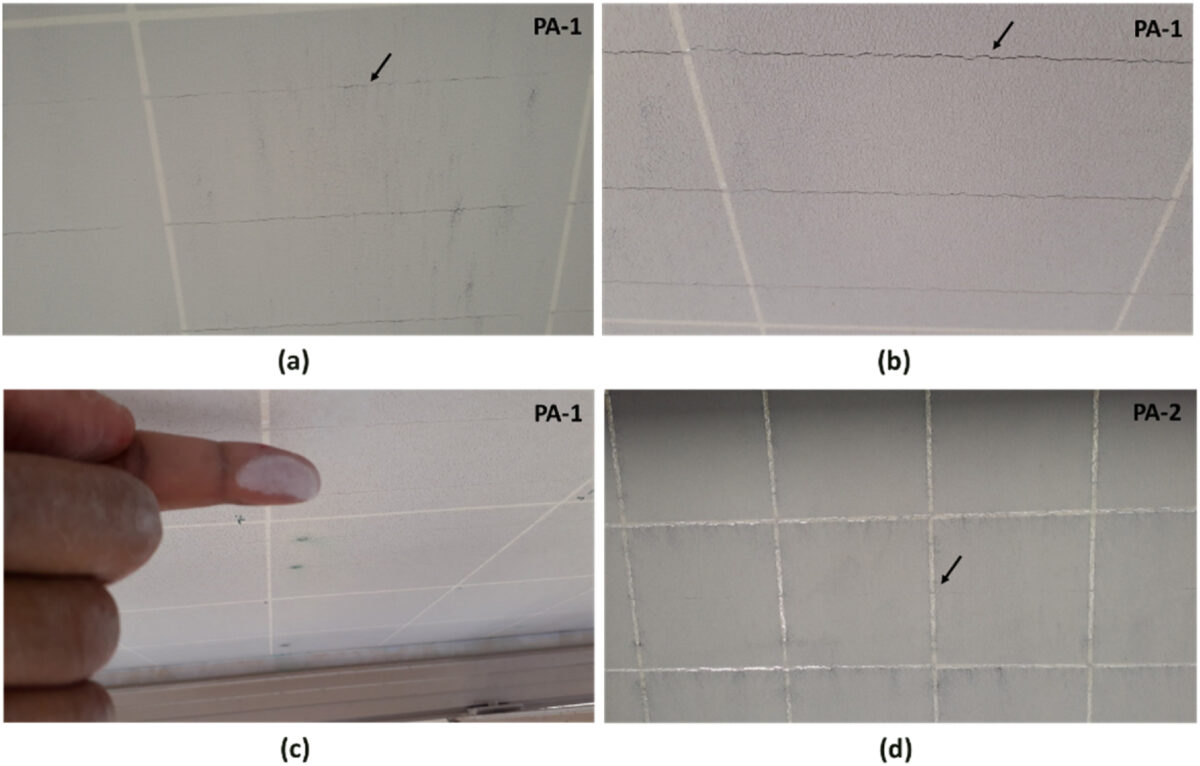
It also showed that all 48 PV modules with PET-1 and 8 modules with PET-2 showed backsheet degradation, with the PET-1 samples showing crack propagation and high crack density and PET-2 samples only showing chalking without cracks in the backsheet. “The elevated temperature measured at the junction box was found to increase the yellowness of the PET-1 backsheet, resulting in the loss of tensile strength of the backsheet material,” the academics explained.

They also found that the PA backsheets had green spots composed of antlerite, a greenish hydrous copper sulfate mineral, and said the presence was due to the reaction of the PA-1 chalk powder with the solar cells’ interconnections.

Their findings are available in the study “Degradation of the backplate materials of photovoltaic modules in desert climate”, published in Solar energy materials and solar cells.

This content is copyrighted and may not be reused. If you would like to collaborate with us and reuse some of our content, please contact: editors@pv-magazine.com.

Popular content

Source link

backsheet closer degradation desert environments
Share. Facebook Twitter Pinterest LinkedIn Tumblr Email
solarenergy
  • Website

Related Posts

Tigo introduces a 725 W optimizer for powerful solar panels

March 6, 2026

Freight costs are rising due to military attacks in the Middle East

March 6, 2026

How to address imbalance datasets in solar panel dust detection

March 5, 2026
Leave A Reply Cancel Reply

Don't Miss
News

Chaberton Energy cuts ribbon at 3.2 MW Maryland Community Solar Project

By solarenergyJuly 10, 20250

Celebrating the flow of new community kisses in Howard County, Maryland, is (from left to…

Combining hybrid wind-solar energy with pumped hydropower in rural electrification

September 7, 2024

Zelestra will build Gem City Solar in Ohio | Projects weekly

February 3, 2026

Anker Solix launches F3000 Portable Power Station for Homeback Use – PV Magazine International

June 6, 2025
Stay In Touch
  • Facebook
  • Twitter
  • Pinterest
  • Instagram
  • YouTube
  • Vimeo
Our Picks

Growth in solar and wind capacity slowed last year, analysis shows

March 6, 2026

Tigo introduces a 725 W optimizer for powerful solar panels

March 6, 2026

Fox ESS, SMA, SAX Power, Kostal and BYD impress with high efficiency – SPE

March 6, 2026

Longi wins tender for 800 MW Hexi solar panels – SPE

March 6, 2026
Our Picks

Growth in solar and wind capacity slowed last year, analysis shows

March 6, 2026

Tigo introduces a 725 W optimizer for powerful solar panels

March 6, 2026

Fox ESS, SMA, SAX Power, Kostal and BYD impress with high efficiency – SPE

March 6, 2026
About
About

Stay updated with the latest in solar energy. Discover innovations, trends, policies, and market insights driving the future of sustainable power worldwide.

Subscribe to Updates

Get the latest creative news and updates about Solar industry directly in your inbox!

Facebook X (Twitter) Instagram Pinterest
  • Contact
  • Privacy Policy
  • Terms & Conditions
© 2026 Tsolarenergynews.co - All rights reserved.

Type above and press Enter to search. Press Esc to cancel.