

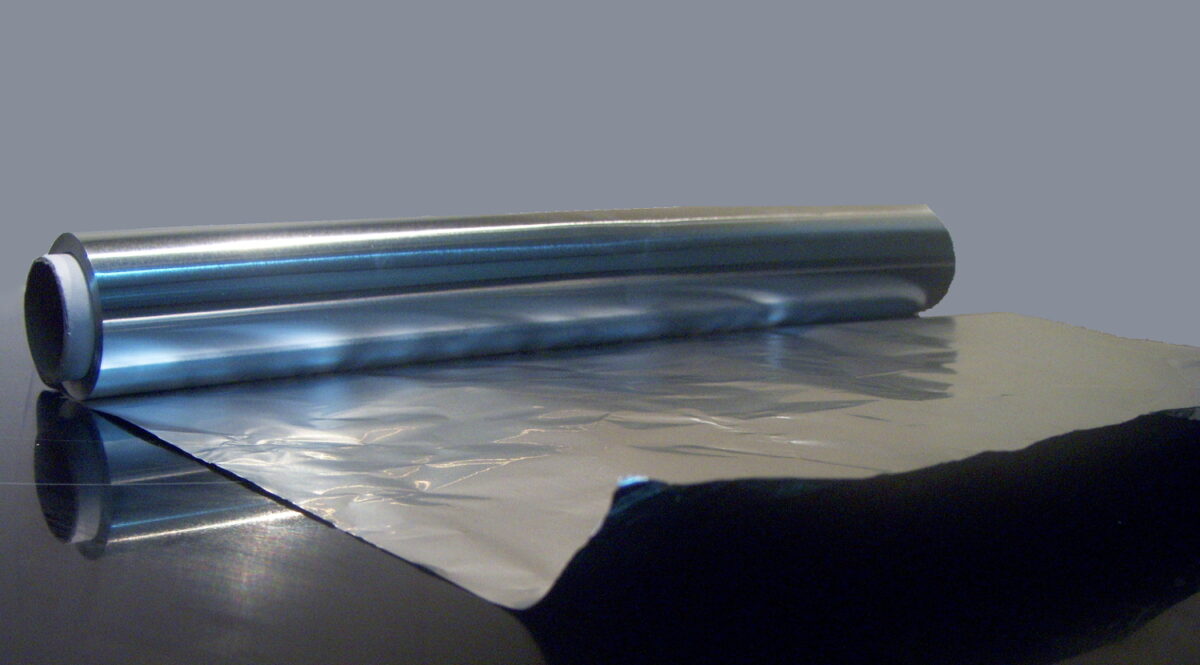
Scientists in China placed a 0.5 mm thick aluminum foil between the solar cell and the Eva, and between the EVA and the glass layer. The two experimental modules were compared with a reference module and were found to remove heat and increase the temperature uniformity in the surface.
A research group led by scientists from Chinese Nanchang University has presented with aluminum (already) foil in PV modules to improve and cool the thermal conductivity in the plane from the inside. The team has presented, manufactured and compared with a reference device without all.
“Passive cooling methods such as phase change cooling and radiation cooling. Disrupt heat from the surface of the PV module, and less attention is aimed at the heat guidance in the plane close to the solar cell,” the academic said. “In this article we introduce Al-Foil with a good thermal conductivity in the PV module structure to expel heat from the transversal direction and at the same time increase the temperature uniformity of the PV module.”
The first structural model placed the 0.5 mm thick al-foil between the C-Si solar cell and the ethylene vinylacetate (EVA) layer (CAE), while it was placed in the second device between the EVA and the glass layer (EAG). A reference module is also made without a foil layer. All layers had an area of 250 mm at 250 mm, except the cell, which had measurements of 156 mm on 156 mm. A thermocouple was attached to the back of each module.
The standard PV module, the EAG and the CAE PV panels were placed on the bracket at the same time, with the bracket to the south opposite a slope of 30 °. “The outdoor experiments were performed in February 2024 on the roof of the material building of Nanchang University. Temperature data was collected every 1 minutes by the temperature logger, “said the academics.
Testing the set -up on a cloudy day was the maximum and average cooling effect of the EAG PV module, compared to the reference, 2.9 C and 1.9 ° C respectively. The corresponding cooling effects for the CAE PV module were respectively 2.3 C and 1.5 ° C. On a clear day, the maximum and average cooling effect of the EAG PV was 4.7 C and 2.4 ° C respectively; and 3.6 C and 1.5 ° C for the CAE.
To evaluate the effect of Al-Foil on the thermal uniformity of PV-Mini modules in the plane, an extra thermocouple was added to the edge of each module. While with the reference module the maximum difference was 20 ° C, with the EAG, the difference peaked at 14.6 ° C and 14.9 ° C at the CAE.
After these results, the group carried out a finite element simulation of the modules that showed deviation from the experimental arrangement, but was ‘in principle consistent’. Focus on the EAG structure, which had better results and also preferred electrical safety, the team simulated a commercial module. The PERC cells used in a 6 x 10 structure. “Results show that all -film the temperature difference on the entire PV module reduces 6,170 ° C and the temperature uniformity improves compared to the reference PV module,” they thought.
The results were presented in “Reducing the temperature of monofacial photovoltaic module with double glass by improving thermal conductivity in the plane“Published in Next energy. Researchers from Chinese Nanchang University and Chinese PV manufacturer Jiangxi Caihong Photovoltaic conducted the research.
This content is protected by copyright and may not be reused. If you want to work with us and reuse part of our content, please contact: editors@pv-magazine.com.
