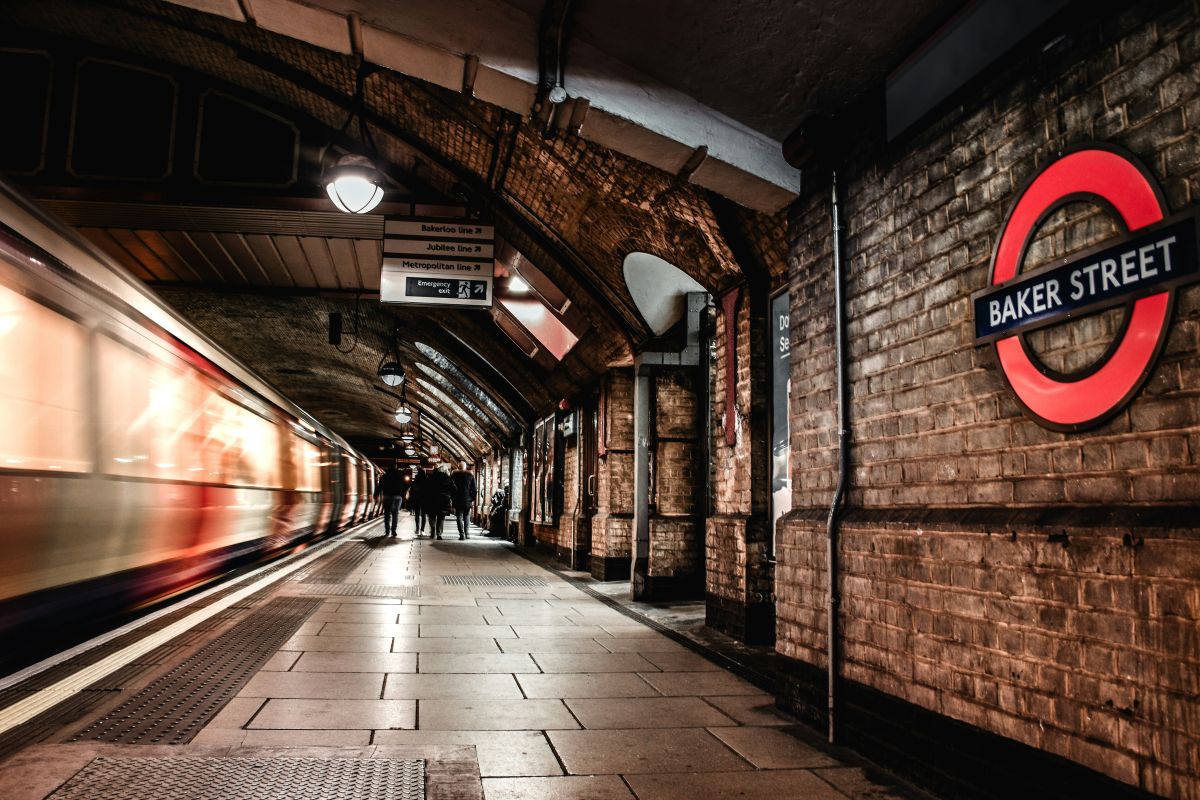
Underground: Solar could soon make its way to Baker Street via a private wire deal between Transport for London and SSE.
Image: Felix Hanspach/Unsplash
Transport for London (TfL) is to bring solar power underground in a deal with SSE Energy Solutions that will cover around 4% of annual electricity consumption for the British capital’s biggest electricity user.
The private wire deal could supply up to 65,000 MWh of electricity per year, according to TfL, which has set a target of using 100% renewable electricity for its operations by 2030.
With an annual demand of approximately 1.6 TWh, TfL is the largest individual electricity consumer in London. The public body is responsible for most of the city’s transport network, including the London Underground, Docklands Light Railway, buses, trams and river services.
The deal with SSE Energy Solutions will see solar installations connected directly to TfL’s energy network, bypassing the local electricity grid. SSE Energy Solutions and TfL will now work to identify suitable locations to build the new solar installations. TfL said these would likely need to be close to the network to enable the direct connection and could include a combination of installation types including ground-mounted and roof-mounted solar.
Signing a private wire deal also guarantees TfL a fixed electricity price and is part of the transport network operator’s wider energy purchasing strategy. TfL has committed to purchasing 70% of its total electricity consumption through power purchase agreements (PPAs) and signed its first agreement for a new solar power plant in Longfield, Essex, in the summer of 2025.
Lilli Matson, head of environment at TfL, said the new solar installations, when built, will reduce pressure on the electricity grid and help protect the network from market volatility – with the potential for cost savings.
Nathan Sanders, managing director of distributed energy at SSE Energy Solutions, said the company is proud to deliver sustainable energy via private wire. “We will invest in, build, operate and maintain the projects, helping to decarbonise and manage price volatility, while enabling potential savings for TfL,” he said.
This content is copyrighted and may not be reused. If you would like to collaborate with us and reuse some of our content, please contact: editors@pv-magazine.com.
Popular content