

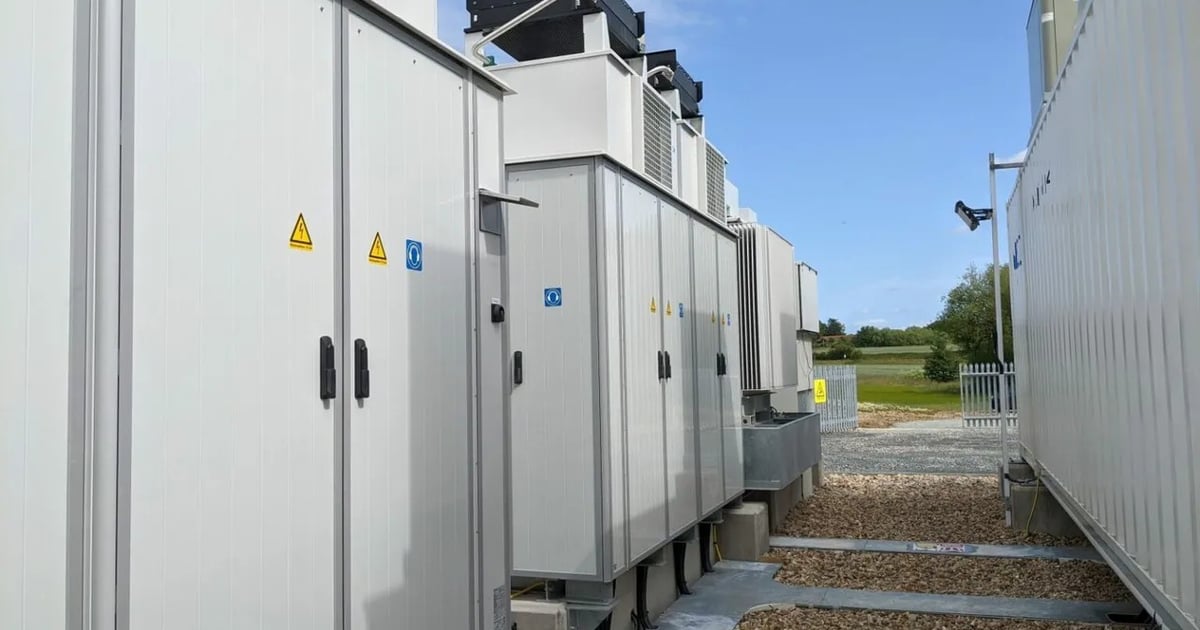
Gore Street Energy Storage Fund (GSF) will sell more of its UK assets as part of a strategic change designed to increase value for its shareholders.
The fund – a subsidiary of Gore Street Capital focused on the UK battery energy storage systems (BESS) market – said it will divest “certain operating and pre-construction assets” as part of the shift. It expects the move to raise £25 million in the 2026/27 financial year, £75 million in 2027-28 and £75 million in 2028-29.
Proceeds from the sale will be used to “fund shareholder distributions,” with a “portion” earmarked for capital repurposing into other assets and investments.
The company also said it will seek to extend the life of its “most immediately viable” energy storage assets to increase their value. “Increasing duration in markets such as Britain and Ireland has been shown to increase revenue potential and value. Following the expansion, assets will be assessed for sale,” the company said in a statement.
GSF expects to expand and construct approximately 100 MWh of projects in fiscal years 2026-27 and 2027-28, and another 150 MWh in 2028-29. It said the board “recognizes that the change in the macro environment necessitates this evolution in its buy-and-hold strategy.”
Alex O’Cinneide, CEO of the Investment Manager at GSF, said: “We welcome the support of the Board of Directors for this updated approach, which enables the Investment Manager to actively unlock value from the portfolio and respond to the changing macro environment.
“After a period of disciplined execution and proof of delivery, if the public markets continue to undervalue these assets, we are fully aligned with the Board of Directors in pursuing alternative solutions that maximize value for the company’s shareholders.”
The strategic change follows a period of low returns for GSF shareholders. In July last year, a prominent long-term shareholder, RM Funds, requested a review of the company’s board of directors after “persistent underperformance”. Since 2022, GSF’s share price has fallen by almost 47% and as of July 2025 it was trading at a discount of around 37% to the company’s net asset value (NAV). At the time, RM Funds called on GSF to sell non-core assets, return capital to shareholders and pursue a merger or sale.
British renewable energy owners have faced difficulties recently. Last week, NextEnergy Solar Fund announced a plans to triple its exposure to energy storage assets and selling some solar assets as part of a capital recycling program. That fund said it had also seen a “sustained” discount to its share value compared to its net asset value.
