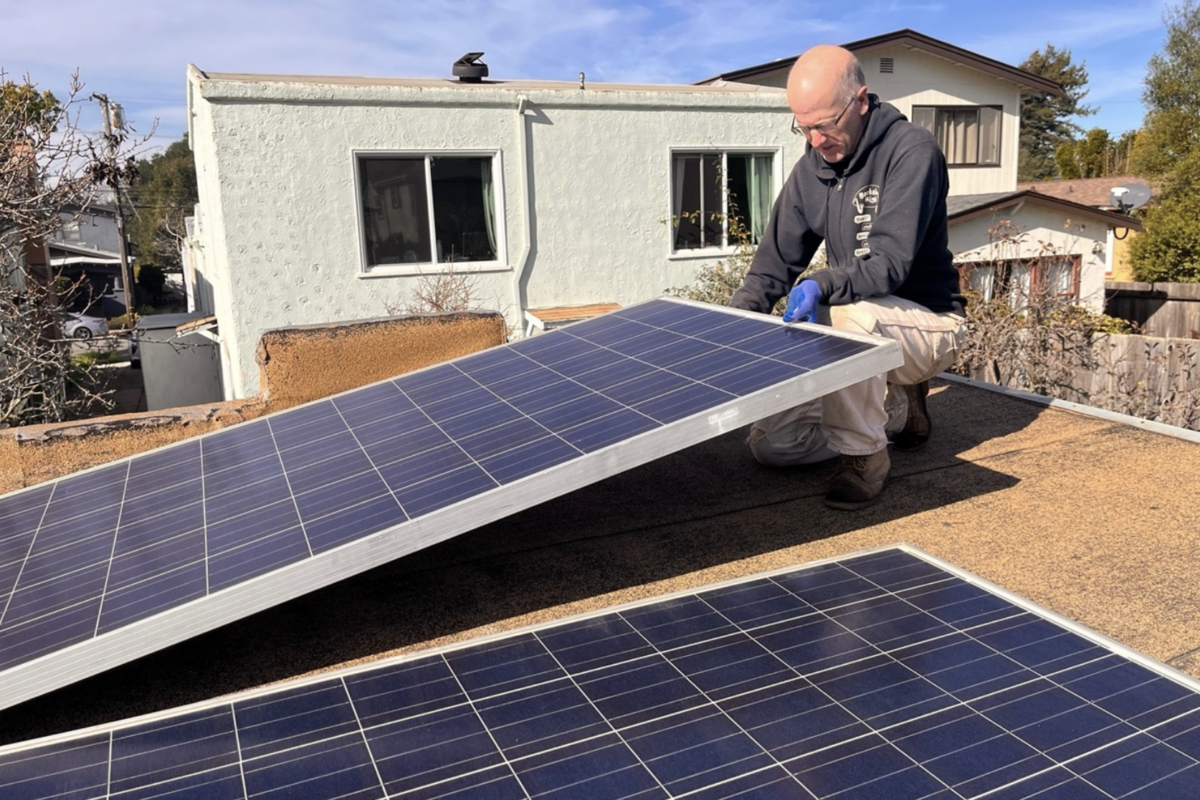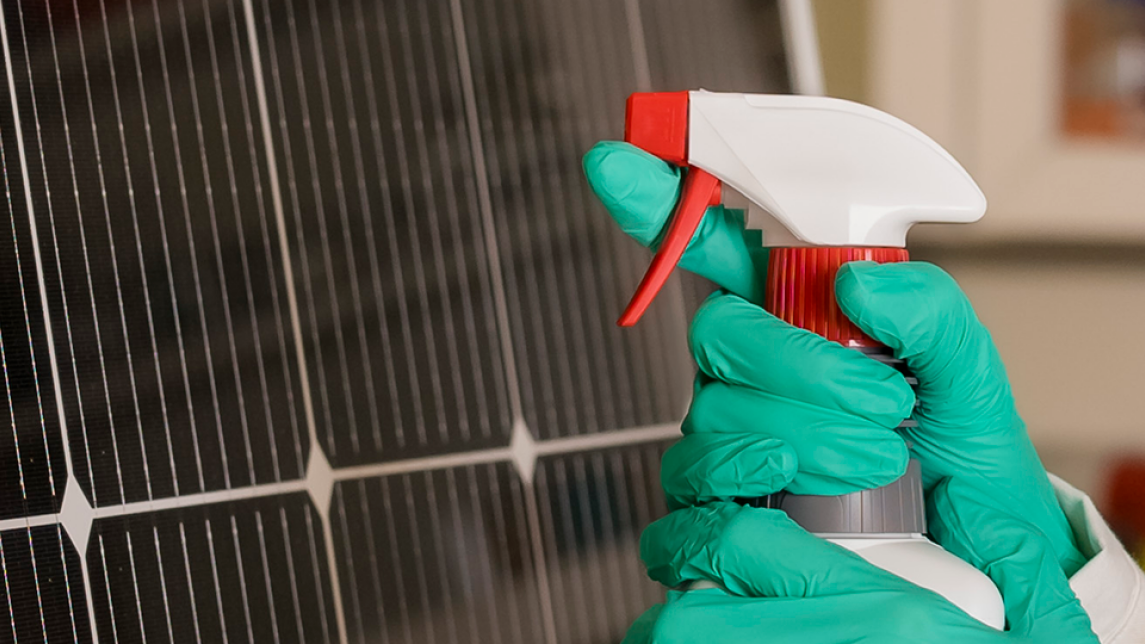
Researchers in Finland found that dish soap reduces the permeability and performance of solar panels, leaving residue even after rinsing. They recommend avoiding its use for cleaning solar panels.
Researchers from the University of Turku in Finland investigated whether household cleaners can be used to clean solar panels, finding that most – including glass cleaner and isopropanol – are suitable and do not affect the light transmission of module glass.
Dish soap was the exception, as it was found to alter the optical properties of anti-reflective (AR) coated solar panel glass.
The scientists noted that while dishwashing detergent is unlikely to cause lasting damage, the permeability of glass cleaned with it did not return to pre-cleaning levels, even after rinsing.
“Although glass washed with detergent looks clean, its light transmittance is noticeably reduced. A visually clean result does not necessarily guarantee top performance,” said researcher Julianna Varjopuro. pv magazine.
“It is possible that the detergent simply leaves stains on the glass instead of damaging the AR coating. In any case, it is recommended to avoid its use when cleaning solar panels,” said Professor Kati Miettunen.
The experiments were performed with glass fragments from an unused silicon solar panel. Large pieces of glass were immersed for 20 hours in various cleaning solutions, including ethanol, acetone, isopropanol, solar panel cleaner, glass cleaner and dish soap.
Image: University of Turku, Mikael Nyberg
A similar test was conducted after growing algae on the glass for three days using a mixture of nutrients, sugar and moss. The transmittance of cleaned glass was measured using a UV–vis spectrophotometer over 190–1100 nm.
Cleaning tests on unsoiled solar panel glass showed that all chemicals improved transmission except dish soap, which reduced the peak by about 1%. Solar panel detergent products, meanwhile, were found to perform only slightly better than generic cleaners. For contaminated samples, cleaning restored transmission and removed algae-induced differences, except when detergent was used, reducing the peak by almost 4%.
Atomic force microscopic (AFM) analysis confirmed that the anti-reflective coating remained intact after cleaning, with scratches
attributed to previous actions.
“Cleaning has a fairly even effect on the surface and the PV power decreases approximately in proportion to the decrease in optical transmission,” says Miettunen. “On average, the transmission of the contaminated glass sample cleaned with detergent was approximately 3% lower compared to that of glass cleaned with the most suitable cleaning agents. The impact on PV yield is therefore
expect it to be similar.”
“Currently, our group has started investigating pollution caused by snow,” Miettunen added. “In Scandinavian conditions, especially in late spring, solar radiation can already be significant, while electricity demand still remains high. Therefore, we are interested in investigating energy losses due to snow accumulation on PV panels.”
Recently, other researchers from the German research institute Fraunhofer CSP discovered that some commonly used PV cleaning agents can damage anti-reflective glass coatings, significantly reducing the efficiency of solar panels. Their tests showed that while some cleaning products are safe, others cause visible and permanent degradation of the coating. This highlights the need for careful selection of cleaning products to avoid long-term performance loss.
This content is copyrighted and may not be reused. If you would like to collaborate with us and reuse some of our content, please contact: editors@pv-magazine.com.
Popular content