

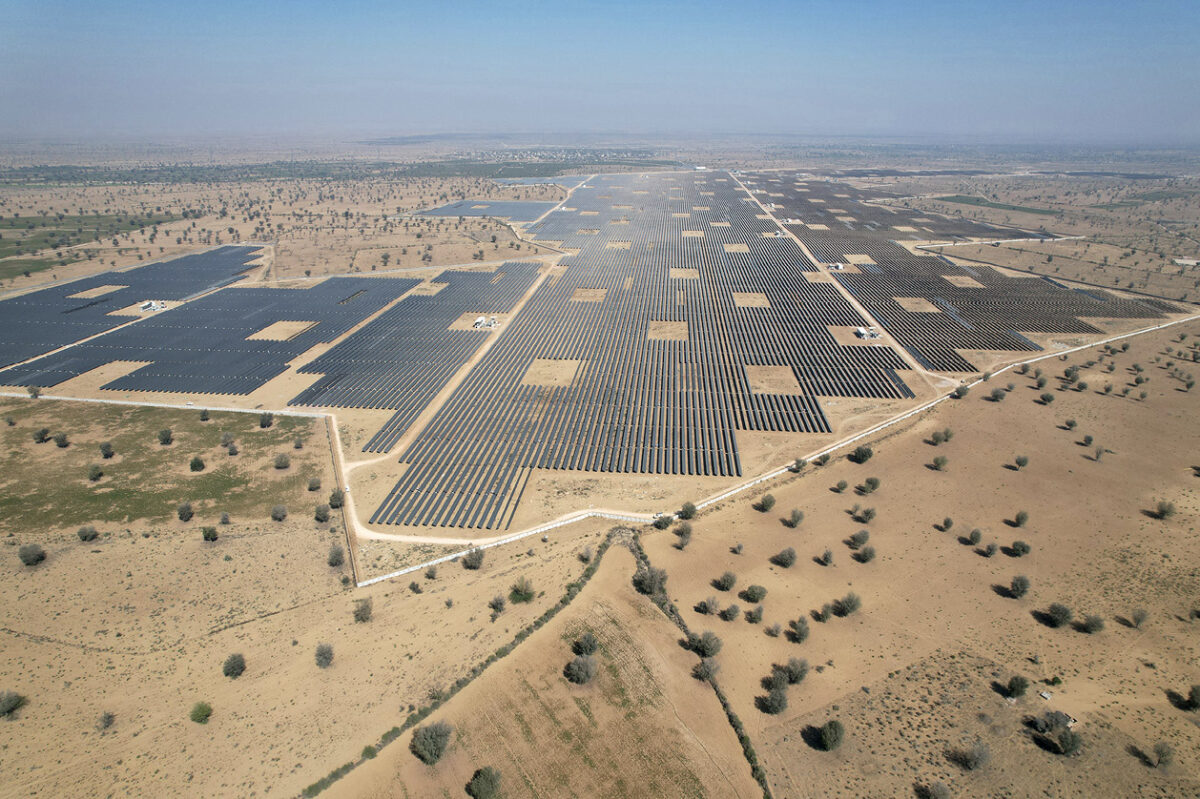
According to a new report from Ember, India has curtailed 300 GWh of renewable energy in the first quarter of 2026 due to transmission restrictions.
Transmission restrictions have led to the loss of 300 GWh of clean electricity in India between January and March 2026, mainly in the northern and western regional grid pooling stations, according to an analysis by Ember. On March 30 alone, the country lost 34 GWh of clean generation, equivalent to the daily electricity consumption of about 5 million urban middle-class households.
Ember estimated total renewable energy curtailment in the first quarter of 2026 at approximately 470 GWh, of which nearly 300 GWh is due to transmission constraints and the remaining 170 GWh due to system inflexibility.
The northern region was responsible for 178 GWh of restricted energy and the western region for 122 GWh. The southern region recorded no transport-related curtailments, reflecting a stronger synchronization between generation growth and grid expansion.
“The curtailment of renewable energy in India due to transmission restrictions is beginning to reach a materially significant level,” he said Duttatreya Dasauthor of the report.
According to the report, the problem stems from a widening mismatch between the pace of renewable energy deployment and the readiness of transmission infrastructure. India has achieved only about 80% of its annual transmission targets in the past five years, while the inter-state transmission system (ISTS) target for the fiscal year 2026-2027 has risen to 25,146 circuit kilometers (ckm). According to the report, one in four major transportation projects has already been delayed by at least a year. As a result, around 20 GW of renewable energy capacity could experience connectivity delays of more than four months in the 2026-2027 financial year.
“Over time, the system will have to move away from generation-based transmission planning to a model in which generation and transmission are planned and executed co-optimally,” Das said.
The report explained that the loss of clean electricity could otherwise have reduced dependence on imported natural gas or freed up domestic gas supplies for higher-priority industrial uses, especially as spot gas prices remain high.
As a short-term solution, Ember recommended using batteries for ‘transmission-as-a-service’. It said battery energy storage systems (BESS) can help bridge transmission gaps if supported by appropriate regulatory reforms.
“Battery storage at pooling stations is the fastest available solution to overcome transmission constraints,” Das said. “About 3 GW to 4 GW of two-hour storage could have absorbed most of the limited generation, while 236 GW of plug-and-play BESS space was already available at major pooling stations. The technical pieces are in place; the gap is regulatory and commercial.”
The report proposed two regulatory measures to support the deployment. First, a government-backed intermediary entity could aggregate energy from renewable energy projects operating under temporary general network access (T-GNA) and outsource them to BESS developers, thereby reducing contract risks associated with fluctuating T-GNA participation.
Second, BESS could be purchased as a transmission asset, with capacity payments distributed among states in the same way as transmission costs. Ember said the combined costs for storage and solar would range between INR 7 ($0.072)/kWh and INR 8/kWh, below the INR 10/kWh that many states currently pay for peak power.
“Enabling such regulatory mechanisms could be one of the fastest interventions to ease renewable energy transmission constraints,” Das added.
The report also identified additional short-term measures to reduce grid congestion. These include harmonizing curtailment compensation frameworks and improving transparency in intrastate connectivity procedures to encourage more intrastate renewable energy development and reduce pressure on ISTS corridors.
Emphasis was also placed on technical interventions such as dynamic line assessment and reconductoring, which could increase the transmission capacity of existing transmission lines and postpone the need for new infrastructure projects.
This content is copyrighted and may not be reused. If you would like to collaborate with us and reuse some of our content, please contact: editors@pv-magazine.com.
