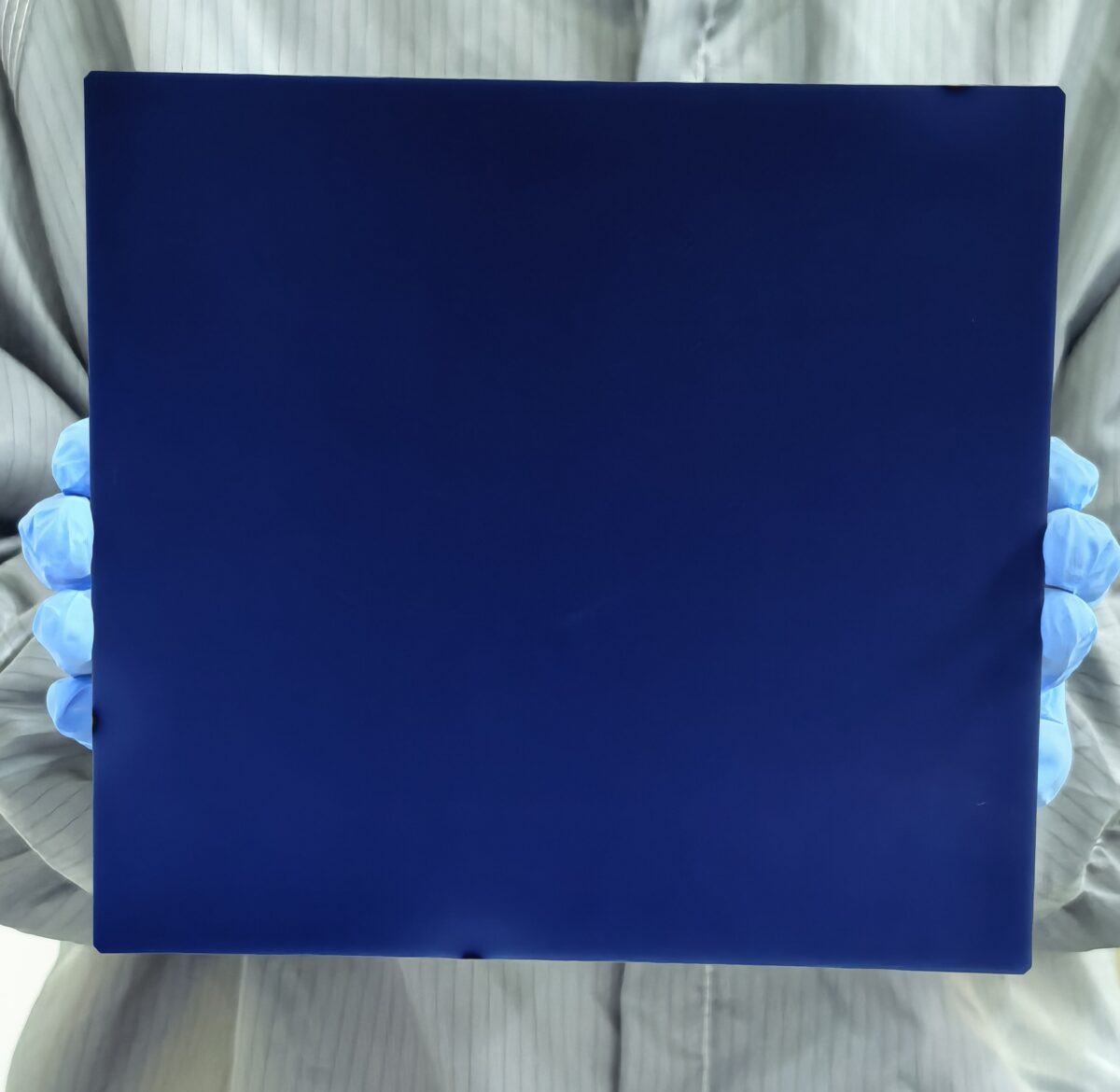
Researchers from UNSW and DAS Solar developed a zero-busbar metal lattice optimization approach for tunnel oxide passivated back-contact (TBC) silicon solar cells, enabling more efficient power collection at the back surface and reducing silver consumption by 3-4 mg/W. The first TB cells mass-produced using this technique have demonstrated an efficiency of more than 27%.
A research team consisting of scientists from the University of New South Wales (UNSW) in Australia and Chinese PV manufacturer DAS Solar have developed a new technique for optimizing the metal lattice design of silicon back contact (BC) solar cells, using tunnel oxide passivated contact (TBC) on the back surface.
The cell is based on a zero-busbar (ZBB) design, which the scientists said required significantly lower silver content (Ag) for metallization.
“Compared with the multi-busbar (MBB) systems, the ZBB design reduces silver paste consumption by approximately 3-4 mg/W,” said the study’s lead author Dengyuan Song. pv magazine. “The specific value varies slightly depending on the different metallization patterns of solar cells. Such a reduction in silver consumption is very significant and practically remarkable. Especially under the current frequent fluctuations in silver prices, reducing silver consumption plays a crucial role in stabilizing production costs and supporting the large-scale industrialization of TBC solar cells.”
“Supported by advanced solar cell simulation technology from UNSW, DAS Solar began mass production of ZBB TBC cell technology in early second half of 2025. The series welding equipment, soldering processes and silver pastes have been fully optimized and are ready for industrial-scale production,” Song continued. “DAS Solar is currently realizing large-scale production of TB cells with a silver consumption of approximately 6 mg/W. The peak conversion efficiency of premium batches in mass production exceeds 27%, further proving that ZBB technology has excellent cost performance.”
The 160 μm thick ZBB TBC cell has dimensions of 182 mm x 105 mm. The front surface is textured with random upright pyramids at a base angle of 53° and passivated using an aluminum oxide (Al₂O₃)/silicon nitride (SiNₓ)/silicon dioxide (SiO₂) stack. The inclusion of a low refractive index SiO₂ layer further reduces reflection on the front surface.
Image: DAS Solar
On the back, the device is based on p-type polycrystalline silicon, n-type polycrystalline silicon and an undoped gap region. The p-poly and n-poly areas are flat to improve the passivation quality of the surface.
Using SunSolve for optical modeling and Quokka3 for electrical modeling, the academics measured the performance of the ZBB TBC cell and compared it to that of a reference device built with typical electrical contact pads used as current collection and connection points.
Optical results indicate that the current generation is largely insensitive to finger width, but decreases slightly as finger distance increases due to reduced light capture. In pad-based designs, performance was found to be limited primarily by busbar-related losses, making wider and more numerous rails and pads beneficial for efficiency. Zero-busbar (ZBB) designs, on the other hand, shift current collection to fingers, where losses scale more strongly with finger geometry, promoting greater rail segmentation and efficient current conduction.
In both architectures, reducing finger width via improved screen printing technology offers clear efficiency gains. Pad-based cells were found to require at least 11 mg/W Ag paste, while ZBB cells maintain similar efficiency at 7 mg/W.
“The absolute efficiency gain of ZBB over pad-based TBC is at least 0.1%, which would increase significantly if Ag paste consumption were lower than 10 mg/W. From the perspective of Ag paste consumption reduction, the ZBB configuration is certainly beneficial, although the larger challenge of interconnection and module reliability requires careful investigation,” the academics concluded.
The new methodology was described in “Grid optimization of tunnel oxide passivated silicon solar cells with back contact”, published in Progress in photovoltaics.
In another recent study conducted with UNSW, DAS Solar unveiled a new circuit model-based method to accurately detect hotspot risks in TOPCon backcontact modules, overcoming the limitations of the IEC 61215 approach caused by low shunt resistance.
This content is copyrighted and may not be reused. If you would like to collaborate with us and reuse some of our content, please contact: editors@pv-magazine.com.
Popular content