

Shortly after her election in 2024, the British government classified data centers as Critical National Infrastructure (CNI).
British Prime Minister Keir Starmer said AI could be used in a wide range of applications, including to speed up planning consultations. Prioritizing AI development will directly support the government’s mission to become a clean energy superpower.
The CNI designation is also given to energy and water systems, and makes more government support possible.
The data centers that enable AI to function require enormous amounts of energy. There are arguments that if data centers can be flexible in their demand, they can serve as a network facility, especially during periods when consumer demand is lower than supply.
But demand for electricity is increasing at an unprecedented rate, and the areas typically zoned for data center developments don’t have the infrastructure to support it.
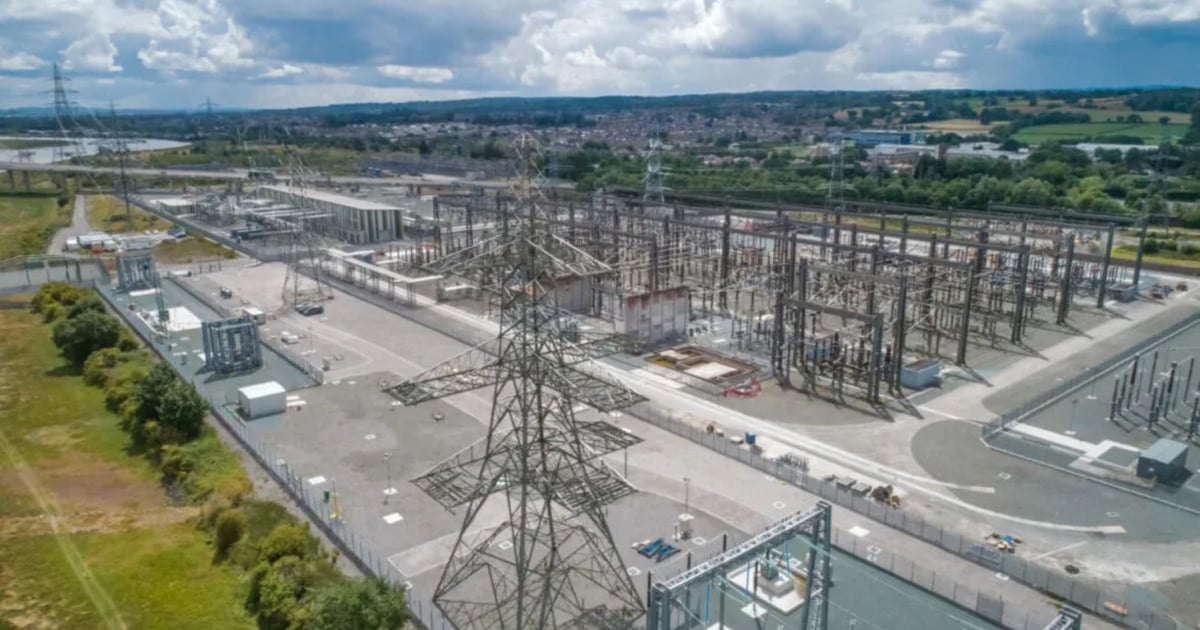
Developing that infrastructure is the responsibility of National Grid, which manages the high-voltage electricity transmission network in England and Wales. At the Clean Power 2030 Summit, organized by our publisher Solar Media in London on June 30 and July 1, a panel will discuss the impact of data centers and AI on electricity demand.
David Adkins, head of network architecture and innovation at National Grid, will join the panel, titled ‘Data Centers, AI & Digital Infrastructure: When Demand Arrivals Faster Than the Grid’.
Adkins spoke Solar energy portal ahead of the event on how National Grid is planning for the increased demand for AI and digitalisation, and how it is using the technology to its advantage.
Tickets are still available for the Clean Power 2030 Summit. View the full agenda on the event website And book your ticket to attend. Our readers can get a 20% discount on tickets with the code SPP20.
Solar Power Portal: The growth of AI and data centers creates significant demand for electricity. How does National Grid prepare the network for this peak, while maintaining reliability?
David Adkins: The growth of AI and data centers is a step change in electricity demand, but it is also an opportunity to rethink the interaction between demand and the grid. Our approach is twofold: investing to expand capacity where it’s needed, while maintaining system resilience, and getting smarter in the way we plan and operate the system.
We are undertaking major strengthening programs to bring forward capacity, in addition to reforms to accelerate connectivity timelines. At the same time, we look at the whole system, using forecasting, scenario modeling and closer coordination with customers to anticipate demand earlier and plan accordingly. This allows us to plan ahead rather than react, while maintaining the reliability the system depends on.
Digitalization is often cited as the key to managing more complex energy systems. How can tools like the digital twin help you plan and operate the grid more efficiently as demand grows?
As the system becomes more complex, digitalization is essential for efficiently managing uncertainty and planning. We use advanced modeling and digital tools, such as the Triton digital twin developed in collaboration with Atos, and our internally developed Neptune. This allows us to better understand how demand will evolve and how it interacts with generation patterns.
These capabilities allow us to simulate different scenarios, optimize network usage and make more informed investment decisions. In practice, this means getting ahead of constraints rather than reacting to them, and ensuring the system can meet new demand in a cost-efficient way.
Network enhancement technologies are gaining attention as a way to unlock additional capacity from existing infrastructure. Can you talk about how these solutions are being deployed and what their impact has been so far?
Grid improvement technologies are an important part of unlocking capacity from the existing network, and dynamic line assessment is one of the clearest examples. Dynamic Line Rating (DLR) uses real-time data about conductor conditions and local weather, such as wind and temperature, to calculate how much power a line can safely carry at any given time, rather than relying on conservative static assumptions. This gives operators a more accurate picture of available capacity and can safely increase the amount of power flowing over existing overhead lines if conditions allow.
We recently announced a significant expansion of DLR across our network, making better use of existing infrastructure, reducing constraints, allowing more renewable energy to flow through the network and reducing costs to consumers.
How are you working with industry to support flexible and smarter energy consumption as data centers often require large, continuous power loads?
We work closely with industry to enable data centers to become active participants in the energy system, rather than passive consumers. Through collaborations such as our work with Emerald AIwe show how data centers can adjust workloads in response to grid signals, temporarily reducing demand during peak periods and increasing it when capacity is available. This is made possible by software that acts as a bridge between the electricity grid and the data center, allowing real-time coordination of energy consumption.
This supports system stability and opens up more flexible and potentially faster connection paths for customers. We are working with Ofgem and the government to understand how codes can be updated to support the use of flex to reduce network build-up and speed up connections.
What will a future-proof electricity grid look like in a world increasingly shaped by AI, and what role will National Grid play in enabling that transition?
A future-proof electricity grid is more flexible, digital and interactive. Rather than a one-way system, it is a network in which large users such as AI data centers dynamically respond to system needs, balancing supply and demand in real time. It is also a system where digital tools give us greater visibility and predictive power, enabling smarter investments and operations.
National Grid’s role is to help orchestrate that system, connect new demand, enable low-carbon generation and create the conditions for flexibility at scale. Ultimately, our goal is simple: ensure the electric grid can support the economic growth of AI and the digital industry, while remaining reliable, affordable, and aligned to net zero.
