

By ESS news
Netherlands-based Alfen and China-based CATL have signed an agreement to deploy 5 GWh energy storage systems with sodium-ion batteries in Europe, building on an existing partnership focused on lithium-ion battery storage projects.
The agreement marks a new phase in a collaboration that started with storage projects based on lithium-ion batteries. In 2023, Alfen and CATL entered into a long-term battery supply agreement, which was extended in 2024 to support the growing demand for Alfen’s energy storage solutions in the European market.
Through the new partnership, the companies will integrate sodium-ion batteries into their storage deployment strategy, focusing on greater technology diversification and lower-cost solutions for stationary applications.
For Alfen, the agreement will diversify the materials used in its energy storage portfolio, optimize product cost structures and reduce exposure to lithium price volatility. The company expects the strategy to strengthen its competitive position in European tenders for medium and large-scale storage projects.
For CATL, the joint deployment will provide operational experience with sodium-ion batteries in European grid-tied applications, support adaptation to regional grid requirements and accelerate the international expansion of sodium-ion energy storage systems.
Alfen develops and integrates solutions for smart networks, energy storage and charging infrastructure for electric vehicles, with a focus on strengthening the European energy infrastructure.
CATL said it has maintained its position as the world’s largest battery supplier for electric vehicles and energy storage applications, operating 20 battery manufacturing facilities.
CATL expands ambitions for sodium ion storage
In April, CATL announced what it described as its largest sodium-ion battery supply agreement to date, covering 60 GWh of batteries for Chinese storage integrator HyperStrong over three years.
The company said the agreement showed that sodium ion technology had overcome key challenges related to mass production and was ready for large-scale deliveries. CATL has invested approximately CNY 10 billion (EUR 1.2 billion) in sodium ion battery research and development since 2016.
CATL has highlighted advances in energy density, material design and manufacturing processes, including improvements to hard carbon anodes and moisture control during production.
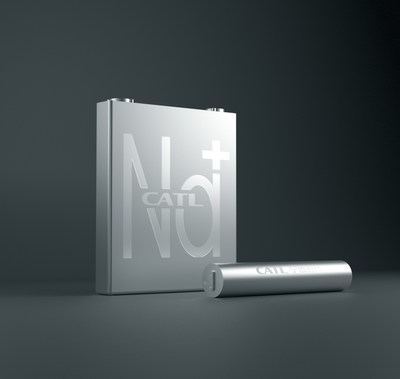
The company also introduced a sodium-ion storage battery designed to maintain compatibility with the 587 Ah lithium battery cell format, simplifying integration into existing systems and reducing retrofit costs.
The new cell offers a capacity of more than 300 Ah, an energy density of approximately 160 Wh/kg, a system efficiency of 97%, a lifespan of more than 15,000 cycles while maintaining a capacity of 80%, and an operating temperature range of -40 C to 70 C.
CATL focuses on the technology for stationary storage applications from two to eight hours, renewable energy integration, shared storage systems and data centers.
The battery uses a hard carbon anode and a layered oxide cathode and avoids cobalt and nickel, while replacing copper with aluminum. CATL said the design passed nail penetration, crush and overload tests without thermal overload.
The commercial expansion of sodium ion batteries has been limited by declining prices of lithium iron phosphate batteries (LFP), which reached approximately USD 50/kWh at the cell level. However, LFP storage cells with a capacity of 314 Ah have increased in price by around 20% over the past six months due to tighter lithium supply and rising demand.
CATL expects the new contract will mark an early stage of mass production of sodium ion technology and bring the chemistry closer to a potential 30% to 40% cost advantage over LFP batteries.
