
Close Menu
  • News
  • Industry
  • Solar Panels
  • Commercial
  • Residential
  • Finance
  • Technology
  • Carbon Credit
  • More
    • Policy
    • Energy Storage
    • Utility
    • Cummunity
What's Hot

Grid operators can reduce renewable energy penetration if data center growth continues unchecked, says ENTSO-E – SPE

May 9, 2026

American solar panel manufacturers must learn to solder – SPE

May 9, 2026

SEG Solar will expand U.S. production with a 4 GW solar module factory

May 9, 2026
Facebook X (Twitter) Instagram
Solar Energy News
Saturday, May 9
  • News
  • Industry
  • Solar Panels
  • Commercial
  • Residential
  • Finance
  • Technology
  • Carbon Credit
  • More
    • Policy
    • Energy Storage
    • Utility
    • Cummunity
Solar Energy News
Home - Technology - American solar panel manufacturers must learn to solder – SPE
Technology

American solar panel manufacturers must learn to solder – SPE

solarenergyBy solarenergyMay 9, 2026No Comments3 Mins Read
Facebook Twitter Pinterest LinkedIn Tumblr Email
Share
Facebook Twitter LinkedIn Pinterest Email

The CEA 2026 Manufacturing Quality Report shows that yield rates vary widely depending on the age of solar panel assembly facilities, with mature Chinese companies approaching 100% and US outliers reaching 30%.

May 9, 2026
John Fitzgerald Weaver

By pv magazine USA

Intertek CEAs Global PV Manufacturing Quality Report 2026 suggests that much work remains to be done to improve the quality of solar panel production. The report states that more than 70% of factories in the 2025 factory audits were rated in the lowest two levels – C or D – and none achieved an A+.

Source – Intertek CEA

One of the central points of the report is that most problems occur during plant start-ups after construction, as well as during capacity expansions. However, reworking solar panels, a process in module production, hides these problems. Typical rework rates are around 10-15%, but factories that excel went much further: an Indian factory reached 56% in 2024, and a US factory reached 62% in 2025.

Overall, the US has the highest rate of critical emissions of all countries surveyed. While certain Chinese manufacturing facilities yield nearly 100% efficiency, some U.S. factories fall within the 30-60% efficiency range.

CEA explicitly noted:

The US capacity expansion exposes execution risks at an early stage.
Source – Intertek CEA

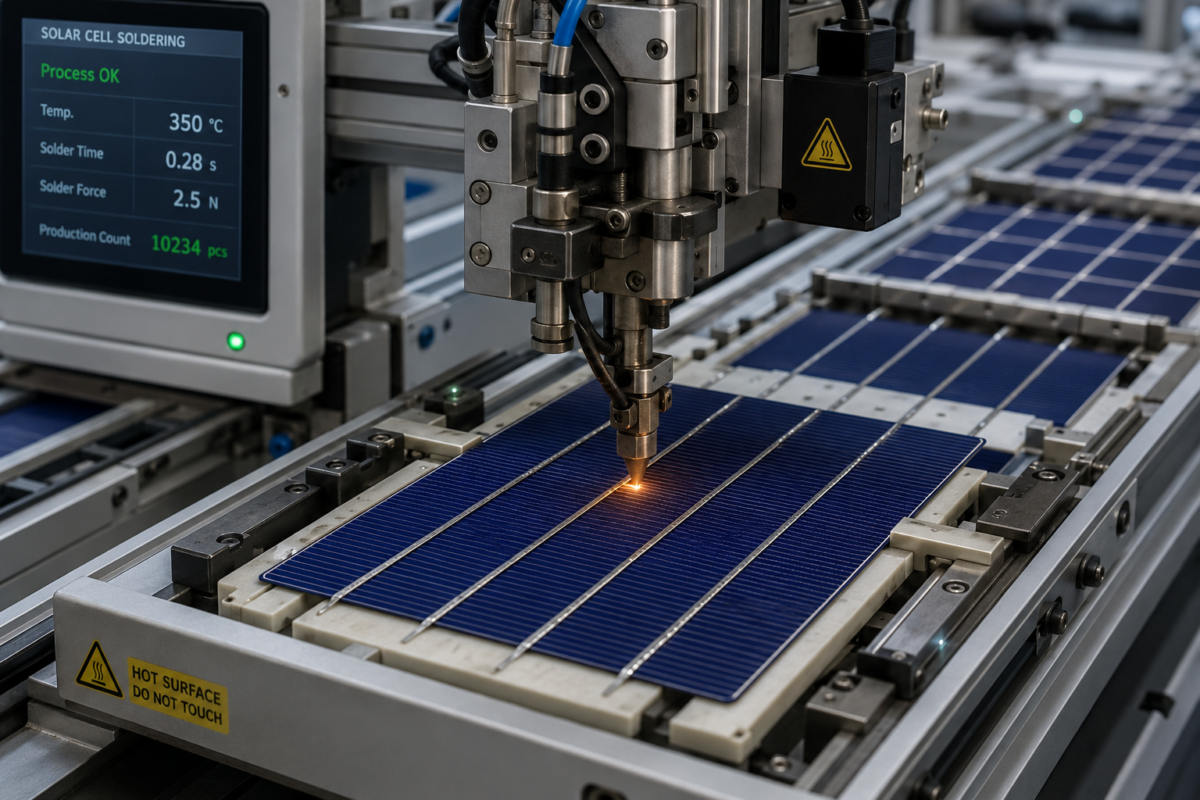
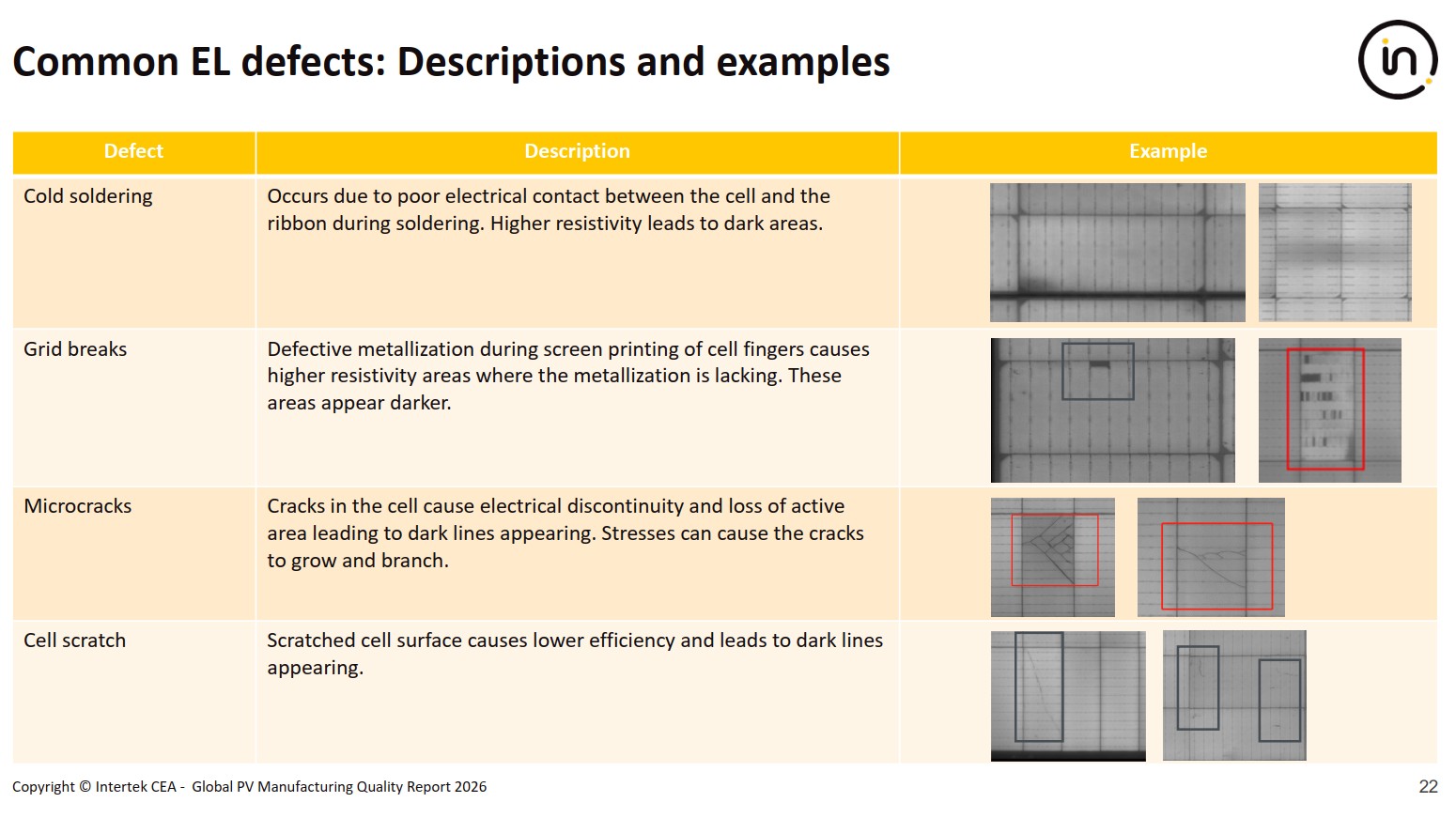
The number one defect category is soldering, both within and between solar cells. The trend is driven by the increasing number of rails and ribbons, which reduces contact areas and makes soldering more susceptible to defects. Electroluminescence (EL) imaging – a now standard QA technique that uses an applied current to reveal internal cell defects that are invisible to the eye – is the main tool for detecting these problems.

See also  Midea Hiconics releases new all-in-one battery storage systems for homes – SPE

CEA notes that the ability to rework and troubleshoot modules resolves most issues before shipment. But stable average rework rates can mask high variability at the plant level – meaning that a fleet-wide number that looks good can hide individual facilities that are performing well above the norm.

The specific problems that EL imaging reveals include cold soldering, grid breaks (holes in the screen-printed metallization on the cell), oversoldering, and cell scratches. Cold soldering – when the soldering temperature, time, or pressure is insufficient to fully bond the cell-to-ribbon connection – is a particular concern because the connection can appear intact while the metal structure underneath is incomplete, leaving a weak connection that can fail in the field.
Source – Intertek CEA

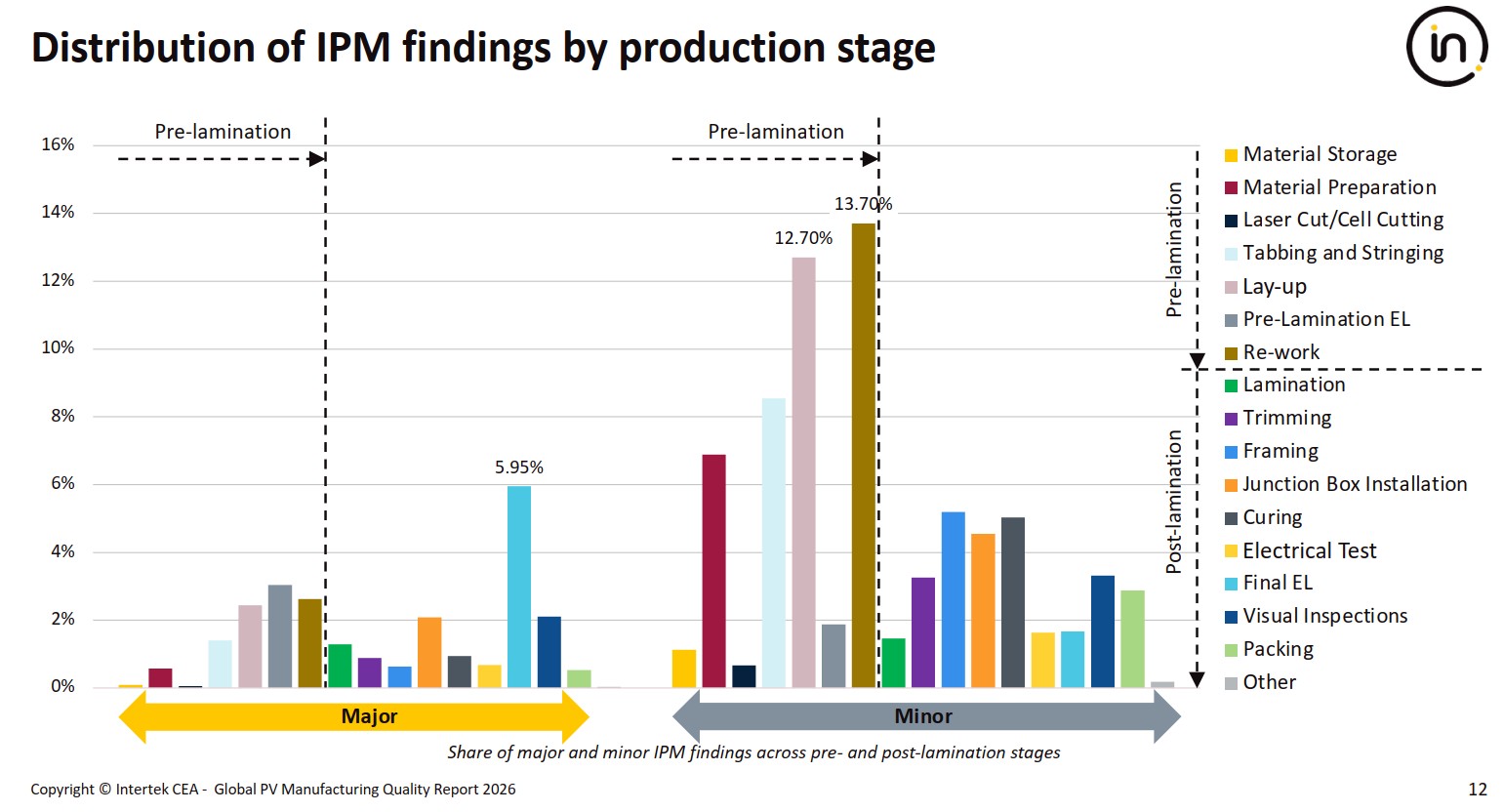
Other problems exist both before and after EL scanning.

The first is the lay-up process, in which the module components (front glass, encapsulant, cell strands, bus ribbons, back encapsulant, and back sheet or back glass) are stacked in sequence before being fused together by lamination. Common findings here include encapsulant misalignment, cell array spacing errors, ribbon misalignment, foreign material trapped in the stack, and cell handling damage.

The second is packaging and delivery. Damaged packaging is by far the most common finding during container loading inspections and is responsible for 47% of problems: pallet damage, torn tie-down straps and damaged outer wood shingles. Missing labels and incorrect identification of each account account for another 19%. The location of the factory can exacerbate the problem: bumpy roads leaving the facility can shift pallets during transit and damage modules before they ever leave the country.

See also  PV, storage to anchor Ireland's first co-located data center campus – SPE

This content is copyrighted and may not be reused. If you would like to collaborate with us and reuse some of our content, please contact: editors@pv-magazine.com.

Popular content
Source link

American learn manufacturers panel solar solder SPE
Share. Facebook Twitter Pinterest LinkedIn Tumblr Email
solarenergy
  • Website

Related Posts

Grid operators can reduce renewable energy penetration if data center growth continues unchecked, says ENTSO-E – SPE

May 9, 2026

SEG Solar will expand U.S. production with a 4 GW solar module factory

May 9, 2026

Colorado approves solar on balconies and requires utilities to accept meter closures

May 9, 2026
Leave A Reply Cancel Reply

Don't Miss
Technology

Research shows that residential PV is becoming less and less attractive in Germany – SPE

By solarenergyOctober 24, 20240

Using a new methodology based on decoupled net present value (DNPV), a German research team…

CI Renewables will install a 1.4 MW solar portfolio for the University of Maryland

May 1, 2024

Qair UK receives approval for 342 MW BESS

October 9, 2025

Japanese researchers achieve world record efficiency of 12.28% for copper-gallium selenide solar cell – SPE

March 13, 2026
Stay In Touch
  • Facebook
  • Twitter
  • Pinterest
  • Instagram
  • YouTube
  • Vimeo
Our Picks

Grid operators can reduce renewable energy penetration if data center growth continues unchecked, says ENTSO-E – SPE

May 9, 2026

American solar panel manufacturers must learn to solder – SPE

May 9, 2026

SEG Solar will expand U.S. production with a 4 GW solar module factory

May 9, 2026

Colorado approves solar on balconies and requires utilities to accept meter closures

May 9, 2026
Our Picks

Grid operators can reduce renewable energy penetration if data center growth continues unchecked, says ENTSO-E – SPE

May 9, 2026

American solar panel manufacturers must learn to solder – SPE

May 9, 2026

SEG Solar will expand U.S. production with a 4 GW solar module factory

May 9, 2026
About
About

Stay updated with the latest in solar energy. Discover innovations, trends, policies, and market insights driving the future of sustainable power worldwide.

Subscribe to Updates

Get the latest creative news and updates about Solar industry directly in your inbox!

Facebook X (Twitter) Instagram Pinterest
  • Contact
  • Privacy Policy
  • Terms & Conditions
© 2026 Tsolarenergynews.co - All rights reserved.

Type above and press Enter to search. Press Esc to cancel.