

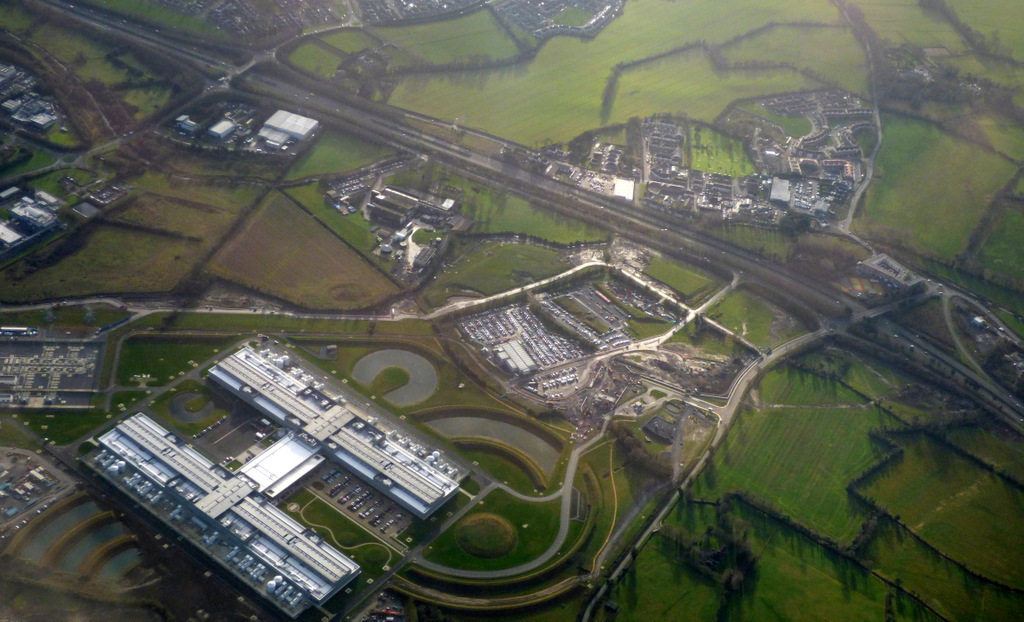
A new report from the European Network of Transmission System Operators for Electricity examines the potential for data centers to become flexible assets in the European electricity system, as well as how network planning and network security can be managed.
The European Network of Transmission System Operators for Electricity (ENTSO-E) has warned that Europe’s transmission system operators may be forced to reduce renewable energy penetration if growing demand for data centers is not properly managed.
The organization that represents grid operators across Europe published a report on May 8 outlining the benefits of system flexibility that data centers can provide. However, it added that European policymakers must ensure these benefits are appropriately enshrined in legislation, otherwise the growth of data centers could overwhelm Europe’s networks and jeopardize progress in sustainable energy.
ENTSO-E called for updated connection codes to ensure data centers support the safety and reliability of the electricity grid. Limits on ramp speed, vibration damping, voltage regulation and reactive power requirements should all be taken into consideration, the organization said.
It also recommends avoiding restrictions on the integration of renewable energy sources and steering data center developers to regions where grid demand is less constrained.
“Once the control architecture for grid-safe operation is in place, data centers can evolve to provide flexibility services and participate in electricity markets as demand sources, or in some cases as virtual power plants,” ENTSO-E said.
The authors of the report note that participation in the flexibility market depends on specific electricity market designs. Data centers can provide fast frequency response, as well as primary, secondary and tertiary reserves, congestion management and some participation in the energy market, both day-ahead and intraday.
Large-scale data centers are best placed to provide flexibility services, while colocation facilities face limitations due to tenant control. The majority of the European data center fleet is based on colocation. Europe currently has more than 10,500 data centers with an IT load of at least 50 kW, which equates to approximately 12.7 GW of installed IT capacity.
“While data centers inherently possess significant potential to serve as flexible network resources, in practice this theoretical capacity is heavily filtered,” the report states, adding that a “cascading series of technical limitations, business model realities and barriers to market participation are gradually reducing the actual flexibility these facilities can provide to the system.”
It also highlights the impact of data centers on network stability, noting that their requirements are more complex than those of large, conventional loads. Their uninterruptible power architectures can “instantly shut down hundreds of megawatts during minor grid outages,” posing risks to the safe operation of the grid and power quality.
IT equipment and cooling systems are responsible for most of the electricity demand in data centers, and the types of workloads influence how facilities interact with the electrical grid. Cooling loads have thermal inertia, which represents a potential source of flexibility, while thermal storage could further reduce constraints, the report adds.
ENTSO-E calls on policymakers to address these challenges ahead of the upcoming EU Cloud and AI Development Act, which aims to potentially triple the size of the European data center market over the next five to seven years.
This content is copyrighted and may not be reused. If you would like to collaborate with us and reuse some of our content, please contact: editors@pv-magazine.com.
