

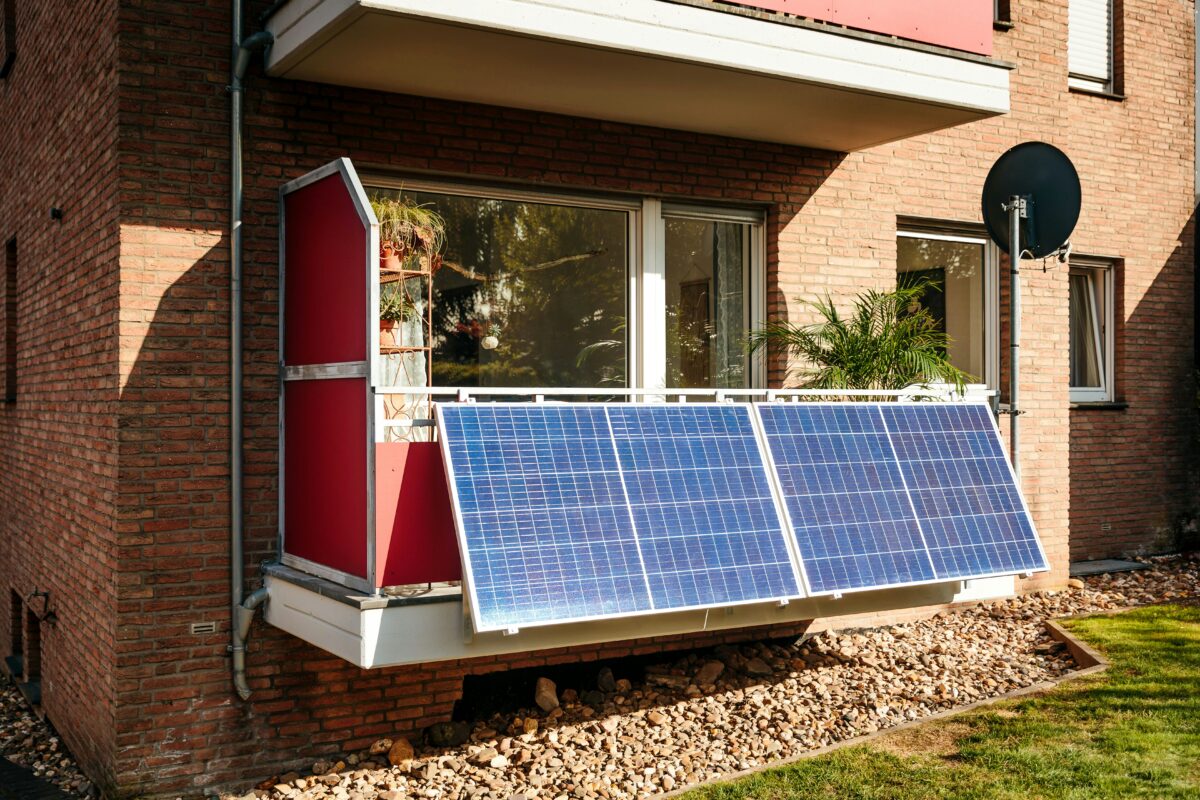
The Plug and Play Solar Act, which passed by a vote of 35 to 1, would allow portable solar power generating devices with an output of up to 1,200 W to be plugged into a building through a standard electrical outlet. The bill now heads to the state Assembly, which has until August 31 to pass it during the current session.
The California Senate has passed SB 868, also known as “The Plug And Play Solar Act.” The bill establishes a definition and rules for “portable solar energy generating devices,” which generate power from solar panels connected to a home’s electrical grid using a standard 120 V outlet, through a small inverter with an AC power rating of up to 1,200 W.
Such devices, commonly called “balcony solar panels” or “plug-in solar photovoltaics” (PIPV), would be exempt from rules that require the owner to pay a fee and get permission from the utility to connect home solar panels.
Introduced in early January by Senator Scott Wiener, SB 868 was modeled after the nation’s first successful plug-in solar bill: Utah’s 2025 HB 340. Following the passage of the bill in Utah, lawmakers in six other states have passed balcony sun laws, although two have not yet been signed by their state governors.
“The cost of electricity has risen to absurd levels, and plug-in solar is an easy way for families to reduce costs,” Wiener said in a statement celebrating his bill’s passage in the Senate. “These units are small and mobile enough that millions of Californians can use them to save on affordable clean energy where rooftop systems are not suitable. I thank my colleagues for supporting this important measure to bring affordable clean energy to more people in our state.”
The California bill passed the Senate by a vote of 35 to 1, with broad bipartisan support, and now heads to the state Assembly. California lawmakers have until August 31 to approve bills for final passage this session.
As California goes…
While bills in other states have been cause for celebration by plug-in solar advocates across the country, California is seen as the most important market for the technology. However, the state has long been a leader in installed solar capacity Texas has become the tanning center of the country as California policies have slowed new distributed solar additions.
Advocates say the push for plug-in solar power will quickly spread the technology across the state, giving companies that sell such products access to millions of new customers. Something they believe will make the economic benefits of adding a few panels to an apartment balcony an obvious good choice.
“These systems are simple, practical and proven. They give people the power to save clean energy immediately,” said Bernadette Del Chiaro, senior vice president for California of the Environmental Working Group (and former executive director of the California Solar and Storage Association), in a statement. “We strongly encourage the Assembly to immediately pass and pass the Balcony Solar Act to ensure that as we head into a hot summer, millions of Californians can look forward to accessing this technology and seeing a meaningful reduction in their energy bills.”
While it’s uncertain whether the General Assembly will pass the bill (and if so, whether outgoing Governor Gavin Newsom will sign it), at least one candidate vying to replace Newsom is a fan of plug-in solar photovoltaics.
“Solar energy is getting cheaper, faster and better. Solar on balconies is fantastic: unpack it and hang it. Any politician who opposes this technology is ignorant or tied to utility monopolies. As governor, I will unleash the full potential of solar energy,” he wrote. Tom Steyer on X.
Even without legislative action, some companies in California already sell plug-in solar products, including APsystems, Craftstrom and the nonprofit Bright Saver. But these companies are still pushing lawmakers to pass SB 868.
Cora Stryker, co-founder of Bright Saver, is a strong supporter of national plug-in solar laws. In a statement to pv magazine USA Before the Senate vote, she expressed her personal thoughts on the momentum behind the plug-in solar movement.
“From large states like California and New York to smaller states like New Hampshire and Virginia, there is no doubt that Americans want some agency to fight back against rising energy bills,” Stryker wrote. “Californians right, left and center are contacting their elected officials to say clearly that they need plug-in solar — not next year, but now. The question now is whether elected officials will listen to the people. We are optimistic they will.”
This content is copyrighted and may not be reused. If you would like to collaborate with us and reuse some of our content, please contact: editors@pv-magazine.com.
