

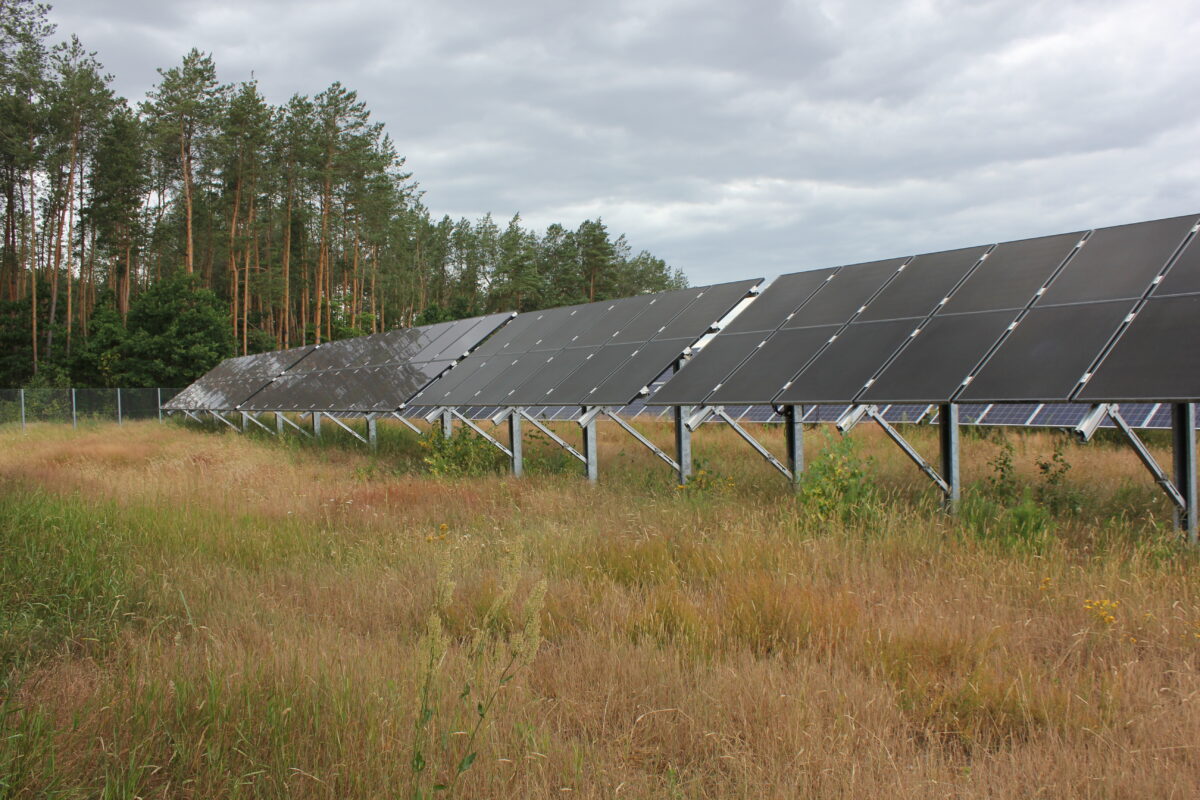
A four-year analysis conducted on a test field in eastern Poland has shown that crystalline solar panels perform better than thin-film panels at high latitudes. The tests showed that there is pronounced seasonal variability across all technologies, with thin-film modules showing significantly lower capacity factors than crystalline silicon, especially in winter.
Researchers from the The Lublin University of Technology in Poland and the University of Jaén in Spain have compared the performance of crystalline silicon (c-Si) solar panels with that of thin-film modules based on cadmium telluride (CdTe), amorphous silicon (a-Si) and copper, indium, gallium and selenide (CIGS) on a test field in eastern Poland over four years and found that the c-Si technologies outperform their thin-film counterparts in terms of both energy yield and reliability.
“All systems have been evaluated against the IEC 61724-1:2021 standard, with detailed monitoring of energy yields, losses, efficiency and performance degradation over time,” says the lead author of the study. Slawomir Gulkowski, narrated pv magazine. “Our study provides one of the first long-term assessments of the performance of photovoltaic systems in the cold temperate climate of Eastern Europe.”
The analysis covered a 3.42 kW a-Si system, a 21.25 kW c-Si array, a 3.3 kW CdTe system and a 3.2 kW CIGS installation. All systems, located in Bordziłówka, eastern Poland, were monitored from 2018 to 2021. “Neither the experimental campaign nor the subsequent data processing contained any special methodological innovations,” the researchers noted. “The novelty of the research lies in its context-specific contributions.”
The tests revealed pronounced seasonal variability across all technologies, with thin-film modules showing significantly lower capacity factors than c-Si, especially in winter.
The results indicated that c-Si achieved the best overall performance, producing approximately 1,050–1,150 kWh per kW annually, closely followed by CIGS, while a-Si and especially CdTe performed “significantly worse.” The annual performance loss was minimal for c-Si, approximately –0.7% per year, but reached extremely high levels for CdTe, at –15% per year, a behavior related to early generation design issues rather than climatic conditions.
Seasonal analyzes showed significant winter losses due to snow cover and low irradiation; However, regular rainfall effectively mitigated the pollution. Additionally, the researchers noted that CdTe modules showed “severe underperformance, combined with a pronounced performance decline over time, indicating significant material-related instability.”
Three key lessons emerged from the research: crystalline silicon modules remain the most reliable choice for high-latitude areas; thin-film modules require improved stability for long-term durability; and continuous on-site monitoring is essential for realistic performance loss estimates and informed investment decisions.
The results of the four-year tests were presented in the article “A study of the long-term operation and performance loss rates of various PV systems
technologies in Eastern Poland”, which was recently published in Renewable energy.
“Although this groundbreaking research is based on a small sample size, it provides unique empirical evidence for Poland and comparable cold temperate regions, and supports the sustainable development of PV systems in Eastern Europe, Central Asia and Northern North America.” Gulkowski concluded.
This content is copyrighted and may not be reused. If you would like to collaborate with us and reuse some of our content, please contact: editors@pv-magazine.com.
