

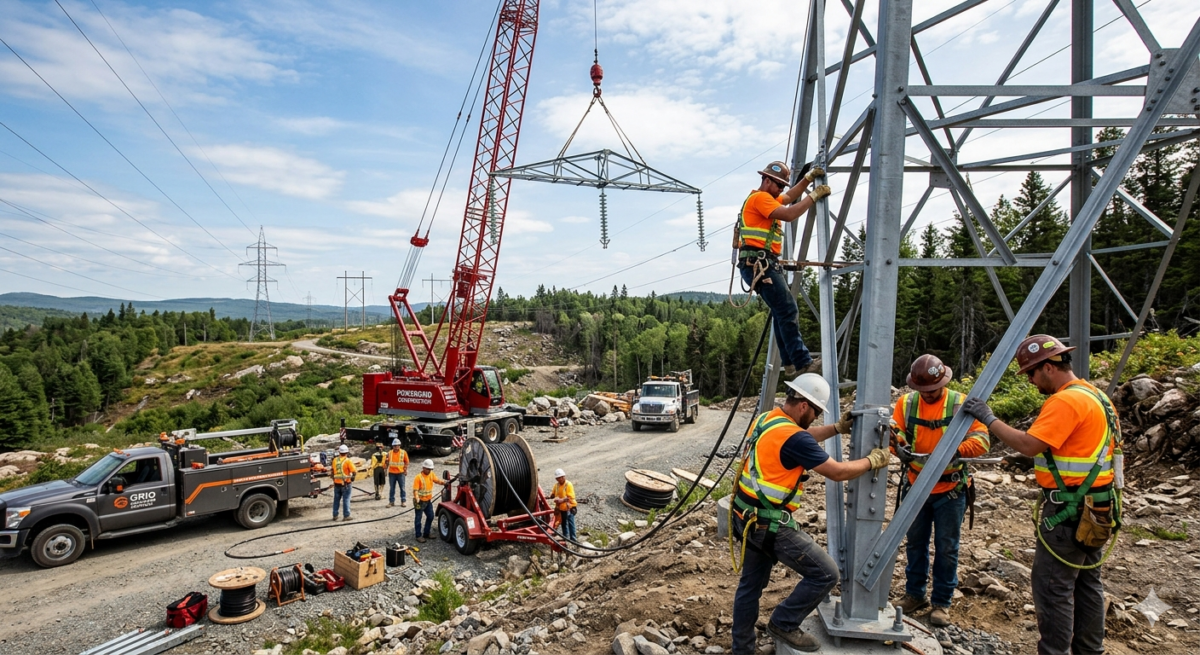
The EU Agency for the Cooperation of Energy Regulators (ACER) says investment in distribution networks has increased by 51% since 2021, but warns that fragmented planning rules and regulatory disruptions could limit efficiency and delay the energy transition.
Investments in Europe’s distribution network increased by 51% to €35.3 billion ($41.6 billion) per year between 2021 and 2024, and are expected to rise another 32% to €46.7 billion in 2027, according to a recently published ACER report.
The figures, from 191 major distribution system operators in 25 EU member states and Norway – excluding Bulgaria and Denmark – reflect the scale of infrastructure spending currently taking place across the bloc. But ACER warned that there is a risk that the investment disaster will be weakened by fragmented planning obligations, continued capital expenditure bias, uneven digitalisation and a structural imbalance leaving smaller operators out of key regulatory requirements.
Nearly two-thirds of distribution system operators (DSOs) in the EU are currently exempt from drawing up a network development plan, the report shows. This means that at least 5% of EU customers are served by operators exempt from drawing up such plans. Data from the Annex indicates that the share of affected customers ranges from negligible in some Member States to around 25% in Germany.
The DSO landscape itself further complicates the problem. Although 92% of European DSOs are small operators – defined as those serving fewer than 100,000 customers or operating small isolated systems – together they only serve around 8% of the customer base. Many of the legal obligations that ACER considers essential for the energy transition only apply to large DSOs, leaving a structurally disadvantaged group outside the key requirements.
ACER also noted uneven progress in digitalization. Smart meter rollout exceeds 80% in most EU Member States, but remains below 30% in six Member States, limiting DSOs’ ability to integrate flexibility tools, monitor network usage and accurately plan for future demand.
Capital expenditure bias remains a further concern. The reward structures in several countries favor the development of physical networks over alternatives for flexibility and demand response. Some countries have introduced corrective measures, but ACER said bias remains widespread.
ACER groups its ten recommendations under three pillars. In terms of powers, it calls for stronger mandates for national regulators, better equipped supervisors and DSOs, the removal of barriers to DSO mergers where consolidation would improve service quality, and the extension of network planning to national or subnational level.
For the sake of transparency, ACER recommends requiring DSOs to publish five-year investment and operational expenditure trajectories and to monitor and report on grid use. Efficient investment requires the elimination of rigid expenditure ceilings, the use of forward-looking incentives based in part on planned expenditures with ex-post reconciliation, and measures to reduce capital expenditure bias, including benchmarking of total expenditures and output-based incentives.
Grid connection limitations have become a growing concern for solar and storage developers across Europe. According to the British government, applications for grid connections in the United Kingdom increased by 460% between January and June 2025.
Earlier this month, RWE cited the availability of grid connections when it halted a 99.9MW solar and battery storage project in Wrexham, Wales, after reaching the formal consultation stage. ACER’s report does not directly address connection queues, but the findings describe structural conditions that industry groups have also linked to delays.
ACER also investigates broader electricity market structures. The regulator recently opened a public consultation on the European power purchase agreement (PPA) market, seeking input on regulatory conditions, financing barriers and market access in member states. The findings will inform future policy measures and contribute to ACER’s ongoing assessment of structural inefficiencies in European energy markets.
This content is copyrighted and may not be reused. If you would like to collaborate with us and reuse some of our content, please contact: editors@pv-magazine.com.
