
Close Menu
  • News
  • Industry
  • Solar Panels
  • Commercial
  • Residential
  • Finance
  • Technology
  • Carbon Credit
  • More
    • Policy
    • Energy Storage
    • Utility
    • Cummunity
What's Hot

Dutch solar owners asked to switch off during peak periods to ease the distribution crisis

June 7, 2026

The hydrogen flow: Toyota demonstrates its racing prototype on liquid hydrogen

June 7, 2026

Era of electrification exposing Australia’s weakest link

June 6, 2026
Facebook X (Twitter) Instagram
Solar Energy News
Sunday, June 7
  • News
  • Industry
  • Solar Panels
  • Commercial
  • Residential
  • Finance
  • Technology
  • Carbon Credit
  • More
    • Policy
    • Energy Storage
    • Utility
    • Cummunity
Solar Energy News
Home - Solar Industry - Floating solar could reach LCOE of $0.053/kWh in Saudi Arabia
Solar Industry

Floating solar could reach LCOE of $0.053/kWh in Saudi Arabia

solarenergyBy solarenergyJanuary 23, 2025No Comments3 Mins Read
Facebook Twitter Pinterest LinkedIn Tumblr Email
Share
Facebook Twitter LinkedIn Pinterest Email

Scientists in Saudi Arabia have assessed the techno-economic feasibility of floating PV installations at three different dams and found that such projects could deliver a return on investment of twelve to thirteen years.

January 23, 2025
Emiliano Bellini

Scientists from King Fahd University of Petroleum and Minerals (KFUPM) in Saudi Arabia conducted a techno-economic analysis to assess the country’s potential for floating PV (FPV) development and found that the levelized cost of energy (LCOE ) of floating PV projects can be as low as $0.053/kWh.

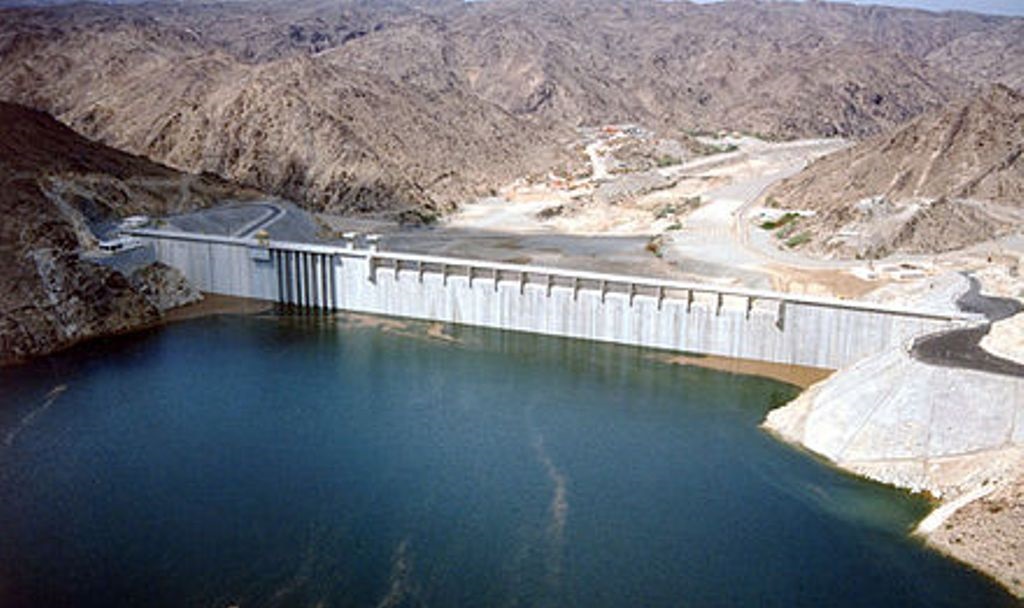
The study assessed techno-economic feasibility at three different locations with varying climates and topographies: the King Fahad Dam, a gravity dam on Wadi Bisha, 35 km south of Bisha in the ‘Asir region; the Wadi Namar Dam, located south of Riyadh; and the Hali Dam, 14 km east of Keyad in Makkah province.

Interested in more insights about Saudi Arabia?

Join our in-person event in Riyadh! The second edition of the SunRise Arabia Clean Energy Conference will be held on February 19, 2025. Reserve your ticket now.

The scientists reported that the King Fahd and Wadi Hali sites offer greater depth, likely improving cooling and increasing efficiency. Maximum solar radiation at King Fahd is 2.38 MW/m²/year, compared to 2.19 MW/m²/year at Wadi Namar and 2.07 MW/m²/year at Wadi Hali.

“These site-specific characteristics will play a critical role in the overall performance, feasibility and sustainability of the FPV system, highlighting the importance of comprehensive evaluation of both environmental and operational parameters when deploying FPV,” she added, noting that the location of a site’s average wind speed is also a key factor in achieving better cooling of the solar panels.

See also  California city to install pop-up solar canopy with EV charging

The research team proposed installing a 1 MW grid-tied PV system at each site, using pontoons made from hollow plastic floats. They evaluated several solar panel technologies, including models from JA Solar, Suntech, LG, Sunpower and Greentech, with powers between 350 W and 370 W and efficiencies ranging from 18.0% to 20.4%. The installation area was estimated at 4,899 m².

The analysis showed that King Fahd Dam achieved the lowest LCOE of $0.053/kWh, while Wadi Hali Dam and Wadi Namar Dam achieved $0.063/kWh. “The LCOE values ​​correspond to Saudi Arabia’s electricity tariff of $0.048/kWh for households and $0.080/kWh for industries,” the researchers said, identifying King Fahd Dam as the most suitable location for floating PV power plants.

The team also found that the Wadi Hali Dam had the shortest return on investment (ROI) at twelve years, while the King Fahd Dam and Wadi Namar Dam were both thirteen years old.

“This pilot study will not only advance scientific understanding, but will also help inform policy formulation, regulatory approvals and commercial investments in FPV technology in Saudi Arabia and other similar regions around the world,” the researchers concluded.

Their findings are available in “Study of a grid-connected floating photovoltaic power plant with an installed capacity of 1.0 MW in Saudi Arabia”, which was recently published in Heliyon.

This content is copyrighted and may not be reused. If you would like to collaborate with us and reuse some of our content, please contact: editors@pv-magazine.com.

Popular content

Source link

0.053kWh Arabia floating LCOE reach Saudi solar
Share. Facebook Twitter Pinterest LinkedIn Tumblr Email
solarenergy
  • Website

Related Posts

Dutch solar owners asked to switch off during peak periods to ease the distribution crisis

June 7, 2026

Letter from China’s PV Industry: Arctech wins 2.1 GW solar deal

June 5, 2026

ComEd starts a new energy pilot with a solar rebate on the roof of a brewery

June 5, 2026
Leave A Reply Cancel Reply

Don't Miss
Policy

Argentina’s Genneia will build 273 MW of solar energy – SPE

By solarenergyJune 13, 20240

Genneia has announced a joint investment of $250 million with the provincial government of Mendoza…

Infraland launches joint venture for the development of renewable energy sources

August 13, 2024

New research optimizes energy density in sodium-ion batteries – SPE

November 7, 2024

Solar wafer prices are stable despite emerging downward pressure despite policy interventions

October 31, 2025
Stay In Touch
  • Facebook
  • Twitter
  • Pinterest
  • Instagram
  • YouTube
  • Vimeo
Our Picks

Dutch solar owners asked to switch off during peak periods to ease the distribution crisis

June 7, 2026

The hydrogen flow: Toyota demonstrates its racing prototype on liquid hydrogen

June 7, 2026

Era of electrification exposing Australia’s weakest link

June 6, 2026

‘Come out from behind your screen, our industry is ultimately about people’

June 6, 2026
Our Picks

Dutch solar owners asked to switch off during peak periods to ease the distribution crisis

June 7, 2026

The hydrogen flow: Toyota demonstrates its racing prototype on liquid hydrogen

June 7, 2026

Era of electrification exposing Australia’s weakest link

June 6, 2026
About
About

Stay updated with the latest in solar energy. Discover innovations, trends, policies, and market insights driving the future of sustainable power worldwide.

Subscribe to Updates

Get the latest creative news and updates about Solar industry directly in your inbox!

Facebook X (Twitter) Instagram Pinterest
  • Contact
  • Privacy Policy
  • Terms & Conditions
© 2026 Tsolarenergynews.co - All rights reserved.

Type above and press Enter to search. Press Esc to cancel.