

Enercity has started construction of a 30 MW wastewater-based heat pump in Hannover as part of its shift away from coal-based district heating, replacing the capacity of the Stöcken coal-fired power plant alongside biomass, power-to-heat and waste heat systems.
Hanover-based utility Enercity AG has started construction on a major heat pump project as it moves away from coal-based district heating. The company, which is currently still heavily dependent on the Stöcken coal-fired power plant for heat supply, has already shut down the first of its production units, while the second will follow in the spring of 2028.
The decommissioned capacity will be replaced by a mix of biomass and electricity plants, extensive heat recovery from a waste incinerator and a range of large-scale heat pumps. The latest addition is a 30 MW heat pump being built at Hannover’s central wastewater treatment plant in the Herrenhausen district.
The system is intended to provide district heating to approximately 13,000 households at a supply temperature of 95 C. To integrate the installation into the existing heating network, the River Leine is crossed by means of horizontal directional drilling.
The heat source is treated wastewater, which maintains a stable temperature of 12 C to 16 C even in winter. Motors, compressors, two central heat exchanger packages and other important components are supplied by the Swiss manufacturer Friotherm.
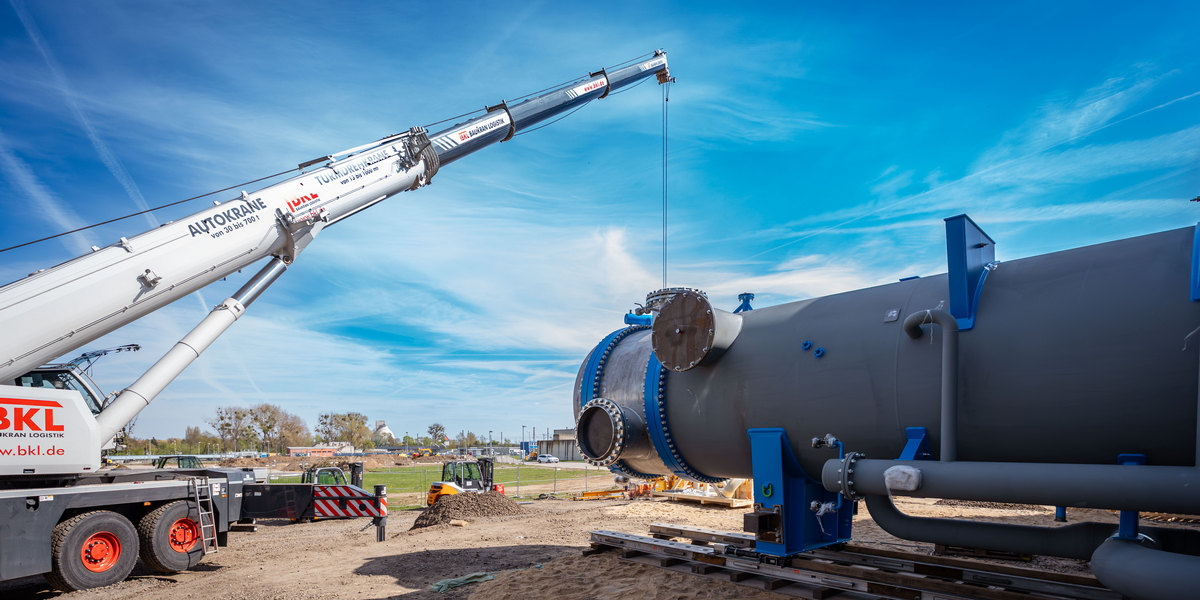
“Within just a few days, the installation team installed the individual components, each weighing up to 50 tons, in front of the building and moved them on rails with millimeter precision,” said Michael Hartung, director of Enercity Contracting GmbH, which is responsible for the project. “In the coming weeks we will connect the components via hundreds of meters of pipework for the evaporator, condenser and clean water circuits.”
The heat pump is expected to generate approximately 130 GWh of district heating annually, covering approximately 7% to 8% of Hannover’s demand. Enercity is investing approximately €56 million ($65.7 million) in the project, which is supported by €22.5 million in federal funding from the Federal Funding for Efficient District Heating Networks (BEW) program.
Enercity plans to expand Hannover’s district heating network from 360 km to approximately 550 km. The company wants to provide approximately 18,000 buildings with climate-neutral district heating by 2040, approximately four times the current level.
This content is copyrighted and may not be reused. If you would like to collaborate with us and reuse some of our content, please contact: editors@pv-magazine.com.
