

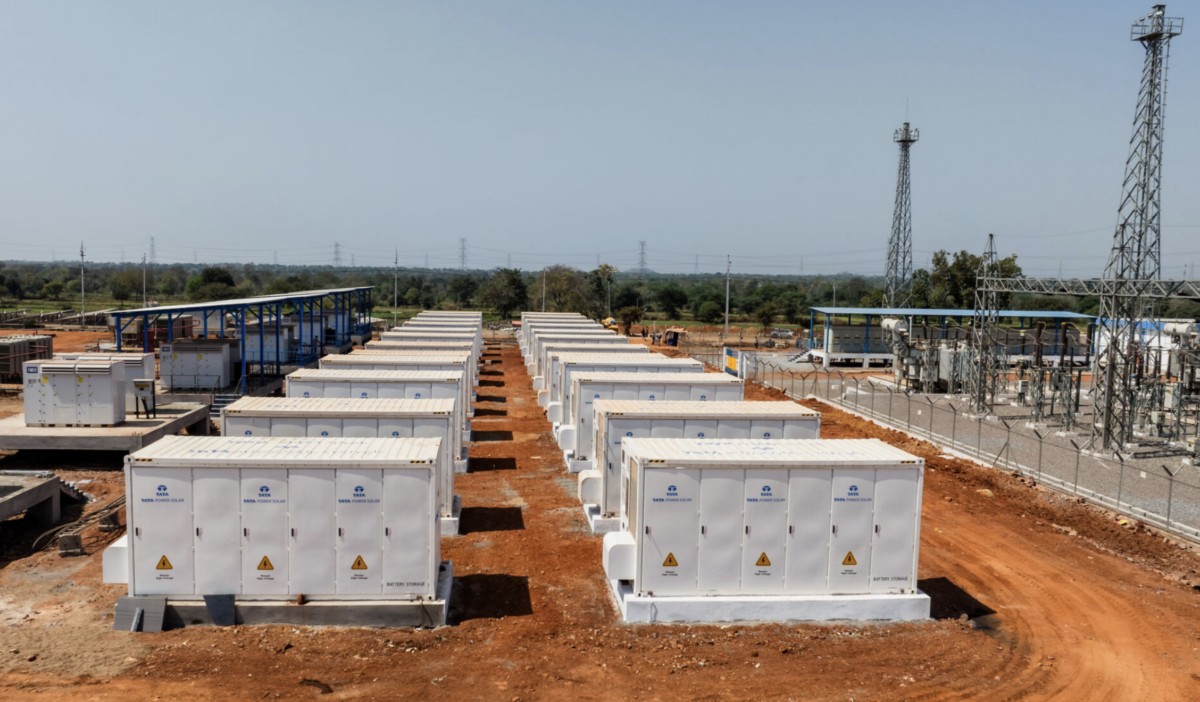
India could need nearly 230 GWh of energy storage capacity by 2030 as peak power demand approaches 300 GW and electricity consumption grows at 6% to 7% annually, a former government official said.
With peak energy demand expected to approach 300 GW in the coming years and electricity demand growing at 6% to 7% annually, India will need nearly 230 GWh of energy storage capacity by 2030 to ensure the stability, flexibility and reliability of the power grid, said Bhupinder Singh Bhalla, former secretary of the Ministry of New and Renewable Energy (MNRE), at the recent Indian Power and Energy Storage Conference 2025.
He said renewables now account for 26% of total electricity generation, with a record high of 51% renewable energy generation in a single day this year. As India moves closer to its target of 500 GW of non-fossil capacity by 2030, he says energy storage is emerging as a critical enabler for grid stability, flexibility and 24-hour reliability, in addition to capacity expansions.
The conference brought together policymakers, regulators and industry executives to chart a path for integrating renewable energy sources while managing thermal generation facilities. It was supported by the MNRE and the Central Electricity Authority.
RPV Prasad, Managing Director, Envision Energy India, said India is entering a phase of accelerated deployment of batteries and energy storage, in line with the 500 GW renewable target. He said falling battery prices, fast-charging ecosystems and policy support could allow storage to shift from a balancing tool to a core grid resource.
Prasad warned against ultra-low bidding and weak technical standards, calling for stronger security frameworks, global best practices and diversified use cases. He said energy storage must be able to stack revenues across grid services, demand response and ancillary markets, while longer duration solutions evolve to deliver baseload-like reliability.
Ashish Mittal, director of energy and resources at CRISIL, said energy storage has become a defining theme in the Indian energy sector, with over 212 GWh of capacity tendered in the last five to six years. He said achieving the 500 GW non-fossil target will require coordinated regulatory frameworks at national and state levels that provide long-term investor confidence.
Mittal said financing mechanisms such as cap-and-floor structures, viability gap financing and storage-as-a-service models will be critical in mitigating risks and mobilizing private capital.
Ashok Sharma, deputy managing director of the State Bank of India, said energy storage projects require a shift in the way risk is assessed and capital is deployed, given their capital-intensive nature and battery-heavy cost structures.
Sharma said India needs to accelerate domestic manufacturing while remaining technology agnostic, combining batteries, pumped storage and emerging technologies to build a resilient infrastructure for the long term.
This content is copyrighted and may not be reused. If you would like to collaborate with us and reuse some of our content, please contact: editors@pv-magazine.com.
