
Close Menu
  • News
  • Industry
  • Solar Panels
  • Commercial
  • Residential
  • Finance
  • Technology
  • Carbon Credit
  • More
    • Policy
    • Energy Storage
    • Utility
    • Cummunity
What's Hot

Zendure launches battery ranges for residential PV – SPE

April 23, 2026

The CFO’s Guide To Nature Based Solutions

April 23, 2026

Inside PV Manufacturing: Belga Solar’s module factory in Belgium

April 23, 2026
Facebook X (Twitter) Instagram
Solar Energy News
Thursday, April 23
  • News
  • Industry
  • Solar Panels
  • Commercial
  • Residential
  • Finance
  • Technology
  • Carbon Credit
  • More
    • Policy
    • Energy Storage
    • Utility
    • Cummunity
Solar Energy News
Home - Solar Industry - Internet-of-Things could bring water cooling with solar panels closer to commercial viability
Solar Industry

Internet-of-Things could bring water cooling with solar panels closer to commercial viability

solarenergyBy solarenergyApril 10, 2026No Comments3 Mins Read
Facebook Twitter Pinterest LinkedIn Tumblr Email
Share
Facebook Twitter LinkedIn Pinterest Email

A Czech team developed an IoT system using MQTT to autonomously cool PV panels, increasing daily energy yield by 7.38% with a positive net energy balance.

April 10, 2026
Lior Kahana

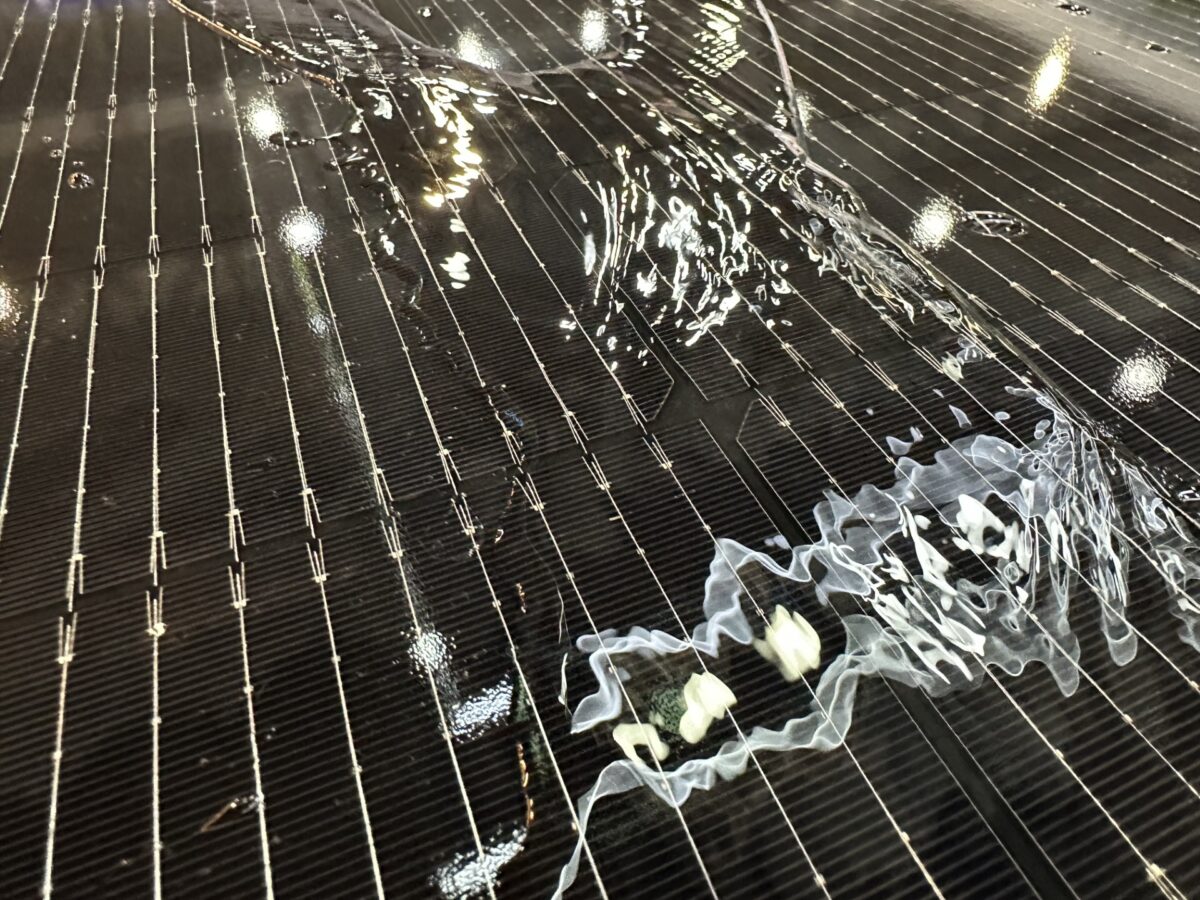
A research team from the Czech Republic has developed a new Internet of Things (IoT) architecture specifically designed for active water cooling of PV panels, active cooling of PV panels.

“The architecture explicitly evaluates the net energy balance of the cooling process,” the team said. “The proposed system enables autonomous operation of individual cooling nodes while providing centralized coordination and trend-aware decision support capabilities at the fog level. This approach improves overall energy efficiency, reduces dependence on centralized hardware, and provides a scalable foundation for future integration of AI-based control strategies.”

The distributed IoT-based architecture integrates an autonomous ESP32-based microcontroller, a Raspberry Pi fog layer for real-time decision making and an optional cloud layer for long-term optimization.

The system uses a distributed IoT architecture with three layers, namely edge, fog and cloud. The edge nodes handle data collection, with sensors on the PV panels measuring temperature, electrical power, coolant status and environmental conditions.

The data is sent to a central controller via the MQTT message queue telemetry transport communications protocol. In the controller, the fog layer comes into action, which performs real-time decision making and activates a water pump based on thresholds not shared by the team. A cloud layer enables long-term analysis, but is not required for use.

An experimental study of the proposed IoT technology was conducted outdoors on a real 600W installation in an undisclosed location. In the experiment, two branches of the PV installation were equipped with the new IoT system, and two were not, which served as a reference. Data were collected for 52 days.

See also  Tethered orbital data centers are intended to power AI with solar energy

According to the results, the daily energy output of the cooled branch on a representative day was 818.61 Wh, while the uncooled reference branch produced 762.36 Wh. That represents an absolute gain of 56.25 Wh and a relative gain of 7.38%. “Taking into account the measured pump consumption of 6 W, the resulting energy return on investment (ROI) reached 1.07 on representative high irradiation days, confirming a positive net energy balance under real operating conditions,” the team added.

“The proposed architecture is fully wireless, scalable and independent of centralized hardware limitations,” they concluded. “By explicitly evaluating the net energetic effect of cooling rather than immediate peak gains, the study creates a practically deployable and energetically consistent framework for adaptive PV temperature management under dynamic climatic conditions.

The system was presented in “Energy-aware IoT architecture for active cooling of photovoltaic panels under dynamic weather conditions”, published in energy conversion and management: Scientists from the Czech University of South Bohemia in České Budějovice and the Czech Academy of Sciences took part in the study.

This content is copyrighted and may not be reused. If you would like to collaborate with us and reuse some of our content, please contact: editors@pv-magazine.com.

Popular content

Source link

bring closer commercial cooling InternetofThings panels solar viability water
Share. Facebook Twitter Pinterest LinkedIn Tumblr Email
solarenergy
  • Website

Related Posts

Inside PV Manufacturing: Belga Solar’s module factory in Belgium

April 23, 2026

Solar energy’s rebound effect could increase European electricity demand by 5% by 2050 – SPE

April 23, 2026

Repowering key for Japanese solar assets nears end of feed-in tariff – SPE

April 23, 2026
Leave A Reply Cancel Reply

Don't Miss
Solar Industry

China’s power reform can stimulate the question of the solar module, says prices, says S&P Global

By solarenergyMarch 11, 20250

Analysis by S&P Global suggests that new power prices in China can bring a stream…

Pressure on the Mediterranean is causing mixed solar results across Europe – SPE

May 13, 2024

Work is underway on a ‘river’ heat pump complex in Massachusetts – SPE

November 10, 2025

Ciel & Terre unveils new floating solar energy solution – SPE

December 11, 2025
Stay In Touch
  • Facebook
  • Twitter
  • Pinterest
  • Instagram
  • YouTube
  • Vimeo
Our Picks

Zendure launches battery ranges for residential PV – SPE

April 23, 2026

The CFO’s Guide To Nature Based Solutions

April 23, 2026

Inside PV Manufacturing: Belga Solar’s module factory in Belgium

April 23, 2026

Solar energy’s rebound effect could increase European electricity demand by 5% by 2050 – SPE

April 23, 2026
Our Picks

Zendure launches battery ranges for residential PV – SPE

April 23, 2026

The CFO’s Guide To Nature Based Solutions

April 23, 2026

Inside PV Manufacturing: Belga Solar’s module factory in Belgium

April 23, 2026
About
About

Stay updated with the latest in solar energy. Discover innovations, trends, policies, and market insights driving the future of sustainable power worldwide.

Subscribe to Updates

Get the latest creative news and updates about Solar industry directly in your inbox!

Facebook X (Twitter) Instagram Pinterest
  • Contact
  • Privacy Policy
  • Terms & Conditions
© 2026 Tsolarenergynews.co - All rights reserved.

Type above and press Enter to search. Press Esc to cancel.