

Irish transmission system operator (TSO) Eirgrid has launched a consultation on a proposed procurement mechanism and operational considerations for its long-term energy storage system (LDES).
It follows the recommendation of last year’s Electricity Storage Policy Framework (ESPF), published by the Ministry of Climate, Energy and Environment (DCEE), for the immediate procurement of LDES services with the capacity to supply electricity to the EiGgrid for 4 hours or more.
Research agency Cornwall Insight did this said at the time that a lack of LDES policies was putting Ireland’s sustainability goals at risk.
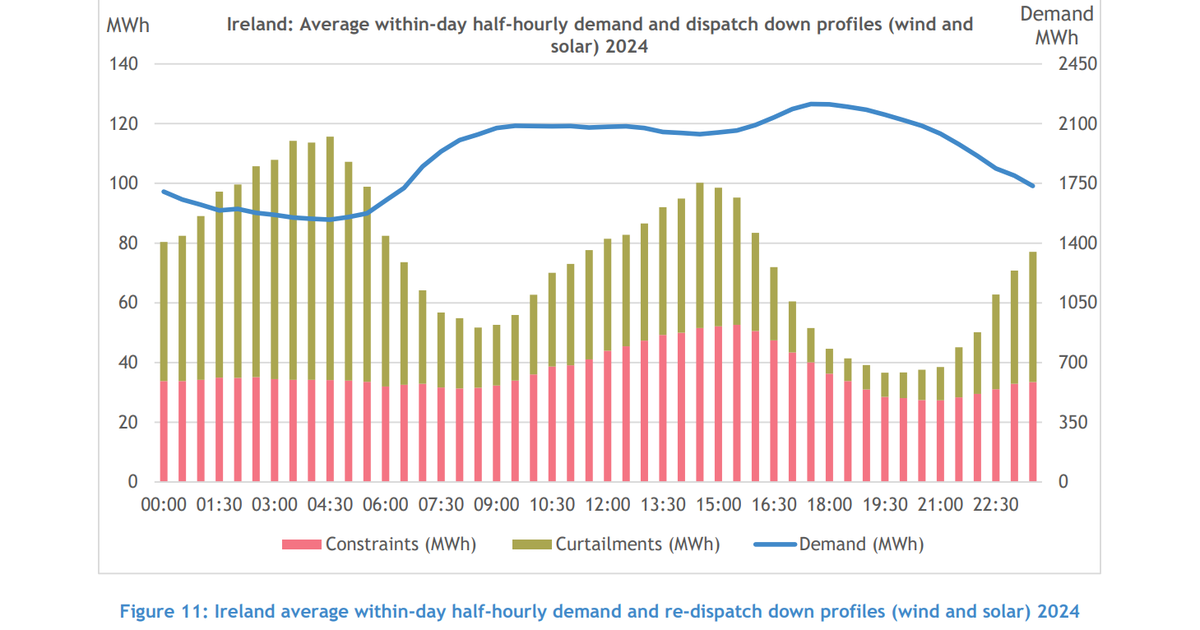
Eirgrid said it is looking to source 500 MW from the LDES resources. The funds will help the TSO manage periods of high renewable energy production by importing to reduce constraints and constraint-based re-dispatch, and exporting during periods of lower renewable energy production to help manage evening demand as solar generation declines.
Please note that in many other markets 4-hour systems are not considered LDES. The duration is standard in the US, Chile and many other markets without LDES-specific policies, although these tend to be renewable energy markets that make greater use of solar energy, while Ireland is mainly wind energy.
Eirgrid’s LDES team will host an industry webinar on November 5, 2025 where the plan will be discussed in more detail.
It comes after the UK Department for Energy Security and Net Zero (DESNZ) and regulator Ofgem implemented their LDES scheme. unveiling the shortlist of 77 winning projects in its first window at the end of September. The 77 projects have a total capacity of 28.7 GW and will have to be deployed as 8-hour systems (or more).
Eirgrid cited the scheme in Britain and Australia as examples, and also highlighted the BESS capacity acquisition mechanisms in Greece and Italy which are not labeled as LDES schemes but acquire capacity with a similar discharge duration.
However, unlike the UK cap-and-floor mechanism, Eirgrid proposes a floor with a percentage-based revenue sharing component for revenues above the minimum. It said more attention to the details is needed, but has proposed that initially 70% of all accrued revenue above the revenue threshold would go to the LDES asset owner, while the remaining 30% would go to the TSO as revenue. This would require open book accounting for all revenue streams.
