

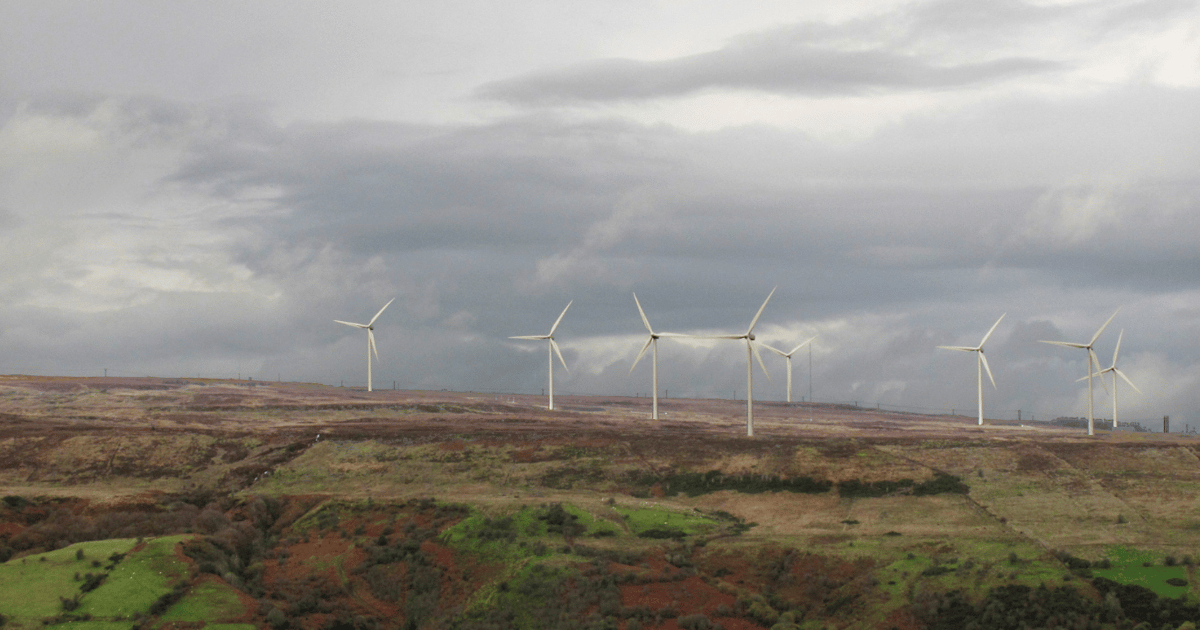
The Government of the Republic of Ireland has published the terms for its annual Renewable Electricity Support Scheme (RESS 6) auction, introducing separate onshore wind and solar pools for the first time and using non-price EU Net-Zero Industry Act (NZIA) criteria.
The terms and conditions provide greater certainty for property developers preparing to participate in the auction, trade body Solar Ireland said in a message last week. The government published the conditions of the auction the week before, on July 16.
The qualifying period runs from (all dates in 2026) July 30 to August 27, with final qualification decisions on October 21, followed by the auction entry period from October 29 to November 5. The preliminary auction results will be announced on November 18, followed by the final results on December 2. The award announcements are on December 10.
The exact target quantity will be released closer to auction time. It is operated by transmission system operator Eirgrid.
It is the first RESS auction to include separate technology pots for onshore solar and wind energy. In previous years it was one pot, although each technology had its own strike price.
Last year’s auction purchased 218.84 MW of onshore wind energy and 860.38 MW of solar energya total of 1.08 GW spread over 23 projects.
It is also the first RESS auction to include non-price criteria under the Net-Zero Industry Act (NZIA). The NZIA is an EU law that aims to stimulate the deployment of clean energy and upstream production. passed in 2024 (covered by our sister site PV technology at the time).
Within each pot, projects are scored on 85% price, 5% resilience and 10% energy system integration.
The energy system integration score allocates a maximum of 2.5% for secondary technology integration and 7.5% for battery storage integration. As more and more renewable energy sources come online, projects that can provide dispatchability and flexibility with storage are becoming increasingly valuable.
However, Solar Ireland said significant regulatory and market barriers remain.
“Current rules continue to limit the efficient deployment of hybrid and co-located projects, meaning developers are incentivized through RESS to deliver capabilities that the broader regulatory framework does not yet fully support,” the trade body said.
Meanwhile, the provisions for the solar capacity factor and unrealized available energy compensation remain unchanged from previous auctions.
The solar capacity factor of 11% is an assumption of how much power solar PV will actually generate compared to the theoretical maximum. The Unrealized Available Energy Compensation, meanwhile, is a financial mechanism that compensates producers for physical availability that cannot be delivered due to grid, curtailment or other system issues beyond their control.
View all details about RESS 6 on the Irish government website here.
