

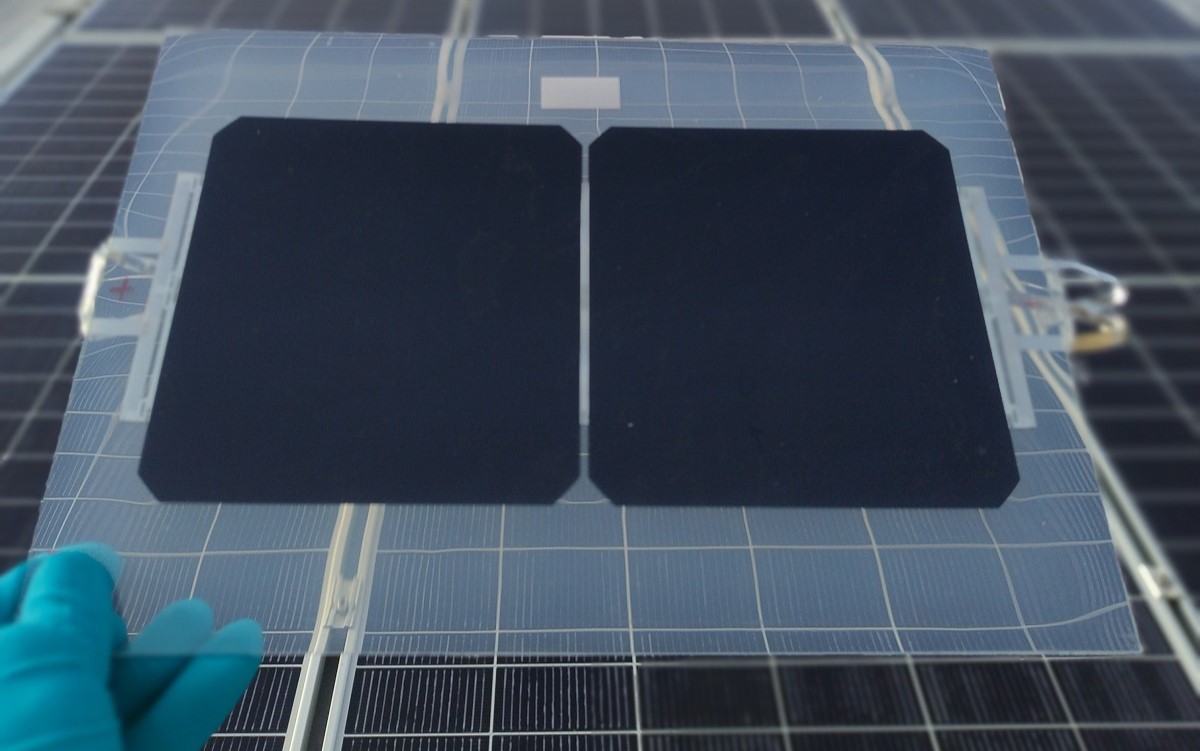
Researchers from King Abdullah University of Science and Technology (KAUST) have published a review that considers polycarbonate sheets as an alternative to solar cover glass. Their findings indicate that these new materials have a combination of light weight, mechanical strength, optical transparency and thermal resistance that is worthy of further investigation.
Replacing conventional solar panel glass with polymeric materials can reduce weight, prevent glass breakage and enable new PV applications where low weight is a key requirement, such as building-integrated solar photovoltaics (BIPV) and vehicle-integrated solar photovoltaics (VIPV).
Alternative materials, such as polycarbonate sheets (PC), deserve consideration according to “Lightweight solar photovoltaic powered by polycarbonate-based sheets”, a review published in Advanced technical materials by researchers from King Abdullah University of Science and Technology (KAUST) in Saudi Arabia.
“Our research included both new concepts for glass-free module designs and existing commercial solutions,” said first author Marco Marengo pv magazine, adding that the PC was worth a second look in light of its proven performance outside in other application areas.
Examples of outdoor applications include greenhouse covering material, architectural skylights and building facades. It is used for its impact strength, wide operating temperature range, excellent dimensional stability and self-extinguishing properties, according to the article.
In addition, PC boards offer a “unique combination” of low weight, mechanical strength, broadband optical transparency and thermal resistance.
“Initially, we had doubts about the possibility of implementing PC as a replacement for glass in PV modules. However, during our research we realized that only a few material combinations had been explored for lightweight PV, and several companies had already explored PC-based modules,” said Marengo.
The focus of the study was on two thicknesses of PC plates: (i) thin, less than 1 mm, flexible back and front plates and (ii) thick, more than 1 mm, rigid polymer plates. In the study, the researchers also compared the material properties of glass, PC and polymethyl methacrylate (PMMA), including costs.
The research shows that challenges to widespread adoption revolve around thermomechanical stresses “induced by different coefficients of thermal expansion in the stack of materials,” compatibility with commercial encapsulants that are not necessarily tailored for bonding to PC sheets, and potentially higher costs. “However, recent developments in encapsulation materials and solar cell junction designs offer promising solutions to these hurdles,” the researchers said.
“Our research showed that polymer-based materials, especially PC, can reduce module weight by more than 50% compared to glass, while providing impact and fire resistance, improved mechanical stability compared to thin front and back plates, and design flexibility,” Marengo said. “That said, long-term reliability studies and outdoor testing remain essential to demonstrate the durability of PV modules encapsulated with PC sheets.”
The team will now focus on developing market-ready, lightweight PC-based photovoltaic modules using commercially available materials compatible with standard industrial laminating processes.
“We also want to demonstrate their reliability to international standards and evaluate their outdoor performance under the hot and humid climatic conditions of the west coast of Saudi Arabia,” Marengo said.
This content is copyrighted and may not be reused. If you would like to collaborate with us and reuse some of our content, please contact: editors@pv-magazine.com.
