
Close Menu
  • News
  • Industry
  • Solar Panels
  • Commercial
  • Residential
  • Finance
  • Technology
  • Carbon Credit
  • More
    • Policy
    • Energy Storage
    • Utility
    • Cummunity
What's Hot

Dutch solar owners asked to switch off during peak periods to ease the distribution crisis

June 7, 2026

The hydrogen flow: Toyota demonstrates its racing prototype on liquid hydrogen

June 7, 2026

Era of electrification exposing Australia’s weakest link

June 6, 2026
Facebook X (Twitter) Instagram
Solar Energy News
Sunday, June 7
  • News
  • Industry
  • Solar Panels
  • Commercial
  • Residential
  • Finance
  • Technology
  • Carbon Credit
  • More
    • Policy
    • Energy Storage
    • Utility
    • Cummunity
Solar Energy News
Home - News - Low Carbon, Lancaster University to study the biodiversity of solar farms
News

Low Carbon, Lancaster University to study the biodiversity of solar farms

solarenergyBy solarenergyMay 28, 2024No Comments3 Mins Read
Facebook Twitter Pinterest LinkedIn Tumblr Email
Share
Facebook Twitter LinkedIn Pinterest Email
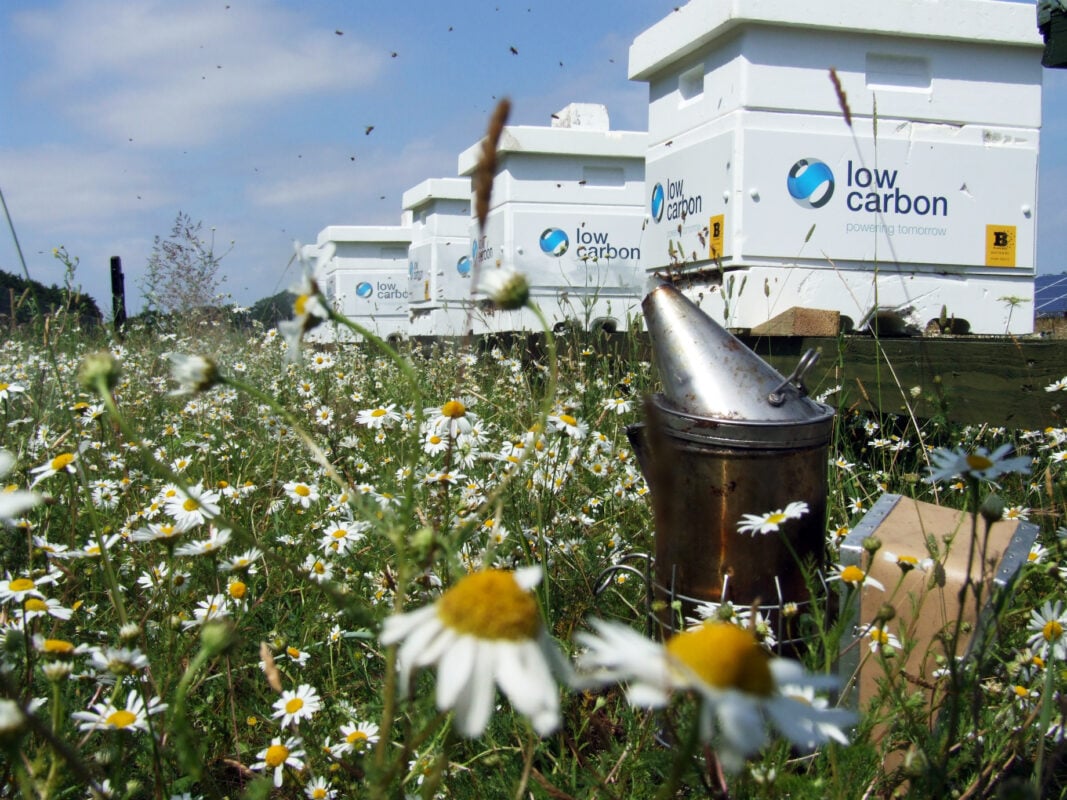
The impact of solar farms on pollinating insects, including bees, will be studied using leading technology. Image: Low carbon

A new study by scientists from Lancaster University and sustainable energy company Low Carbon has been launched to understand the impact of solar farms on biodiversity.

The research, which will be carried out at the Westmill Solar Park in Oxford, will use new technologies to continuously assess the presence of pollinating insects around the solar park. These technologies include acoustic monitoring equipment and automatic insect monitoring (AMI) traps that assess the biodiversity of moths in the area.

Although this technology has been used to assess biodiversity in agricultural environments, this is the first time it has been used in a renewable energy environment.

ESG and Sustainability Director at Low Carbon welcomed Harriet Parker: “At Low Carbon we aim to create as much sustainable energy capacity as possible while protecting the environment for future generations. For us, it is not good enough just to be a leading producer of renewable energy; we must also create a positive impact to protect and stimulate nature and biodiversity. The data already tells us that solar sites can positively contribute to nutrient-poor land that is no longer capable of producing food on a large scale by allowing the land to rest. I’m curious to see what other benefits we can learn about solar energy. this new study.”

Hollie Blaydes, researcher at Lancaster University, who is leading the research, added: “We are very excited about this research and look forward to measuring biodiversity using new methods. By leveraging these emerging technologies in addition to conducting traditional monitoring techniques, we hope to gain insight into what the future of biodiversity monitoring on solar farms could look like. The data we collect will also tell us more about how pollinators respond to solar farms, compared to similar land uses, which is critical in embedding biodiversity benefits into solar developments.”

See also  A national registration system for carbon credits

Biodiversity is a major problem

Many who object to solar farms worry that their land use could damage wildlife habitat, but evidence has shown otherwise.

A 2024 study by Solar Energy UK praised solar farms as “biodiversity havens”, with Hollie Blaydes responding by noting at the time that “Groups such as birds and invertebrates appear to respond positively to biodiversity-focused management on solar farms and we I hope to continue working with the data to further unravel the identified patterns.” Ecologically sensitive bird and mammal species, including yellowhammers, linnets, starlings and brown hares, were commonly found at the 87 solar farms studied.

Previous studies have also confirmed the positive impact of solar farms on biodiversity, with environmental impact studies from Downing Renewable Developments and Endurance Energy showing a net biodiversity gain of 176% and 62% respectively on their 50 MW solar farm plans.

Developers of solar parks are increasingly focusing on biodiversity in their development plans. Queequeg Renewables recently partnered with environmental consultancy Biodiverse Consulting to boost biodiversity at five of its solar and battery energy storage systems projects.

Solar Power Portal’s publisher Solar Media will host the UK Solar Summit on June 4-5, 2024 in London. The event will explore Britain’s new utility and rooftop solar landscape, look at the opportunities within a GW+ annual market, and much more. For more information, go to the website.

Source link

biodiversity carbon farms Lancaster solar Study University
Share. Facebook Twitter Pinterest LinkedIn Tumblr Email
solarenergy
  • Website

Related Posts

Dutch solar owners asked to switch off during peak periods to ease the distribution crisis

June 7, 2026

Letter from China’s PV Industry: Arctech wins 2.1 GW solar deal

June 5, 2026

ComEd starts a new energy pilot with a solar rebate on the roof of a brewery

June 5, 2026
Leave A Reply Cancel Reply

Don't Miss
Policy

Morocco distributed the solar potential of 28.6 GW – SPE

By solarenergyNovember 4, 20250

Morocco could install up to 28.6 GW of distributed solar power, produce 66.8 TWh of…

Carbon offset programs underestimate the threat of hurricanes

May 20, 2024

EU invests €3 billion in decarbonising buildings and road transport – SPE

February 10, 2026

Effizency launches a web-based simulator with PV systems, heat pump prices and savings – SPE

October 4, 2024
Stay In Touch
  • Facebook
  • Twitter
  • Pinterest
  • Instagram
  • YouTube
  • Vimeo
Our Picks

Dutch solar owners asked to switch off during peak periods to ease the distribution crisis

June 7, 2026

The hydrogen flow: Toyota demonstrates its racing prototype on liquid hydrogen

June 7, 2026

Era of electrification exposing Australia’s weakest link

June 6, 2026

‘Come out from behind your screen, our industry is ultimately about people’

June 6, 2026
Our Picks

Dutch solar owners asked to switch off during peak periods to ease the distribution crisis

June 7, 2026

The hydrogen flow: Toyota demonstrates its racing prototype on liquid hydrogen

June 7, 2026

Era of electrification exposing Australia’s weakest link

June 6, 2026
About
About

Stay updated with the latest in solar energy. Discover innovations, trends, policies, and market insights driving the future of sustainable power worldwide.

Subscribe to Updates

Get the latest creative news and updates about Solar industry directly in your inbox!

Facebook X (Twitter) Instagram Pinterest
  • Contact
  • Privacy Policy
  • Terms & Conditions
© 2026 Tsolarenergynews.co - All rights reserved.

Type above and press Enter to search. Press Esc to cancel.