

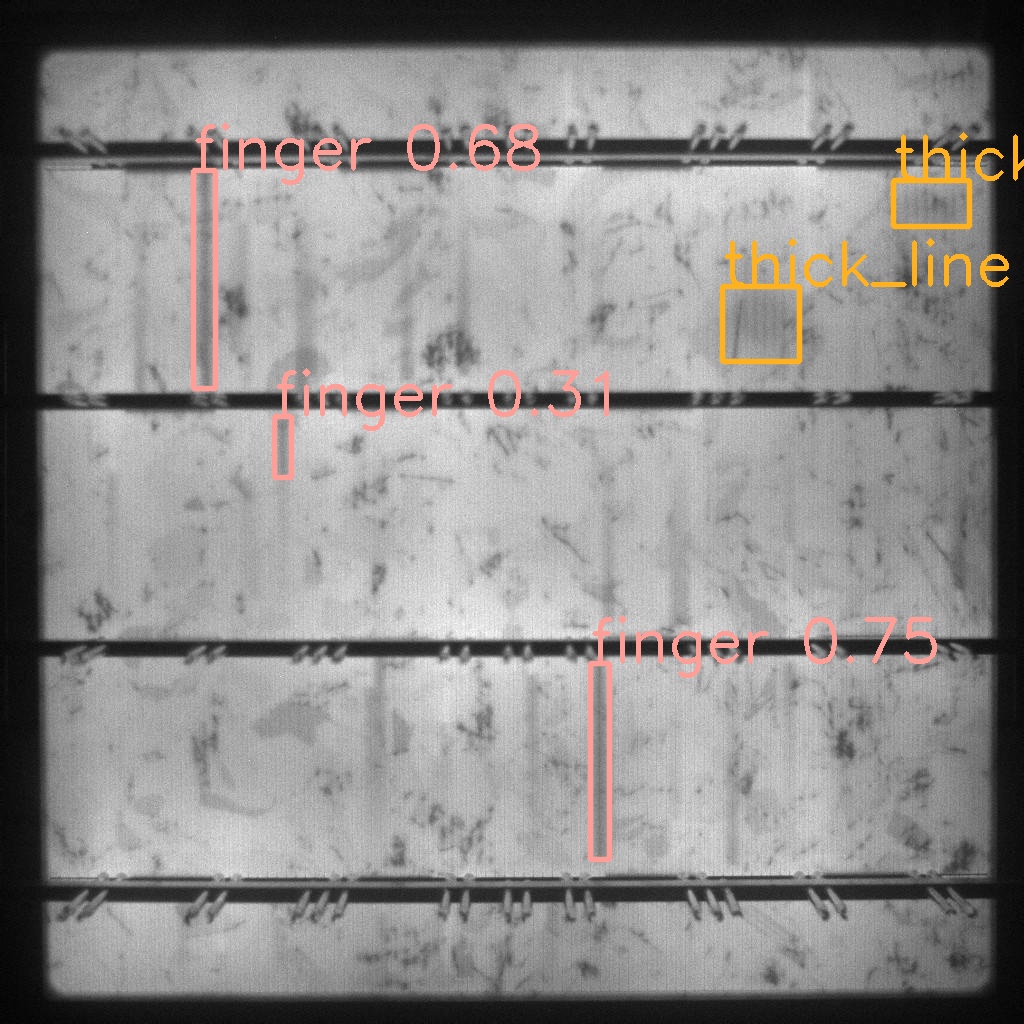
The new method uses the YOLOv8 framework, which integrates an attention mechanism and a transformer model. It was tested on a dataset of 4,500 electroluminescence images against several other models and the results were up to 17.2% more accurate.
Scientists from China have developed a new deep learning method for detecting defects in PV cells. When analyzing electroluminescence (EL) images, the new system uses the YOLOv8 convolutional neural network (CNN) architecture, integrating an attention mechanism and a transformer model.
“To further improve the accuracy, I think we can start by optimizing the model structure and training the model’s loss function, using more advanced modules or loss functions to improve the model’s accuracy and at the same time speed up the detection speed guarantee,” says lead author. Du Lang, narrated pv magazine.
“EL imaging technology is vital for image acquisition because certain abnormalities are often embedded in the interior of PV cells, making them undetectable by optical or infrared cameras,” the researchers said. “Computer vision-based methods can effectively meet the urgent demand for quality monitoring in various fields. Automated defect detection is crucial for replacing labor-intensive and costly manual inspections and increasing production capacity.”
YOLO is a real-time object detection framework that balances performance and efficiency. The latest version has faster detection speeds and high average accuracy. In their work, the academics improved the model with a combined transformer (CCT) CNN, integrating the transformer model to extract global contextual information.
“The transformer model deviates from traditional recurrent and convolutional neural networks by exclusively using self-attention mechanisms to capture dependencies between input sequences,” the scientists explained. “The self-attention mechanism allows the model to evaluate the meaning of different elements in the input sequence when calculating the representation of each component.”
In addition to the transformer model, the academics added the polarized self-attention mechanism (PSA) to address feature fusion conflicts. They also explained that methods designed to focus attention on crucial image areas while ignoring irrelevant parts are called attention mechanisms. “The PSA mechanism introduces polarization into self-attention mechanisms, allowing the model to focus on informational elements while selectively suppressing distractions,” she added. “PSA increases the discriminative power of self-attention mechanisms by assigning polarities to attentional weights, thereby improving feature representation and task performance.”
The new model was tested on the PVEL-AD datasetwhich contains 4,500 images of cells. The cells are annotated into 12 categories, including crack, finger, black core, thick line, star crack, corner, fragment, scratch, horizontal dislocation, vertical dislocation, misprint, and short circuit. For reference, seven different detection models were also run on the same dataset.
To compare them, the team used the F1 evaluation metric, which combines precision and recall. In addition, the mean average precision (mAP) at the intersection over the union (IoU) 50 (mAP50) and mAP50:95 were also used. The first measures the mAP of the model at an IoU threshold of 50%; the latter rates it on multiple IoU thresholds ranging from 50% to 95%, with 5% increments.
Their analysis showed that, compared with YOLOv3-tiny/YOLOv5u-s/YOLOv6u/YOLOv8, the proposed method significantly improves the F1 score by 8.4%/2.4%/6.5%/8.7%, and the mAP50 increases by 15.5%/17.2%/20%/16.9% and mAP50:95 by 22.1%/8.4%/9.7%/8.6%.
“Based on the experimental results, our proposed method achieves a mAP50 of 77.9%, which surpasses YOLOv8, which achieves 61.0% mAP50, demonstrating superior performance in F1 score, mAP50 and mAP50:95 compared to other YOLO detectors,” the scientists concluded. “Although the frames per second (FPS) of the proposed method decreases slightly compared to the baseline, it still meets the real-time requirements of production lines and achieves a significant performance improvement.”
The new model was presented in “A PV cell defect detector combined with transformer and attention mechanism”, published in Scientific reports. Scientists from China’s Zhejiang Industry Polytechnic College and Northeastern University conducted the research.
This content is copyrighted and may not be reused. If you would like to collaborate with us and reuse some of our content, please contact: editors@pv-magazine.com.
