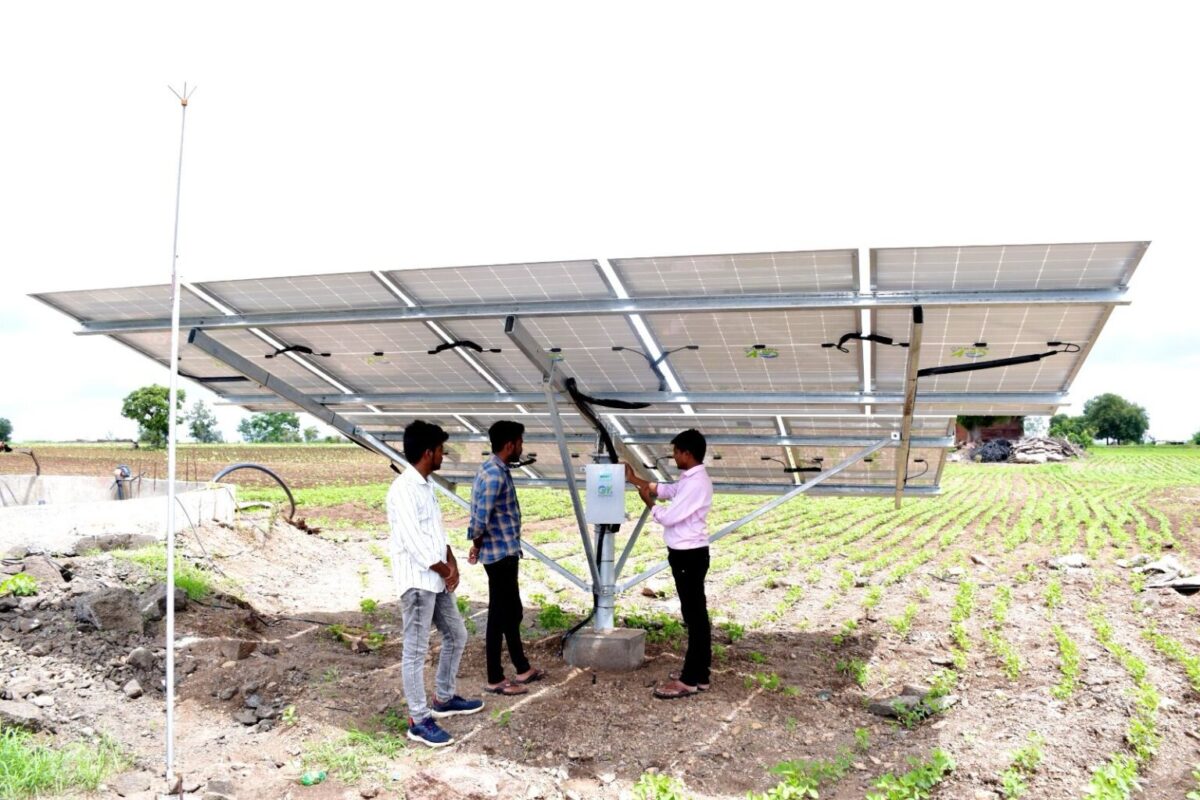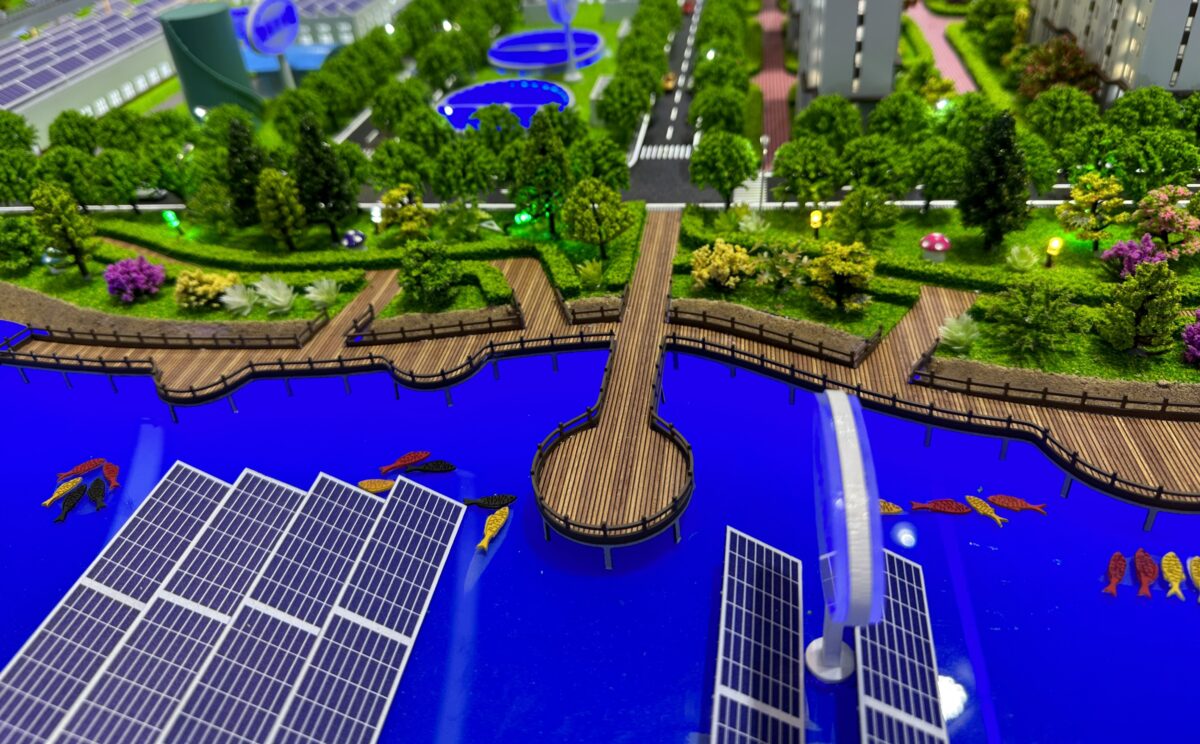
New research from India shows how to deploy bifacial solar panels to achieve strong performance in floating PV projects planned on tropical freshwater. Their experimental setup showed that higher efficiency gains are achievable by measuring panel height, water depth and tilt angle.
An international research team has created an experimental setup and a model for optimizing floating bifacial solar panels intended for deployment in tropical freshwater.
The research group used a response surface methodology (RSM) based on a central composite design (CCD). CCD is a specific methodology for designing experiments that fits RSM models that can represent the relationship between input and output factors. In addition, the team investigated the economic viability of floating two-sided PV projects.
“Our research integrates a global perspective on solar technology, focusing on sensitivity analysis of design parameters and correlations of power gains via RSM,” the academics said. “We aim to optimize the height, azimuth angle and water depth of the bifacial solar panels, thereby promoting sustainable energy solutions in bifacial solar systems.”
As part of the CCD design, the researchers built two PV systems on a roof in Virudhunagar, southern India. Each used 395W bifacial PV modules mounted on a conventional white painted surface or on a freshwater tank with white paint on the bottom.
Both systems have been tested at a panel height of 25 cm, 87.5 cm or 150 cm and a tilt angle of 45 degrees, 90 degrees and 135 degrees. The PV system mounted above the water was also tested with varying water depths of 2 cm, 6 cm and 10 cm. The temperature, voltage and current of the panel were tested at different irradiation levels and wind speeds.
“The data collected during these tests was analyzed using RSM to understand the influence of multiple variables,” the scientists said. “This extensive data collection included monitoring key performance indicators such as power output and bifacial gain. The aim was to distinguish the impact of different cooling methods on the efficiency of BFS panels, with a particular focus on real-world scenarios.”
According to the results of the quadratic model, an optimization model for RSM, the optimal results were obtained at a panel height of 100 cm, a water depth of 6 cm and a tilt angle of 90 degrees. In this case, the predicted output power was 397.68 W and a very accurate bifacial gain of 10.39 was recorded.
Image: Kamaraj College of Engineering and Technologies, Scientific Reports, Common License CC BY 4.0
Furthermore, the proposed freshwater surface (PFS) achieved a 4.34% to 4.86% gain in two-sided efficiency over different irradiation levels compared to the conventional white surface (CWS). “Under irradiation of 950 W/m2, freshwater cooling achieves 3.19% higher bifacial gain than CWS cooling,” the group added.
“Panel temperature analysis shows consistent reductions in freshwater cooling ranging from 1.43 C to 2.72 C, improving overall efficiency and longevity,” they concluded. “With slightly higher daily energy costs of Rs 10,979 ($0.13) versus Rs 10.75 for CWP, PFW offers a faster payback period of 4.52 years versus 4.62 years for CWP, highlighting its economic viability and efficiency.”
Their findings were presented in “Performance Analysis of Floating Bifacial Standalone Photovoltaic Module in Tropical Freshwater Systems of South Asia: An Experimental Study”, published in Scientific reports. The team included scientists from India’s Kamaraj College of Engineering and Technology and Kebri Dehar University in Ethiopia.
This content is copyrighted and may not be reused. If you would like to collaborate with us and reuse some of our content, please contact: editors@pv-magazine.com.
Popular content