

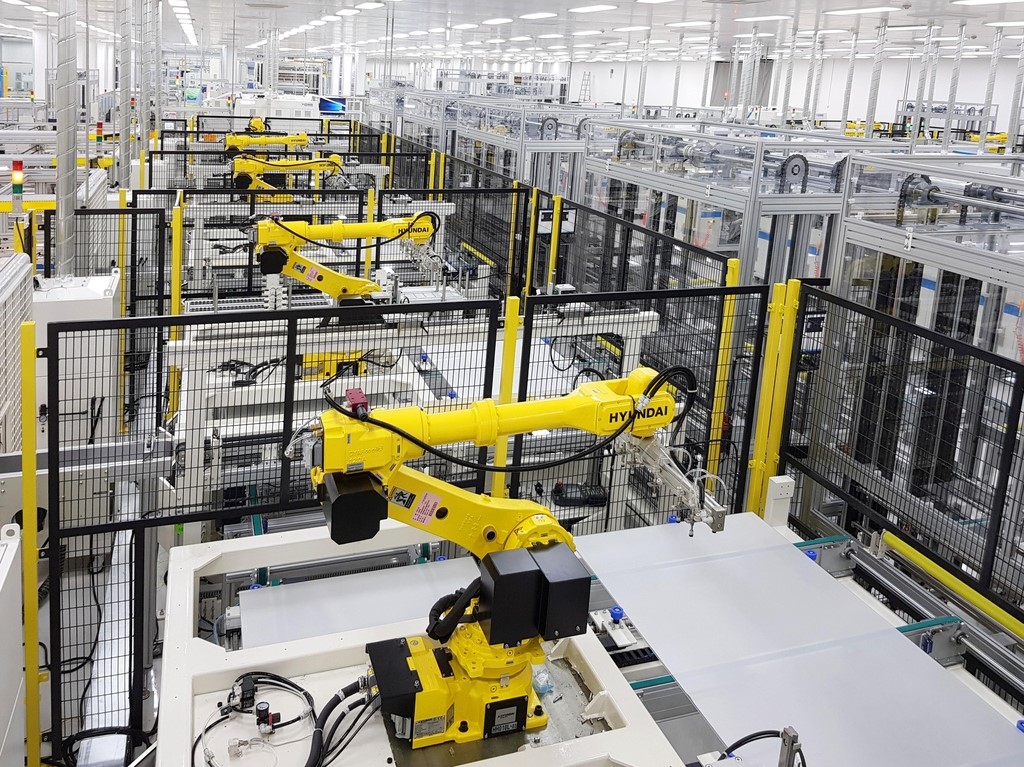
South Korea has extended investment tax credits to solar panel manufacturing facilities that meet carbon footprint thresholds, in the latest step in a policy path that increasingly uses purchasing and tax measures to support domestic manufacturers.
South Korea has expanded its fiscal support framework for low-carbon solar panel production, clarifying that facilities producing PV modules with carbon emissions of 655 kg CO₂/kW or less are eligible for investment tax credits under revised enforcement rules that came into effect on April 1.
This was reported by the Korea Photovoltaic Industry Association (KOPIA). The electric times this week that the review covers the entire manufacturing ecosystem rather than individual processes, adding that it provides a basis for domestic companies with strong technological capabilities to compete on quality and carbon performance rather than price. South Korea’s energy trade publication said the changes are aimed at increasing incentives for domestic manufacturers to adopt low-carbon production processes and secure high-efficiency technologies.
The revisions also expand eligibility for solar module design and manufacturing facilities that meet specified carbon thresholds. The revised rules specify eligible production equipment for the entire solar value chain – polysilicon production facilities, silicon wafer production equipment, solar cell lines and module production lines – rather than targeting individual processes or specific products.
South Korea has applied carbon classification to public solar purchases since at least 2019, when the government first gave preference to low-carbon and high-efficiency modules in project tenders. The system classifies modules into three tiers based on lifecycle CO₂ emissions per kilowatt of capacity, with the products with the lowest emissions receiving the highest quality and preferential treatment in Renewable Portfolio Standard (RPS) auctions. Modules of Chinese origin generally fall into the lowest level. The new tax credit rules extend the same logic of carbon thresholds from procurement to the investment framework for the manufacturing sector.
Chinese solar cells accounted for 95% of the South Korean market in 2024, up from 38% in 2019, according to South Korean media reports citing Ministry of Trade, Industry and Energy (MOTIE) data, leaving domestic manufacturers with a 4% share.
In October 2025, South Korea’s National Institute of Technology and Standards (KATS) introduced new national standards for photovoltaic-thermal (PVT) solar panels. The government-run agency said the new standards apply to modules that combine photovoltaic and solar thermal technologies in one device, noting that separate standards for each technology already exist.
“This regulatory improvement system accelerates the development of certification standards for new products that cannot be certified under existing systems due to a lack of appropriate standards,” KATS said in a statement. “This move is also aimed at helping domestic manufacturers enter this emerging market.”
This content is copyrighted and may not be reused. If you would like to collaborate with us and reuse some of our content, please contact: editors@pv-magazine.com.
