

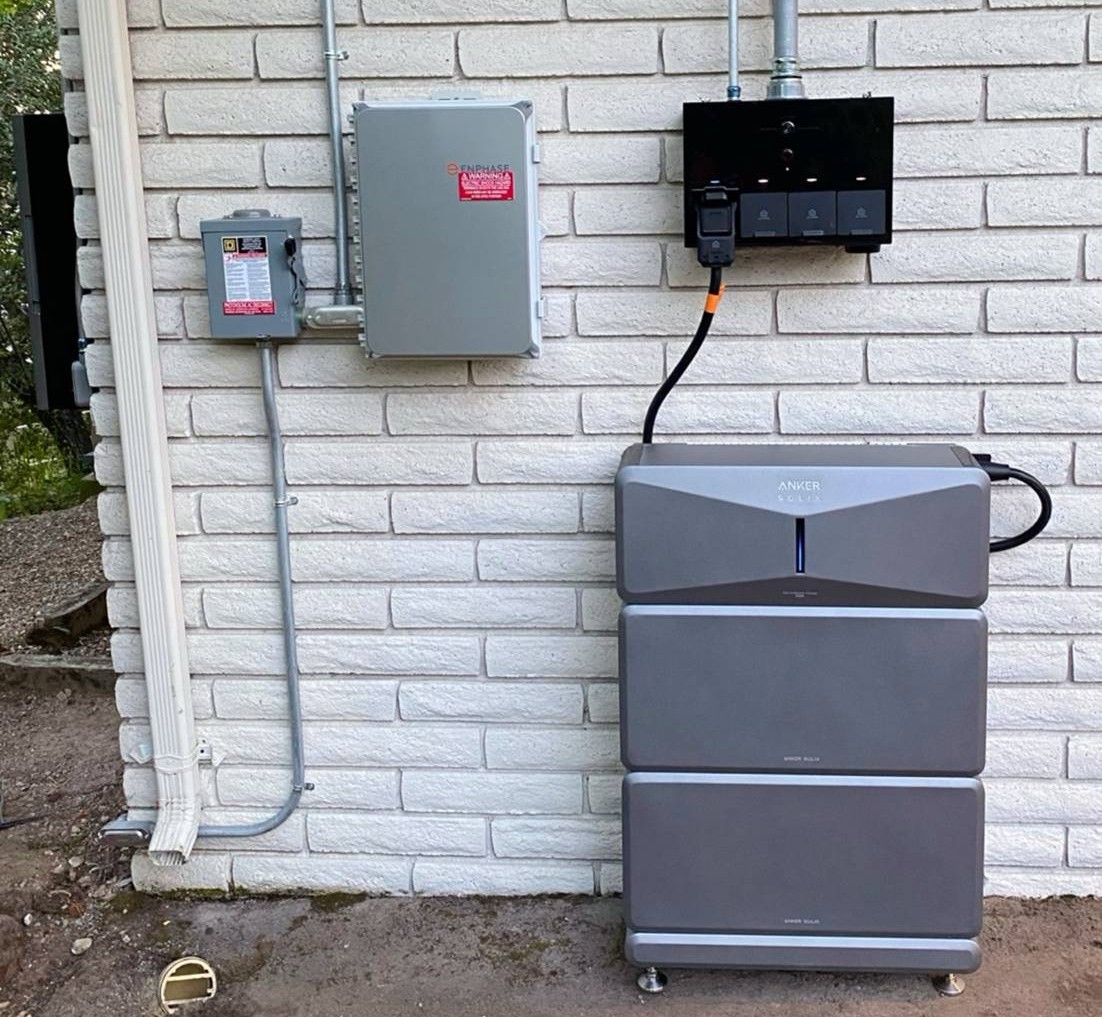
An engineer and home energy enthusiast installs the Anker Solix E10 on a fire-prone California hillside and documents the entire process in an in-depth review for ESS news
By ESS news
A rural setup that begs for storage space
I live on a wooded hillside in California’s Napa Valley wine country, above the morning mist that settles in the valley below. It is rural and beautiful, but also a CAL FIRE designated zone of very high fire danger.
Pacific Gas & Electric Company (PG&E) serves the area, which practically means two things: electricity is expensive and power outages are relatively common (seven in 2025 alone). In addition, Public Safety Power Shutoffs (PSPS) may occur; this is when the utility preemptively turns off power to reduce ignition risk during high fire danger weather conditions, and these can last for 2-3 days.
In recent years, my backup for such situations has been a portable gas generator that I wheeled out of the garage and connected to the house via a manual transfer switch. It powered the refrigerator, the water pump and a few lights. It dominated everything else too: loud enough that it made sleeping difficult even with the windows closed and the exhaust fumes filling the air as long as the air kept running. Placing the unit far enough away from the house to be somewhat bearable required heavy cable to handle the voltage drop.
During the back-to-back multi-day PSPS events a few years ago, the generator burned several expensive tanks of gasoline, causing me to spend more time at the gas station than I ever wanted to spend. After the second event, I started looking seriously at storage.
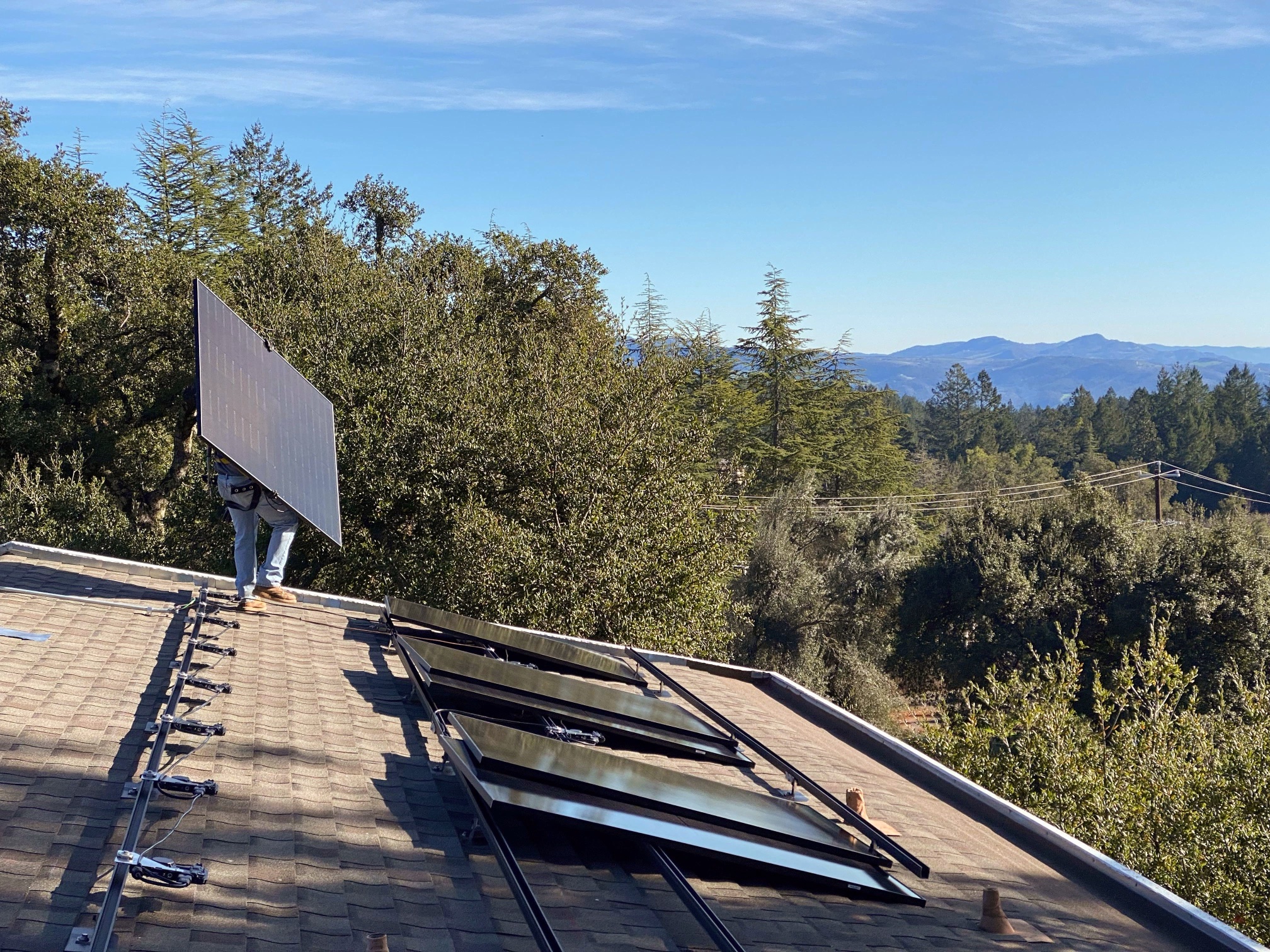
The rate environment was the second motivator. In late 2025, I installed a 6.7 kW AC Enphase solar panel (21 IQ8MC microinverters), mainly to offset an uncomfortable monthly bill. Only solar energy helps with daytime production, but based on PG&E’s Net Billing Tariff (NEM 3.0) – the residential successor to NEM 2.0 – the credit for exporting a kWh is a small fraction of the cost of importing it. On my own bills, the import side is about 32¢/kWh blended and the export credit averages about 4¢/kWh, for a return penalty of about 28¢ on every kWh of solar energy exported and later bought back.
Other solar owners had warned me about this exact situation – “you need a battery” – which, as it turns out, is the only practical way to catch most of that spread.
Installation of the PV system that connects to the E10
What the E10 actually is
The Anker Solix E10 is a modular battery storage system designed for full or partial home backup. My configuration is one A17E1 inverter module (“Power Module”) on top of two B6000 battery modules (6,144 Wh each, 12,288 Wh nominal capacity), coupled with an AX170 Power Dock that handles the automatic transfer switch (ATS), backup distribution, and integration with the existing solar.
The Power Dock supports two solar integration patterns. For installations where the E10 is the primary solar inverter, the E10 accepts DC input directly from a PV array. For retrofits like mine, where solar was already in place using proprietary AC microinverters, the AC output from the existing solar goes into dedicated AC-PV input terminals (Circuits 7 and 8) in the Power Dock, with the integration configured during the commissioning step in the Anker app.
To read further, visit our ESS news website.
The views and opinions expressed in this article are those of the author and do not necessarily reflect those of the author pv magazine.
This content is copyrighted and may not be reused. If you would like to collaborate with us and reuse some of our content, please contact: editors@pv-magazine.com.
Popular content

