
Close Menu
  • News
  • Industry
  • Solar Panels
  • Commercial
  • Residential
  • Finance
  • Technology
  • Carbon Credit
  • More
    • Policy
    • Energy Storage
    • Utility
    • Cummunity
What's Hot

Dutch solar owners asked to switch off during peak periods to ease the distribution crisis

June 7, 2026

The hydrogen flow: Toyota demonstrates its racing prototype on liquid hydrogen

June 7, 2026

Era of electrification exposing Australia’s weakest link

June 6, 2026
Facebook X (Twitter) Instagram
Solar Energy News
Sunday, June 7
  • News
  • Industry
  • Solar Panels
  • Commercial
  • Residential
  • Finance
  • Technology
  • Carbon Credit
  • More
    • Policy
    • Energy Storage
    • Utility
    • Cummunity
Solar Energy News
Home - Finance - The government will publish new NSIP thresholds
Finance

The government will publish new NSIP thresholds

solarenergyBy solarenergyJuly 30, 2024No Comments3 Mins Read
Facebook Twitter Pinterest LinkedIn Tumblr Email
Share
Facebook Twitter LinkedIn Pinterest Email
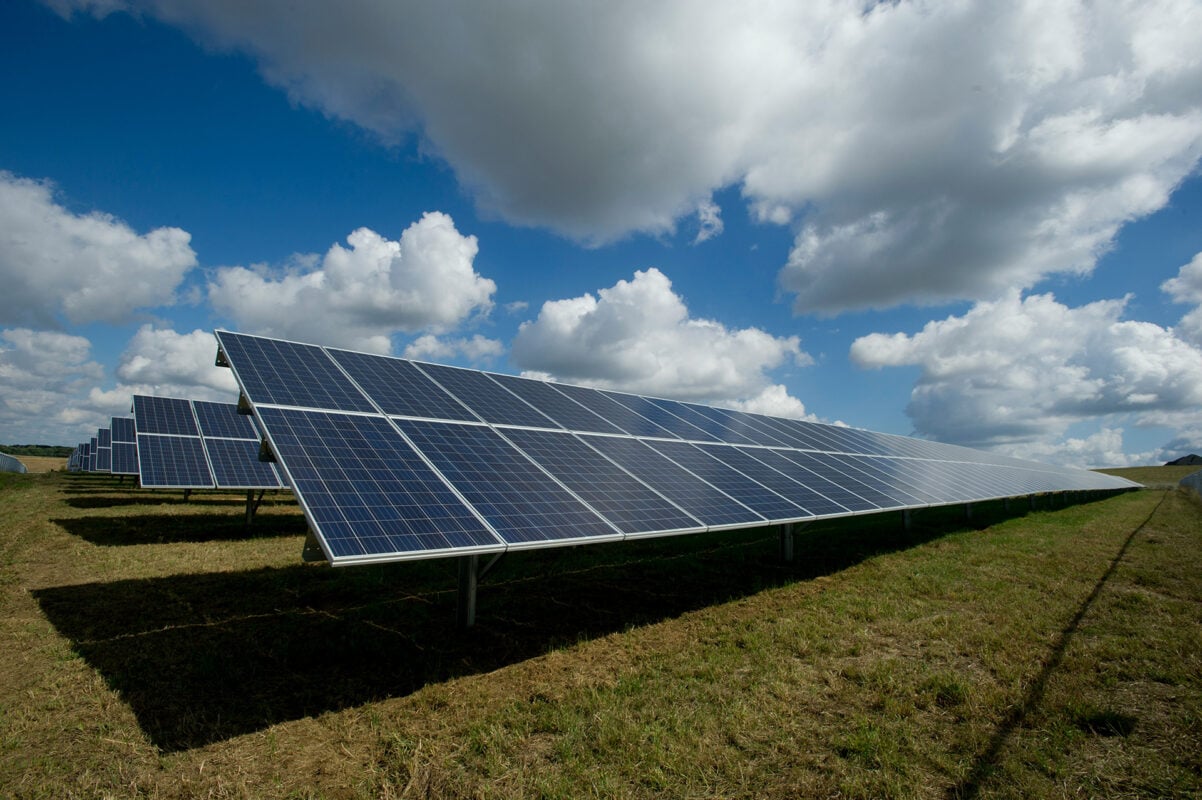
The capacity range of 50-200 MW is a “planning dead zone” for solar projects. Image: Unsplash.

The Ministry of Housing, Communities and Local Government will publish the results of its consultation on the thresholds for Nationally Important Infrastructure Projects (NSIPs).

Changes to the NSIP categorization have long been debated as more and more 49 MW projects were proposed at the 50 MW threshold. That said, there is no clear agreement among industry groups on what should change, nor an evidentiary basis for changing the threshold.

According to Gareth Philips, head of customer relations for the global energy sector at Pinsent Masons LLP, the capacity range of 50-200 MW is a “planning dead zone” for solar projects. Developers did not find it cost-effective to seek permission through the NSIP regime; costs damage viability.

A recent report from trade body RenewableUK, rural charity CPRE and sustainable business organization Aldersgate Group notes that the NSIP process is not considered cost-effective for projects just over the 50MW threshold to be designated as NSIP.

However, as Phillips noted, the fact that solar NSIPS in the 100 to 200 MW region have increasingly emerged in recent years suggests that the costs associated with applying for Development Consent Orders (DCOs) are no longer prohibitive for larger-scale projects.

In fact, the NSIP regime offers investors some certainty when it comes to timelines and likelihood of approval. In comparison, the Spatial Planning Act regime is often in conflict with the local planning authority and planning inspectorate being at odds with each other.

Thus, raising the NSIP threshold carries the risk of delaying project implementation as development becomes entangled in local politics and decision-making. Mechanisms such as the ability of the Secretary of State for Housing, Communities and Local Government to “call in” planning decisions could work for some projects, but cannot be the answer to pushing through decisions.

See also  Huge US lithium mine receives government approval

It could also be argued that, given Ed Miliband’s track record, the NSIP process will be accelerated – especially compared to the regime under Claire Coutinho – and that changes to the threshold would do little to accelerate the cost-effective implementation of solar energy projects below a minimum. certain capacity.

The Labor government has promised that it will be state-owned Major British energy company will help reduce red tape and speed up approval times. Also up for consideration during the NSIP consultation was the idea of ​​applying different thresholds to different technologies.

For Phillips, the threshold should be the same for all generation technologies. He said: “The concept of applying different thresholds to different technologies is difficult to grapple with. It is the generation of energy and the related contribution to national needs that is relevant to determine whether a power plant is of national importance. How can 100 MW of power generated by onshore wind energy be nationally significant, but not if it is generated by solar energy?”

Source link

government NSIP publish thresholds
Share. Facebook Twitter Pinterest LinkedIn Tumblr Email
solarenergy
  • Website

Related Posts

UK government considers community grant for battery storage

June 5, 2026

The UK government is redoubling its climate efforts, the net-zero economy is booming

June 3, 2026

Pexapark registers 17 European PPAs for 966 MW in April – SPE

May 27, 2026
Leave A Reply Cancel Reply

Don't Miss
Finance

Groot -Britain achieves a new maximum record of Zonne generation

By solarenergyApril 2, 20250

The nation recently surpassed the 18GW threshold for installed PV capacity. Image: Res On April…

Reliance introduces bifacial heterojunction solar panels

October 5, 2024

MITION, Elements Green Start with the construction of 720mWh Bess in Nottinghamshire

August 24, 2025

TCL Zhonghuan aims to acquire a majority stake in DAS Solar – SPE

January 19, 2026
Stay In Touch
  • Facebook
  • Twitter
  • Pinterest
  • Instagram
  • YouTube
  • Vimeo
Our Picks

Dutch solar owners asked to switch off during peak periods to ease the distribution crisis

June 7, 2026

The hydrogen flow: Toyota demonstrates its racing prototype on liquid hydrogen

June 7, 2026

Era of electrification exposing Australia’s weakest link

June 6, 2026

‘Come out from behind your screen, our industry is ultimately about people’

June 6, 2026
Our Picks

Dutch solar owners asked to switch off during peak periods to ease the distribution crisis

June 7, 2026

The hydrogen flow: Toyota demonstrates its racing prototype on liquid hydrogen

June 7, 2026

Era of electrification exposing Australia’s weakest link

June 6, 2026
About
About

Stay updated with the latest in solar energy. Discover innovations, trends, policies, and market insights driving the future of sustainable power worldwide.

Subscribe to Updates

Get the latest creative news and updates about Solar industry directly in your inbox!

Facebook X (Twitter) Instagram Pinterest
  • Contact
  • Privacy Policy
  • Terms & Conditions
© 2026 Tsolarenergynews.co - All rights reserved.

Type above and press Enter to search. Press Esc to cancel.