

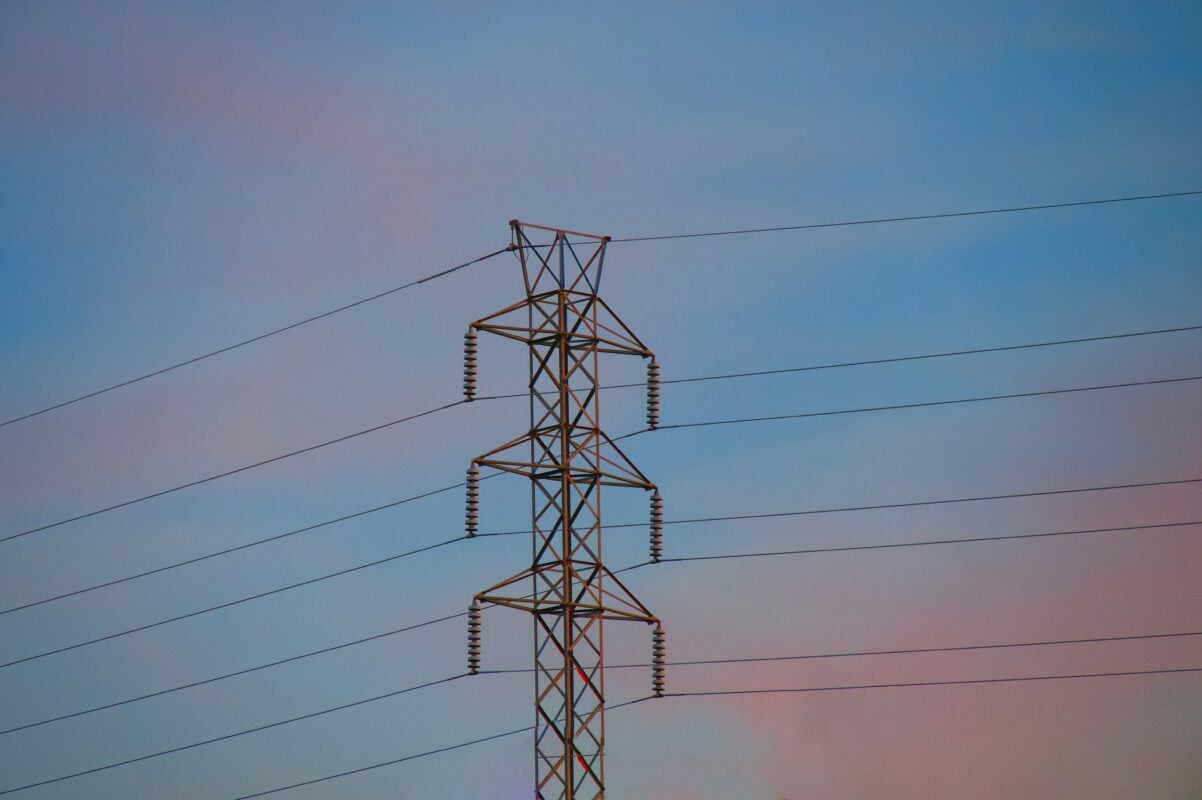
Recently, a major interconnector trip caused the UK grid frequency to plummet. At around 8:47 a.m. one morning in early October, the NSL interconnector linking Britain and Norway stopped working suddenly and without warning.
Norwegian electricity exports to Britain suddenly fell from 1.4 GW to zero, with immediate and potentially disastrous consequences for the UK electricity grid. The frequency on the network dropped to 49.59 Hz in less than two seconds, a number significantly lower than the National Energy System Operator (NESO) operating limits of 49.8 – 50.2 Hz. Without quick intervention, much of the country’s electricity grid could have failed.
Here, battery energy storage systems (BESS) answered the call. Through NESO’s network, 1.5 GW of BESS resources came online to inject power into the system, bringing the frequency to a high level within two minutes. The whole story is a true testament to the crucial importance of BESS in our modern electricity grid, an event that Roger Hollies, CTO at Arenko Group, described as “exciting”. Hollies said: “It’s exciting to see batteries casually keeping the lights on while delivering a diversity of activities to maximize revenue. I count nine markets and services that these twelve batteries participate in during this 50-minute period alone.”
Despite this, battery storage developers have expressed the feeling that they have been underutilized by the NESO and its predecessor, ESO. A open letter written by a coalition of BESS developersincluding top names such as Zenobē, Eelpower, Harmony Energy and Field, noted that energy system operators often prefer to switch off renewable energy sources, such as wind turbines, to cope with energy oversupply, rather than using BESS resources . The coalition argued that this is holding back investment and driving up consumer bills; one could argue that such missed investment opportunities could slow down the development of BESS and thus limit its usefulness as an asset during interconnection voyages.
The benefits of BESS in emergency situations
BESS assets are uniquely positioned to support emergency network and frequency balancing due to the speed at which they can respond when needed: milliseconds to seconds. The reason for this rapid response is inherent to the nature of BESS compared to other energy sources; as Hollies explains: “A BESS does not have to be “on” to provide a support service. All synchronized systems, such as gas-powered turbines, must operate at minimum power (i.e. burn fuel) to quickly respond to an emergency frequency event. Not BESS; they can respond very quickly, even from a deep standby state.”
The modular nature of BESS resources also makes them useful in emergency situations; even if a BESS partially fails, the parts of the asset that are online can still provide a response.
In addition to interconnector travel, BESS resources are useful in other emergency situations. Several operators of BESS assets have touted the potential value of batteries in ‘black-starting’ support services if a blackout were to occur, including new player to the market Root-Power, whose director Neil Brooks noted: ‘BESS’ flexibility, rapid deployment and compatibility with other renewable energy sources make it particularly suitable for disaster response and recovery, and for improving Britain’s energy resilience. Batteries are also useful for ‘black start’ support in the event of a power outage, allowing other forms of generation, which themselves typically require power from the grid to start, to jump-start.”
What the sector needs to flourish
The storage industry has criticized the NESO extensively, repeatedly raising the same complaints.
Grid connection timescales remain a key concern, with Brooks noting that BESS projects are often given grid connection dates as far away as 2030 or even 2035. While the NESO, as well as distribution network operators (DNOs), have stated plans to implement changes in speed By implementing connection queuing, including the removal of so-called ‘zombie projects’, the reality for developers is very different.
Brooks added: “To date we have not seen the numerous NESO strategies discussed to bring forward connection dates have any real positive impact on project timescales, and there is still a large gap with sector-wide reforms and the reality of what is being implemented. at DNO level. Much work needs to be done to ensure that DNOs implement these sector-wide reforms in projects at the distribution level and that DNOs conduct their own connection queue reassessment.”
Oli Petterson, Balance Power’s connections manager, believes that the way network operators model the impact of BESS projects does not reflect real network usage. He said: “Modelling assets before they go online needs more attention here. Due to the way BESS schemes are modeled by network operators, the need for reinforcements is constantly increasing, while in reality the existing import availability on the network is not fully utilized. This has pushed many plans back five to ten years, at a time when BESS is critical to market and network stability.”
Meanwhile, Hollies believes the answer lies in capacity market (CM) reforms, noting: “Currently all BESS with CM contracts are given four hours’ notice of the need to deliver near full output for a stress event, for an undefined situation. duration. This could have the unintended consequence of triggering a new stress event, with all BESS choosing to charge upfront to meet their obligations (rewarding surrender), but it also represents an inefficient use of the most of what is available. 1-2 hours of assets.”
He added: “An additional coordination mechanism between BESS is needed that can reasonably ‘sequence’ the offloading of these shorter duration assets during times of system stress to fully realize their benefits.”
The way forward
The recent near-crisis on the UK grid highlights an undeniable truth: BESS are no longer just complementary players; they are critical to keeping our lights on.
We need reforms that match the speed and responsiveness of BESS itself. This means a streamlined grid connection process, realistic modeling that reflects how BESS assets actually interact with the grid, and a revision of capacity market rules.
If we want a resilient, future-oriented energy system, NESO and the regulators must stop treating BESS as a backup plan and make it a pillar of the UK energy strategy. With the right policies in place, BESS can provide the robust, flexible support our network urgently needs and keep the lights on.
As Roger Hollies puts it, the growth we have seen in the BESS market so far “has nothing to do with green credentials: BESS is simply better and cheaper than the alternatives.”
